Up for review: Discernment of Spirits, Soviet New Age, and Magic

I’ve received three books for review over the last few weeks, making for a hectic book review phase (I’m not gonna mention the ones I’m already late with). They are three fascinating collections, dealing with very diverse material. Here’s a quick preview.

Angels of Light? (Brill, 2012)

Angels of Light? (2012)

Clare Copeland and Jan Machielsen’s Angels of Light? (Brill, 2012) is a collection of essays dealing with that delicious problem of Christian theology and practice: how to discern real sanctity from demonic trickery? If an angel appears in all its splendour – whether in a dream, a vision, or in front of  your bare eyes – how do you know that it is not the devil masquerading to lure the devout to the dark side? This, in a nutshell, is the problem of discernment. It has had consequences not only on the abstract level of theological philosophizing, but also on the social level. Above all during the tumultuous reformation era, when new reformers led to the emergence of new sects with new creeds, new leaders, and new lines of authority. The devout had to fear not only false angels, but false prophets as well. From the blurb:


(more…)

Webportal for the academic study of esotericism

The Amsterdam Center for History of Hermetic Philosophy has a new website.

The Amsterdam Center for History of Hermetic Philosophy has a new website.

Last month, the Center for History of Hermetic Philosophy and Related Currents (HHP) in Amsterdam released their new website. Regular readers of Heterodoxology are likely to have seen this already, but in case you missed it in the middle of the summer, here is a reminder.

The reason why this is newsworthy is that the new website aims to be a lot more than simply the web-presence of one particular institution for higher education. It has a number of other functions, that are useful for the broader academic community that the HHP is part of. It gives relatively elaborate information on the HHP study programs (the MA and the BA), and lists the current research projects undertaken by HHP staff. The agenda on the website is still rather slim, but the intention is that it will fill up with not only activities in Amsterdam (courses, lectures, openings), but other events of relevance to the broader community of esotericism researchers as well.

(more…)

ESSWE4 round-up – reviews and impressions from across the esosphere

Attendees are starting to get some distance from the ESSWE4 conference in Gothenburg now, and a number of reviews and impressions have appeared on blogs during the last week. Below you’ll find a round-up of pieces written from different perspectives. My own two cents you’ll find here.

(more…)

A fresh take on “magic” on the Societas Magica blog

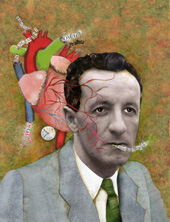
merleau-ponty

Bodies, brains, magic, culture.
Maurice Merleau-Ponty’s new uses.

Some time ago I mentioned that Societas Magica were going to launch a blog. Well, that happened soon after, and I did not pay attention. So, quite overdue, here is the link to this new and valuable addition to the esoteric-et-cetera blog community.

So far there is only one post, but it is also a very good one that sets a high standard: “Ritual Magic and Conjured Bodies: A Philosophy and Methodology” by Damon Lycourinos. I was impressed with Damon’s paper at ESSWE4, on the use of Merleau-Ponty and embodiment theory in the analysis of contemporary ritual magical practice. In his first blog post at Societas Magica, Damon continues this exploration and offers, I think, some very valuable and stimulating reflections on how to theorise magical practice.

In particular, I couldn’t agree more with his complaint that talk about the body and embodiment in “postmodern” theorising has in fact not taken the body seriously at all – and that this could be remedied by returning to the phenomenology of Merleau-Ponty:

(more…)

The biggest esotericism conference yet – ESSWE4 and the schizophrenic life of academics

A few days ago I returned from Gothenburg, Sweden, after the fourth international conference of the European Society for the Study of Western Esotericism (or #ESSWE4 for those following the tagboard). It was slightly larger than the three previous conferences (in Tübingen, Strasbourg, and Szeged); more than 90 papers were presented, there were discussion panels, keynotes, and night-time events. The conference was spread out over four days, and it needed every minute of the daily 9-hour schedule.

(more…)

Getting ready for ESSWE4: interdisciplinary panels, international networking, magickal musick – and the transhuman apocalypse

Screen shot 2013-06-22 at 8.03.27 PM

ESSWE4: Gothenburg, Sweden, June 26-29, 2013.

I’m only doing one conference this summer season, but that is already turning out to be a massively busy and exciting event. Now that the final program is available, and the book of abstracts can be downloaded, the ESSWE4 conference in Gothenburg, Sweden, stands out as everything that an international conference of the European Society for the Study of Western Esotericism should be: strongly interdisciplinary (the inclusion of historians of science and medicine is particularly noticeable, and a greater number of sociologists and anthropologists is also a highly welcome development), with a rich and varied program that includes panel sessions, discussion groups, roundtables, and keynotes. There is also a dinner in the Masonic Hall and a final esoteric concert event: Genesis P-Orridge and Carl Abrahamsson (known in the esoteric world as editor of The Fenris Wolf) perform live with their act, White Stains. P-Orridge and Abrahamsson will even appear in a half-hour discussion group at the conference itself on the final day, entitled “Music and Esotericism from the Inside Out”.

Browse the program on the website to find out more.

In addition to that, you should check what people are saying about the event in social media on this Tagboard (join the conversation with the tag #ESSWE4). This promises to be the first ESSWE conference with live twitter feeds to follow, so do check that out and contribute if you are going! (I hear there will be free wifi available, so no need to worry about insane roaming charges) .

(more…)

Open-access publishing and Western esotericism: Greeting Correspondences Vol. 1.1

Correspondences journal header

The first issue of a new peer-reviewed journal for the study of Western esotericism has just been released. There aren’t too many of those around to begin with, so Correspondences is (as announced previously) a welcome newcomer to a small field. The first issue already shows much promise with four articles covering a broad span, even breaking some new ground (read them here). But what makes this journal a particularly important newcomer is that it is entirely open-access. Everything is published openly online (after editorial selection, peer review, copy-editing and typesetting, of course), and shared through social media under a Creative Commons license. Without compromising anything on the side of peer-review (a broad editorial board has helped the editors-in-chief find competent reviewers), and with typesetting that completely matches what the paywall-protected publishers typically can muster (let’s face it: it was never anything too fancy to begin with), the result is fully fledged, quality-approved academic articles that are completely free, open to everyone, and published without the often considerable lag of subscription journals.

(more…)

Praeludia Microcosmica – there’s a new blog on the block

There’s a new blog out in the esotericisim/hist-sci neighbourhood. Praeludia Microcosmica brings microcosmic preludes from the PhD research of Mike Zuber (University of Amsterdam). In particular, we should look forward to “occasional notes on chymistry, theosophy and religious dissent in the early modern period”. The blog is named after a curious book, the  Microcosmische Vorspiele Des Neuen Himmels und der Neuen Erde – the contested authorship of which you can read a bit about in the blog’s opening post.

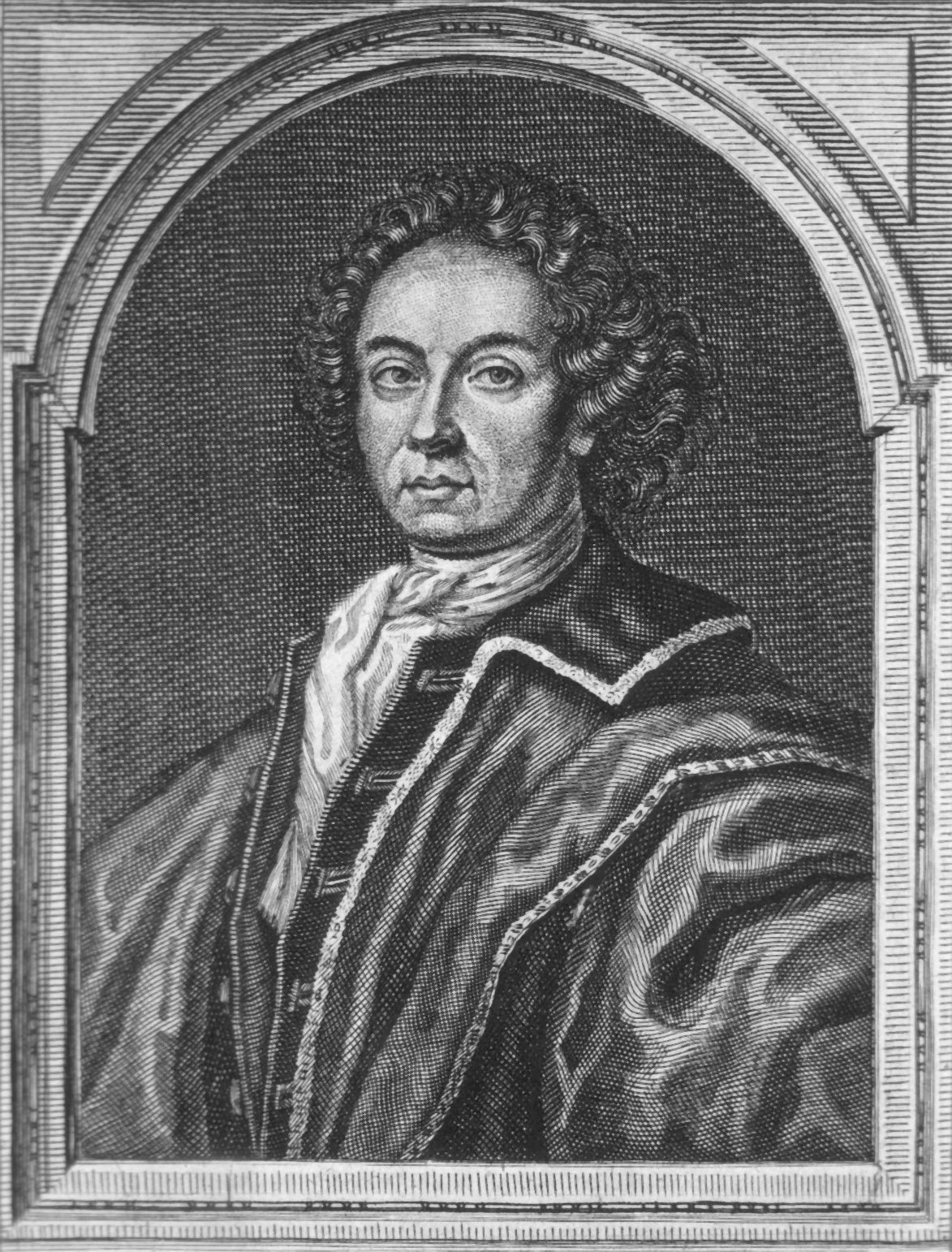
Johann Konrad Dippel

Johann Conrad Dippel

It starts good, with a follow up post on Johann Conrad Dippel (1673-1734) – who has not only been falsely held as the author of the Microcosmische Vorspiele, but also possesses a questionable reputation as an alchemical counterfeit gravedigger snake-oil & horoscope salesman with a connection to the castle Frankenstein near Darmstad, which have made him a  candidate for the “real” Victor Frankenstein, the model of Mary Wollstonecraft Godwin’s  hubristic doctor.

But Dippel’s “Real Frankenstein Potential” is not so obvious when exposed to historical methods. For starters, the most questionable thing about reputations like that of Dippel is, usually, their provenance. Mike (who is trained as a historian of science and now doing the PhD at the History of Hermetic Philosophy centre in Amsterdam) shows that most of the rumours surrounding Dippel – and especially those involving grave-digging – are highly dubious. What’s left is a radical pietist convert doing work in chymistry and medicine, who may been born near to the Frankenstein castle.

Personally I look much forward to the promising second installment on Dippel:

“I hope to explore more of it in the near future—including Dippel’s shifting fortunes as an alchemist, a reading list he partially shared with Victor Frankenstein, his reputedly all-curing animal oil, his attempt to gain possession of Castle Frankenstein in exchange for an alchemical arcanum late in life, and his mistaken prophecy that he would live until 1806. So stay tuned and watch this space!”

Do it!

The sources of gnosis – an evening of gnosticism scholarship in Amsterdam

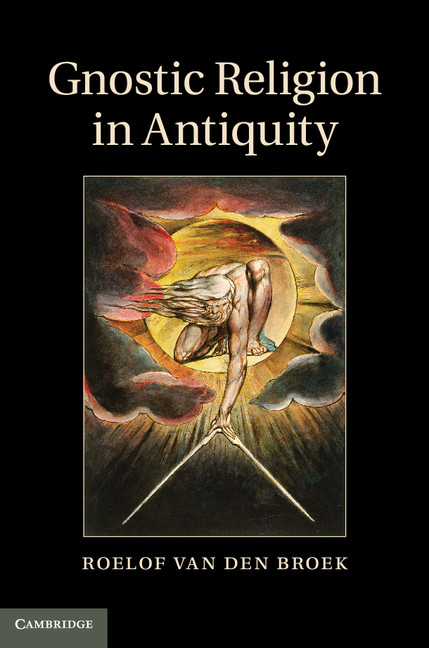
van den Broek Gnostic Religion cover

A new book on the primary sources of “gnosticism” by Roelof van den Broek

On the 29th of May there will be an evening of gnosis at the Spui25 venue in Amsterdam. A group of scholars, some known as world-leading specialists of gnosticism and ancient Christianity will meet to discuss the latest book by Roelof van den Broek, Gnostic Religion in Antiquity (Oxford University Press, 2013 – essentially an English version of his 2010 book in Dutch, mentioned previously at Heterodoxology). At the centre of discussion is the primary sources of “gnostic” religion: what’s really in there? How does the content of these sources relate to recent understandings of gnosticism, whether by scholars, educated laypersons or among contemporary spiritual practitioners?

Roelof van den Broek himself is joined by the Nag Hammadi scholar Matthew Dillon (Rice University), the specialist of religions in antiquity Albert De Jong (Leiden University), and Wouter Hanegraaff and Jacqueline Borsje from the Religious Dynamics and Cultural Diversity research group at the University of Amsterdam.

The event is free, but requires registration (see website).

The (all too) secret history of Vril

Julian Strube's first book, Vril, becomes a standard reference for knowledge about this peculiar concept and its even more peculiar history.

Julian Strube’s first book, Vril, becomes a standard reference for knowledge about this peculiar concept and its even more peculiar history.

It is astonishing how much of modern occultism is dependent on works of fiction. The machinations of secret societies, the malicious rituals of satanic cults, and the magicians’ adventures on the astral plane have all been portrayed in great detail in works of fiction, which have in turn directly influenced the creation of real organisations and inspired new ritual practices among self-styled occultists. The entire current of Rosicrucian initiatory societies even had its main impetus in a text considered by its authors to be a playful ludibrium – although no doubt one that expressed deep convictions. This dynamic of fiction turning to fact is itself perhaps nowhere better explored than in Umberto Eco’s work of fiction, Foucault’s Pendulum. In recent years there has been quite some interest in such dynamics among contemporary scholars of religion as well – focusing on what they call “invented”, “hyperreal”, or “fiction-based” religions. While these scholars tend to focus on relatively recent cases – Jediism, Tolkien-spirituality and the sort – we have every reason to believe that this is a much older process. Particularly, it would seem, in the Western esoteric context.

A case in point is the concept of “vril” – an occult fluid or force that can be manipulated, controlled and directed by spiritually advanced initiates. It was invented by the the author and politician Edward Bulwer-Lytton (1803-1873) in his novel, The Coming Race (1871).

(more…)