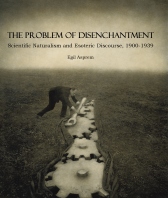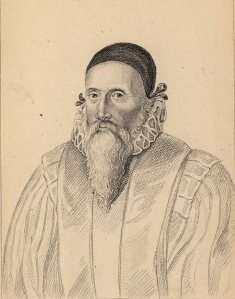
The first half of 2012 has been a great year for research on modern Western ritual magic. I have already mentioned the publication of my own book, Arguing with Angels, which deals with that obscure system of angel magic known as “Enochian”. I have also mentioned the forthcoming thesis workshop on magic, co-hosted by the ESSWE and the Chair for History of Hermetic Philosophy and Related Currents here in Amsterdam. There are however a couple of other publications that have appeared so far this year as well, which I have been meaning to mention for a while. Let’s get to it.
Magic and how to write about it – 2nd ESSWE thesis workshop, July 6, 2012
This summer the European Society for the Study of Western Esotericism is hosting its second Thesis Workshop in Amsterdam. Participation is free, and the intention is to provide a one-day platform for people involved with academic research in western esotericism on the MA and PhD levels to get together, discuss ideas and research challenges, make connections with other students, and with established scholars in the field. The workshop coincides with the ESSWE board meeting, which means that a number of senior scholars will be present and approachable.
“Varieties of Magical Experience” – a new article on Crowley, magic, and psychologisation
The November issue of Magic, Ritual, and Witchcraft ran an article by my colleague Marco Pasi, titled ”Varieties of Magical Experience: Aleister Crowley’s Views on Occult Practice”. It may safely be characterised as the most complete academic treatment of Crowley’s magical thought and practice that has so far been published in a peer-reviewed journal. It also ties in neatly with a discussion here at Heterodoxology and a couple of other blogs earlier this year (Tyromanteia and Invocatio), namely the question of the “psychologisation of magic”. A review is definitely in order.
Who was Fräulein Sprengel? New evidence on the origin of the Golden Dawn, or: “Vale Soror! Ave Frater!”
"Sapiens Dominabitur Astris". From 17th century emblem, by George Wither, A collection of emblemes.
In the history of the Hermetic Order of the Golden Dawn, one of the supremely most influential esoteric and magical orders in modern occultism, the question of origins has been a matter of much dispute. This is, of course, a common story for esoteric orders, or even for religious movements more broadly. If there is one thing you can count on, it’s that their founders and their followers will tend to invent mythologies, lineages, and exotic provenances to bolster their group’s sense of importance.
In the case of the Golden Dawn, founded in 1887 by a group of London based high degree Freemasons and occultists, the emic historiography has centred upon a claim to Rosicrucian lineage. The direct link was a mysterious Fräulein Sprengel of Stuttgart, also known under her magical motto Sapiens Dominabitur Astris (“the wise will rule the stars”). The evidence for this lineage was a letter communication between Sprengel and the G.D. co-founder, coroner William Wynn Westcott, which ostensibly ensued after Westcott found her address on a sheet of paper tucked together with the mysterious “cipher manuscript” on which the G.D. rituals would later be based (for the uninitiated: there’s a brief overview of the controversy around them on Wikipedia). The notorious “Sprengel letters” that ensued, and the possible background of the order have been discussed for decades by scholars such as Elic Howe and Robert A. Gilbert – the general consensus being that the letters were forged and Sprengel a fiction. In the latest issue of Aries, Christopher McIntosh publishes brand new evidence in this mystery, evidence which has been there all along but curiously overlooked by all previous investigators.
The discovery is surprising, and makes an already confusing story even more so.
… and we have a cover
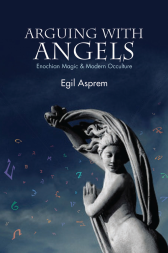
The book cover for Arguing with Angels has just been released by SUNY Press. Dark night skies with swirling Enochian letters in pastels. Too new agey, or just about enough to rise interest and curiosity? I like it, anyway.
More from the publisher here; my own first post on the book here. Comments welcome!
International Conference on Contemporary Esotericism: Call for Papers
As advertised before, there will be a book out next year on Contemporary Esotericism, edited by Kennet Granholm and myself. The volume brings together well-established and up-and-coming scholars in the field of esotericism, with brand-new research articles on contemporary esoteric topics. In connection with the book, we are organising an international conference on the same topic, to be held at Stockholm University next August. Below you will find the full call for papers. You can also check out the conference website. It’s early, but we will accept proposals as soon as they start coming in, so no need to postpone thinking about it.
On “Scientific Illuminism” and the Psychologisation of Magic
There is a post up at the tyromanteia blog, which offers a nice criticism of my article on Aleister Crowley’s negotiation of magic with science and psychology (“Magic Naturalized?”, published in Aries back in 2008). Tyromanteia draws on the work of Alex Owen (which I briefly reviewed last year) to place three 20th century magicians, Crowley, Israel Regardie, and Dion Fortune, within a broader “crisis of subjectivity” and a process of psychologisation. In this connection, the author finds opportunity to deal with my criticism of the “psychologisation thesis” on the survival of magic. I largely performed this criticism on the basis of Crowley, arguing that in this case, an attempted naturalisation of magic is more important than psychologisation. To this, Tyromanteia objects that Crowley largely anticipated the psychological and even psychotherapeutic interpretations which Regardie and Fortune later emphasised in their teachings. As I think this criticism points out an ambiguity in the original article, I will take this opportunity to make a brief response.
Arguing with Angels – another book you should get next year
A bit of shameless self-promotion: A pre-production description has recently been released by State University of New York Press, announcing the publication of my first book, Arguing with Angels: Enochian Magic and Modern Occulture. It is due in May 2012. As SUNY’s summary states, the book is an exploration of the Elizabethan philosopher John Dee’s system of angel magic, but in particular its reception history and various reinterpretations in modern times. It follows the creation of what is usually known as “Enochian magic”. Since 19th century occultism, and continuing in 20th century and contemporary occulture, this system has been understood in a variety of ways as it has become embedded in a number of different occult currents and practices.
The book pays special attention to the discussions and quarrels among occultist groups and practitioners over the “right” interpretation, and discusses the various claims that are made to legitimise such positions – vis-a-vis competing occultist interpretations on the one hand, and a generally perceived “disenchanted” modern society on the other. Among the main protagonists we find the Hermetic Order of the Golden Dawn, Aleister Crowley, Israel Regardie, Paul Foster Case, Anton LaVey and the Church of Satan, Michael Aquino and the Temple of Set, the obscure Order of the Cubic Stone, the Aurum Solis, and scores of cyber-age ritual magicians, debating the nature of angels and magical ritual online.
The book will appear in the SUNY series on Western Esoteric Traditions, which has previously published such classics in the field as Antoine Faivre’s Access to Western Esotericism, Joscelyn Godwin’s Theosophical Enlightenment, and Wouter Hanegraaff’s New Age Religion and Western Culture. There is no cover art up yet (this should be in place soon, my editors say), but below is the full publisher’s description:
Giants’ Shoulders #29: Esoteric Science Special
Heterodoxology is proud to present the twenty-ninth installment of your favourite History of Science Blog Carnival: The Giant’s Shoulders. This time featuring an Esoteric Science Special, dedicated to all those esoteric pursuits of superior knowledge; a celebration of all strange, alien, and counterintuitive methods that have been attempted to dissect, read, or tame nature’s secrets, from renaissance natural philosophy to present-day Grand Unified Theories – from the cleverly inventive, through the hopelessly megalomaniac, to the simply misguided.