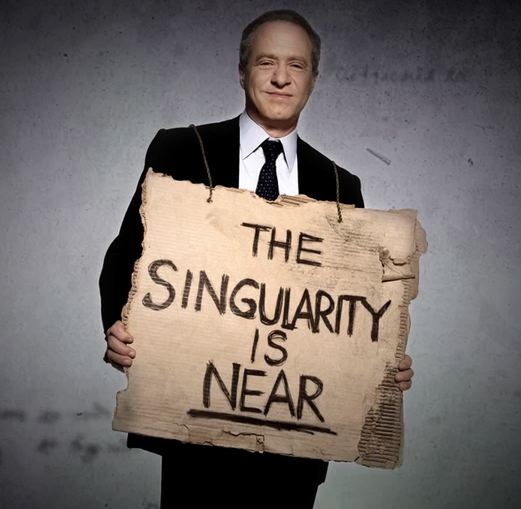
 If you’re in Trondheim next week, I am giving a public lecture on some aspects of the transhumanist movement. It’s organized by the excellent club- and lecture initiative Forum Nidarosiae. The lecture will be in Norwegian, but I attach an English translation of title and blurb below:
“2045, Rapture of the Nerds!” A public lecture in Trondheim, Norway

Jakob Böhme Crash Course – BPH/HHP Webinar
There is another webinar out from the collaboration between the BPH and the HHP in Amsterdam. This time, Wouter Hanegraaff gives a one-hour crash course on the wonderfully obscure and fascinating German Silesian Christian theosophist/mystic/pietist (or however one wants to label him) Jakob Böhme (1575-1624). This cobbler from Görlitz was the author of some fairly heterodox theological texts, written in unsystematic, poetic, highly symbolic and mythologizing style. In this webinar, Hanegraaff focuses mostly on Böhme’s cosmogony – or rather, his theogony. In stark contrast to Christian orthodoxy, Böhme held that God was not eternal nor really transcendent, and certainly not immaterial or purely “spiritual”. To the contrary, he was obsessed with “the birth of God” from an original, primeval, unknowable chaos, the Ungrund (“un-ground”). Materiality and corporeality are always highlighted.
Meet the editors of Correspondences
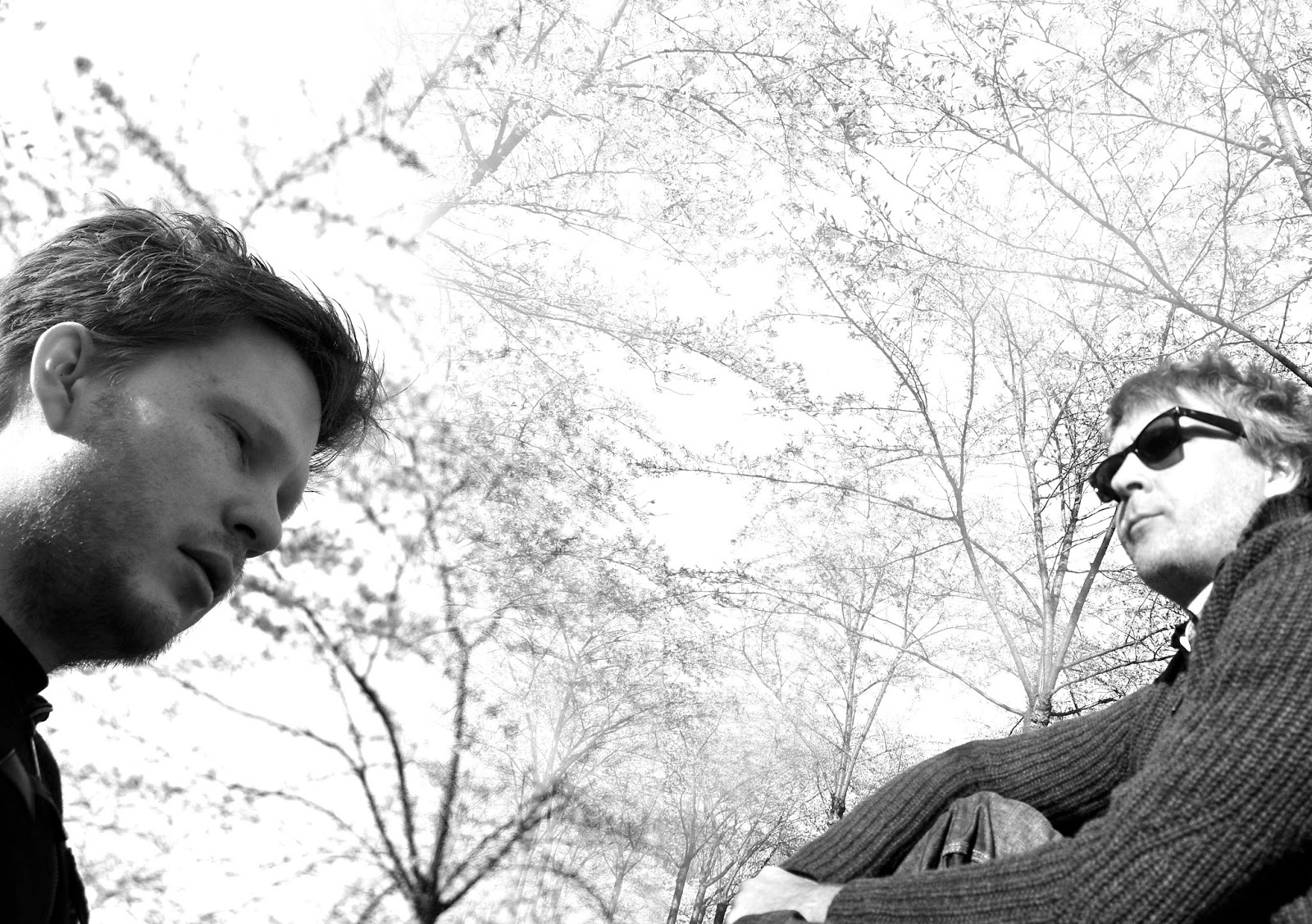
Editors in chief
Chances are you have seen the new open access journal Correspondences, which publishes peer-reviewed research on esotericism (if you haven’t, check out the first issue here). In case you were wondering who’s behind this initiative and what compelled them to start this journal, Ethan Doyle White of Albion Calling has published an interview with the two editors, Jimmy Elwing and Aren Roukema. The accompanying rock star image leaves little doubt that the editors and the journal are part of the emerging “next generation”, defining “Esotericism 3.0”. Read about how they got involved with the academic study of esotericism, what kind of research they’re into, and their views on open access publishing and the way forward.
The interviewer also had an article published in the first issue of Correspondences, focusing on witchcraft and Luciferianism. Oh, and while the deadline for the second issue has just passed, I’m sure Aren and Jimmy would appreciate new submissions!
Relocation

The Greenhouse at night.
This weekend I have relocated to my old home town, Trondheim. In the coming few months I’m going to fill an associate professor position, temporarily, due to a set of complicated circumstances that I’ll not go into here. Having left the Center for History of Hermetic Philosophy and Related Currents in Amsterdam behind, I’ll now be found at the newly restructured Department of Philosophy and Religious Studies at the Norwegian University of Science and Technology (NTNU). My office and all teaching happens at campus Dragvoll, which looks pretty much like a giant greenhouse, in a rural and woodlands area on the outskirts of town. Certainly a change of scenery from Amsterdam’s overcrowded streets!
Up for review: Discernment of Spirits, Soviet New Age, and Magic
I’ve received three books for review over the last few weeks, making for a hectic book review phase (I’m not gonna mention the ones I’m already late with). They are three fascinating collections, dealing with very diverse material. Here’s a quick preview.

Angels of Light? (2012)
Clare Copeland and Jan Machielsen’s Angels of Light? (Brill, 2012) is a collection of essays dealing with that delicious problem of Christian theology and practice: how to discern real sanctity from demonic trickery? If an angel appears in all its splendour – whether in a dream, a vision, or in front of your bare eyes – how do you know that it is not the devil masquerading to lure the devout to the dark side? This, in a nutshell, is the problem of discernment. It has had consequences not only on the abstract level of theological philosophizing, but also on the social level. Above all during the tumultuous reformation era, when new reformers led to the emergence of new sects with new creeds, new leaders, and new lines of authority. The devout had to fear not only false angels, but false prophets as well. From the blurb:
Webportal for the academic study of esotericism

The Amsterdam Center for History of Hermetic Philosophy has a new website.
Last month, the Center for History of Hermetic Philosophy and Related Currents (HHP) in Amsterdam released their new website. Regular readers of Heterodoxology are likely to have seen this already, but in case you missed it in the middle of the summer, here is a reminder.
The reason why this is newsworthy is that the new website aims to be a lot more than simply the web-presence of one particular institution for higher education. It has a number of other functions, that are useful for the broader academic community that the HHP is part of. It gives relatively elaborate information on the HHP study programs (the MA and the BA), and lists the current research projects undertaken by HHP staff. The agenda on the website is still rather slim, but the intention is that it will fill up with not only activities in Amsterdam (courses, lectures, openings), but other events of relevance to the broader community of esotericism researchers as well.
ESSWE4 round-up – reviews and impressions from across the esosphere
Attendees are starting to get some distance from the ESSWE4 conference in Gothenburg now, and a number of reviews and impressions have appeared on blogs during the last week. Below you’ll find a round-up of pieces written from different perspectives. My own two cents you’ll find here.
A fresh take on “magic” on the Societas Magica blog
Bodies, brains, magic, culture.
Maurice Merleau-Ponty’s new uses.
Some time ago I mentioned that Societas Magica were going to launch a blog. Well, that happened soon after, and I did not pay attention. So, quite overdue, here is the link to this new and valuable addition to the esoteric-et-cetera blog community.
So far there is only one post, but it is also a very good one that sets a high standard: “Ritual Magic and Conjured Bodies: A Philosophy and Methodology” by Damon Lycourinos. I was impressed with Damon’s paper at ESSWE4, on the use of Merleau-Ponty and embodiment theory in the analysis of contemporary ritual magical practice. In his first blog post at Societas Magica, Damon continues this exploration and offers, I think, some very valuable and stimulating reflections on how to theorise magical practice.
In particular, I couldn’t agree more with his complaint that talk about the body and embodiment in “postmodern” theorising has in fact not taken the body seriously at all – and that this could be remedied by returning to the phenomenology of Merleau-Ponty:
The biggest esotericism conference yet – ESSWE4 and the schizophrenic life of academics
A few days ago I returned from Gothenburg, Sweden, after the fourth international conference of the European Society for the Study of Western Esotericism (or #ESSWE4 for those following the tagboard). It was slightly larger than the three previous conferences (in Tübingen, Strasbourg, and Szeged); more than 90 papers were presented, there were discussion panels, keynotes, and night-time events. The conference was spread out over four days, and it needed every minute of the daily 9-hour schedule.
Getting ready for ESSWE4: interdisciplinary panels, international networking, magickal musick – and the transhuman apocalypse
ESSWE4: Gothenburg, Sweden, June 26-29, 2013.
I’m only doing one conference this summer season, but that is already turning out to be a massively busy and exciting event. Now that the final program is available, and the book of abstracts can be downloaded, the ESSWE4 conference in Gothenburg, Sweden, stands out as everything that an international conference of the European Society for the Study of Western Esotericism should be: strongly interdisciplinary (the inclusion of historians of science and medicine is particularly noticeable, and a greater number of sociologists and anthropologists is also a highly welcome development), with a rich and varied program that includes panel sessions, discussion groups, roundtables, and keynotes. There is also a dinner in the Masonic Hall and a final esoteric concert event: Genesis P-Orridge and Carl Abrahamsson (known in the esoteric world as editor of The Fenris Wolf) perform live with their act, White Stains. P-Orridge and Abrahamsson will even appear in a half-hour discussion group at the conference itself on the final day, entitled “Music and Esotericism from the Inside Out”.
Browse the program on the website to find out more.
In addition to that, you should check what people are saying about the event in social media on this Tagboard (join the conversation with the tag #ESSWE4). This promises to be the first ESSWE conference with live twitter feeds to follow, so do check that out and contribute if you are going! (I hear there will be free wifi available, so no need to worry about insane roaming charges) .




 Heterodoxology