Scientific delusions, or delusions about science? (Part four: on natural laws and resonating habits)

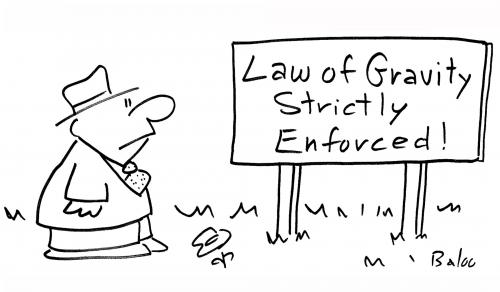
law-of-gravity-enforced

Laws as a bad metaphor: Who’s enforcing what on whom?

It has been a while since my last post on Rupert Sheldrake’s Science Delusion, or, as it is called in the United States version (published by none other than Deepak Chopra Books – no doubt a token of proper peer-reviewed science), Science Set Free. For new readers as well as for old ones who need to refresh their memories, previous installations in the series are found here, here, and here. Without further ado, let me get started on an evaluation of the fourth dogma ascribed to science: “The laws of nature are fixed”. As in previous posts, evaluating this dogma (and whether it is one to begin with) will occasion a few short excursions in the philosophy and history of science. But this time we are also led, finally, to confront Sheldrake’s own key thesis, namely his theory of “morphic resonance”. Read on if you’re still curious.

(more…)

Platonic orientalism – new webinar lecture

One of the most central concepts in Wouter Hanegraaff’s book of last year, Esotericism and the Academy (Cambridge UP), is “Platonic Orientalism”. The revival of this specific understanding of platonism during the renaissance has had enormous influence on the formation of “Western esotericism”, according to Hanegraaff, and in particular by supplying a characteristic trait: the “ancient wisdom” narrative. If you want to learn more about this fascinating topic, do check out the new BPH webinar with Hanegraaff, where he explains the revival of Platonic orientalism, its place in the theological debates of the early apologetic church fathers, and the wider polemical context of late-classical paganism. Some more background about the main characters involved (Plethon, Ficino, Pico) is also provided on the BPH’s own blog.

The esoteric in modern art

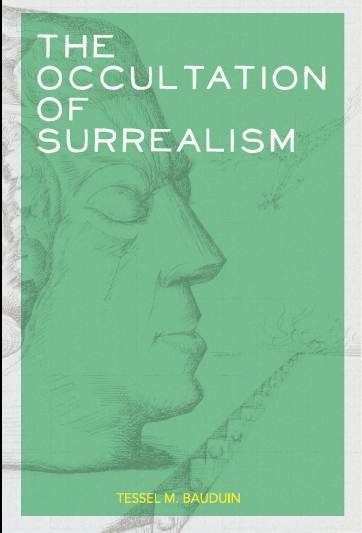
Bauduin occultation of surrealismOver the last few years, there appears to have been an increased interest, at least from academics and curators, in the relationship between esotericism and art. A couple of my colleagues have spent considerable research time investigating this relation, and I want to use this post to recommend their work. This seems particularly relevant given certain recent publications, which I will get to in a second.

(more…)

Correspondences journal – deadline fast approaching!

As previously mentioned, a new online journal for the academic study of esotericism was launched recently, with the very fitting name Correspondences. If you are a scholar working on esoteric topics, whether you are already established, aspiring, a student, or new to this particular field, and if you happen to have a manuscript that is more or less ready, don’t forget to finish it and have it submitted to the Correspondences editors before February 28! The deadline for the first issue is fast approaching. Please find the call for papers here.

Published in: on February 17, 2013 at 7:16 pm  Leave a Comment  
Tags: ,

A webinar on John Dee and video tour of the BPH

As readers of Heterodoxology will know, the Bibliotheca Philosophica Hermetica in Amsterdam hosts a webinar series on aspects of Western esotericism in collaboration with lecturers at the UvA. The latest lecture was published last week: This time Peter Forshaw talks about our old favourite John Dee, focusing on his Monas Hieroglyphica. Check it out below!

(more…)

There’s a new doctor in town

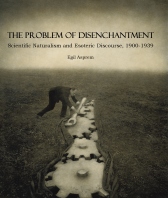
On February 5, 2013, I was initiated into the higher mysteries of Academia, after publicly defending my dissertation entitled “The Problem of Disenchantment: Scientific Naturalism and Esoteric Discourse, 1900-1939”. Here’s a recollection of the ceremony in images.

Before it all began

Before it all began

(more…)

Kabbalah and Modernity – more than red strings and pop queens

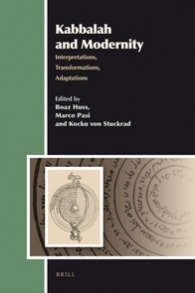
Kabbalah and ModernityI have made a habit out of making the pre-print versions of some of my book reviews available here at Heterodoxology. I was recently reminded of one that I had completely forgotten about: a review of the excellent volume Kabbalah and Modernity: Interpretations, Transformations, Adaptations (Brill, 2010). It is edited by three good colleagues of mine (Marco Pasi, Boaz Huss, and Kocku von Stuckrad), and features contributions by many other friends and acquaintances, but hopefully my review is not too biased. Moreover, symptomatic of the extreme delay in academic publishing, I should say that this review was written in 2010, and only appeared in print last year. The review was published in Magic, Ritual, and Witchcraft (summer 2012).

(more…)

Scientific delusions, or delusions about science? (Part three: muddled conservations)

In the previous post on Sheldrake’s Science Delusion I discussed the first two dogma, concerning the “mechanical philosophy” and its challenges, and the question of whether matter is conscious. As we saw there, Sheldrake comes out as a sort of modern-day vitalist (even though he claims to be an organicist I think his anti-materialism is actually more radical, placing him in the vitalist camp), and a mild supporter of panpsychism. In the present installment we shall look at the third dogma, where Sheldrake takes on a central conceptions of physics: that the matter and energy of the universe is constant, and subjected to laws of conservation and conversion.

(more…)

Sarah Veale has done an exquisite job on the recently released website of NSEA (Network for the Study of Esotericism in Antiquity). The network itself, as you can read more about in Sarah’s post at Invocatio and at the website itself, is organised on the initiative of Dr. Dylan Burns, and is another thematic network of the European Society for the Study of Western Esotericism. Now that NSEA is up and running, with an excellent online resource database, the ESSWE suddenly has a special-interest network for both of the two historical periods that have most often been neglected by historians of esotericism: antiquity and the present day.

Published in: on January 16, 2013 at 2:59 pm  Leave a Comment  
Tags: , , , ,

Faking it

Bad science is normal. Outright fabrication and fraud is luckily less normal, but much more wide-spread than it ought to be. Results may be fabricated entirely to support desired conclusions; conversely, inconvenient results may be challenged by fabricated doubt – whether the fabricators are payed by tobacconists fearing the consequences of cancer research, or oil companies afraid of climate taxes and infrastructural changes. The result is false knowledge and fabricated ignorance – both serious threats to a complex global risk society that needs decisions to be made on the best possible foundation.

While industrial interests and funding structures in the sciences are no doubt accountable for much bad science, they are far from the only reasons. There is of course the personal factor; but even the inevitable moralizing discourse on frauds – the black sheep of the academic flock, who act on egoistic intentions, manipulating colleagues, friends, students to their benefit with a lack of conscience that borders on the psychopathic – is ultimately unconvincing. Especially considering that bad science is normal, while psychopathy is not.

(more…)