One of the most central concepts in Wouter Hanegraaff’s book of last year, Esotericism and the Academy (Cambridge UP), is “Platonic Orientalism”. The revival of this specific understanding of platonism during the renaissance has had enormous influence on the formation of “Western esotericism”, according to Hanegraaff, and in particular by supplying a characteristic trait: the “ancient wisdom” narrative. If you want to learn more about this fascinating topic, do check out the new BPH webinar with Hanegraaff, where he explains the revival of Platonic orientalism, its place in the theological debates of the early apologetic church fathers, and the wider polemical context of late-classical paganism. Some more background about the main characters involved (Plethon, Ficino, Pico) is also provided on the BPH’s own blog.
The esoteric in modern art
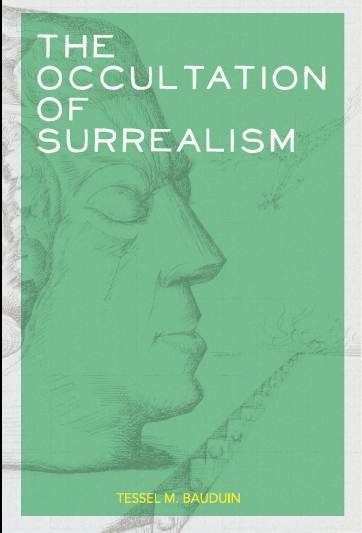 Over the last few years, there appears to have been an increased interest, at least from academics and curators, in the relationship between esotericism and art. A couple of my colleagues have spent considerable research time investigating this relation, and I want to use this post to recommend their work. This seems particularly relevant given certain recent publications, which I will get to in a second.

Correspondences journal – deadline fast approaching!
As previously mentioned, a new online journal for the academic study of esotericism was launched recently, with the very fitting name Correspondences. If you are a scholar working on esoteric topics, whether you are already established, aspiring, a student, or new to this particular field, and if you happen to have a manuscript that is more or less ready, don’t forget to finish it and have it submitted to the Correspondences editors before February 28! The deadline for the first issue is fast approaching. Please find the call for papers here.
A webinar on John Dee and video tour of the BPH
As readers of Heterodoxology will know, the Bibliotheca Philosophica Hermetica in Amsterdam hosts a webinar series on aspects of Western esotericism in collaboration with lecturers at the UvA. The latest lecture was published last week: This time Peter Forshaw talks about our old favourite John Dee, focusing on his Monas Hieroglyphica. Check it out below!
There’s a new doctor in town
On February 5, 2013, I was initiated into the higher mysteries of Academia, after publicly defending my dissertation entitled “The Problem of Disenchantment: Scientific Naturalism and Esoteric Discourse, 1900-1939”. Here’s a recollection of the ceremony in images.
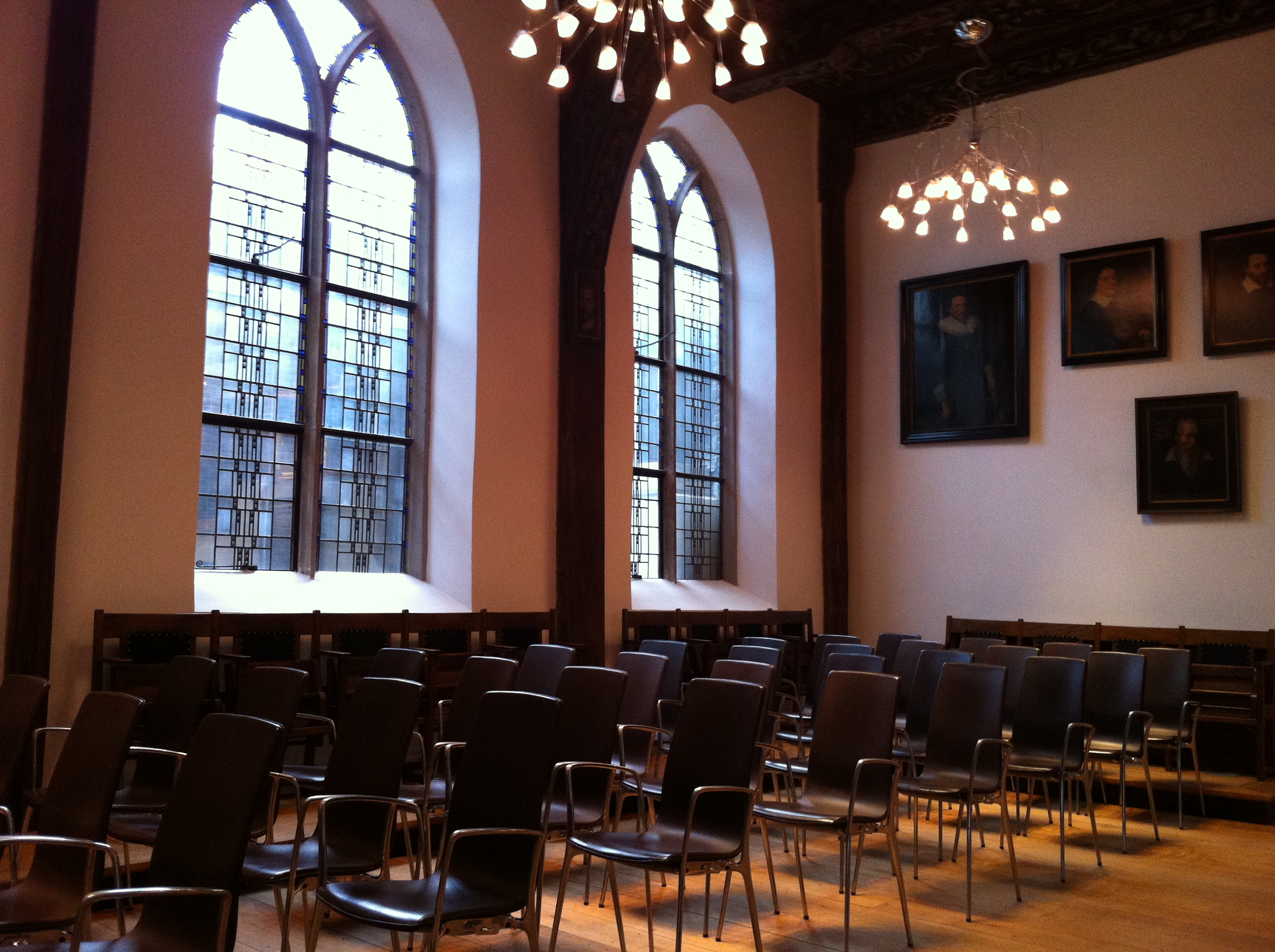
Before it all began
Kabbalah and Modernity – more than red strings and pop queens
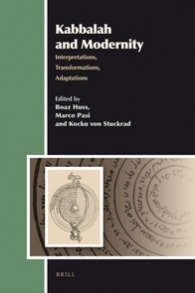 I have made a habit out of making the pre-print versions of some of my book reviews available here at Heterodoxology. I was recently reminded of one that I had completely forgotten about: a review of the excellent volume Kabbalah and Modernity: Interpretations, Transformations, Adaptations (Brill, 2010). It is edited by three good colleagues of mine (Marco Pasi, Boaz Huss, and Kocku von Stuckrad), and features contributions by many other friends and acquaintances, but hopefully my review is not too biased. Moreover, symptomatic of the extreme delay in academic publishing, I should say that this review was written in 2010, and only appeared in print last year. The review was published in Magic, Ritual, and Witchcraft (summer 2012).
Scientific delusions, or delusions about science? (Part three: muddled conservations)
In the previous post on Sheldrake’s Science Delusion I discussed the first two dogma, concerning the “mechanical philosophy” and its challenges, and the question of whether matter is conscious. As we saw there, Sheldrake comes out as a sort of modern-day vitalist (even though he claims to be an organicist I think his anti-materialism is actually more radical, placing him in the vitalist camp), and a mild supporter of panpsychism. In the present installment we shall look at the third dogma, where Sheldrake takes on a central conceptions of physics: that the matter and energy of the universe is constant, and subjected to laws of conservation and conversion.
Sarah Veale has done an exquisite job on the recently released website of NSEA (Network for the Study of Esotericism in Antiquity). The network itself, as you can read more about in Sarah’s post at Invocatio and at the website itself, is organised on the initiative of Dr. Dylan Burns, and is another thematic network of the European Society for the Study of Western Esotericism. Now that NSEA is up and running, with an excellent online resource database, the ESSWE suddenly has a special-interest network for both of the two historical periods that have most often been neglected by historians of esotericism: antiquity and the present day.
The Problem of Disenchantment – invitation to a PhD defence

Last autumn I completed my PhD dissertation, and now it’s time to defend it. The defence is public, and will take place on February 5, 2013, at 12:00 in the Agnietenkapel of the University of Amsterdam. The event is open to anyone (with a max. capacity of 90 people), and I will give a short public lecture on the topic of my research prior to defending it in front of the committee.
While I have given hints about my research in a number of posts here at Heterodoxology, I am now happy to present an official abstract of the final product – the dissertation itself:
Two conferences in June, 2013: CESNUR and ESSWE4
This June will be a busy conference month, as often is the case. This year, as last August (EASR and Contemporary Esotericism), Sweden is the place to be for big international events having to do with (“alternative”) religion and esotericism. Two big conferences are planned, and it is still possible to submit proposals for both of them – although not for very long. Below is the information you need.




 Heterodoxology