 I am preparing a set of upcoming guest lectures for a course on Contemporary Western Religiosity / New Religious Movements at NTNU, Trondheim. The last two of these concern, once again, science and esotericism. Briefly reading up on the literature for the course, however, gave me occasion to revisit the concept(s) of “scientism”, which have also been discussed earlier on this blog.
Types of scientism, types of religious doubt?

Esotericism, Religion and Science in Toronto – report on the IAHR (part 2)
Following up the last post, here comes a report on the esotericism panels at the IAHR in Toronto, organized by Marco Pasi. As you can read about below, they go straight into a central debate in the field of esotericism studies at the moment.
British magic after Crowley: review
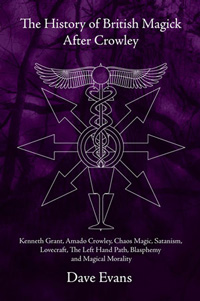 Although Aleister Crowley has become the icon of modern ritual magic and occultism, magic did not end with his death in 1947. While approximately a dozen books have been devoted to Crowley, surprisingly little has been written about his legacy in contemporary occultism. His impact on later currents such as contemporary witchcraft, Satanism, and various pagan groups has often been mentioned, but vast areas still remain uncharted, from Chaos Magic and cyber paganism to the recent history of the Ordo Templi Orientis, the Golden Dawn, and Crowley’s A\A\. The result is that a relatively broad range of contemporary western esotericism remains essentially unstudied. Below follows my review of Dave Evans’ contribution to this field of study, recently published in Aries 10.2. Hyperlinked for the occasion.
IAHR: Two panels
 As mentioned a couple of times before, I am going to Toronto next weekend to join the IAHR World Congress. It only happens every five years, and is a big happening in the fields of religious studies/Religionswissenschaft. This year there will also be a considerable presence of esotericism research. Marco Pasi, Cathy Gutierrez and Allison Coudert are hosting a large panel on “Western esotericism and its boundaries”, which, by systematically tackling the issue of the cultural and geographical boundaries of this concept will no doubt be an important occasion for this field of research. In addition there is the “Seduced by Science” panel, which I co-host with Tessel M. Bauduin. For anybody who’s interested, I attach more details about these two panels below.
Neurosurgical nonsense and the historical method
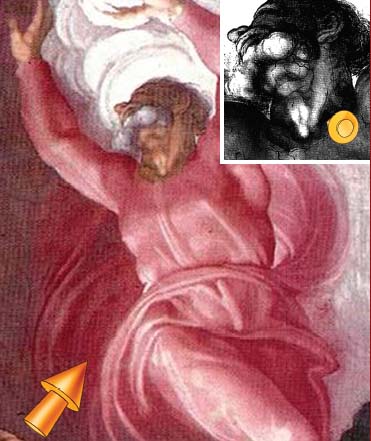
The brain of God, or just another Rorschach effect?
Some will have noticed the recent revival of speculation about the anatomical knowledge of Michelangelo. The blog at Scientific American reported on “findings” published in Neurosurgery this May. The authors, Tamago and Suk, claimed to reveal detailed anatomical sketches of a human brain and nervous system hidden in the “Separation of Light and Darkness” fresco in the Sixtine Chapel.
Rather exceptional, since these anatomical details were officially not known until 360 years later. The cutting-age anatomy of the day was that of Vesalius – very impressive, but hardly taught to modern-day neurosurgeons.
This unfortunate piece of Scientific American-backed high-publicity nonsense has been thoroughly debunked by Darin over at PACH (here, here, and here). In addition to clarifying some of the serious historical errors of fact in the SA piece, he has some very readable reflections on the utter disregard for the historical method, and the typical fallacies encountered (a little too often) when scientists try their hands at history of science. Go read it. (The PACH blog will now duly be added to the blog roll).
Alchemy, and how to write about it: ESSWE thesis workshop
 As advertised before on this blog, the European Society for the Study of Western Esotericism (ESSWE) has been organising a thesis workshop on alchemy. It took place in Amsterdam on June 24; here is a short report.
Marginality in The European Legacy
 There is a call for papers out for an upcoming special issue of The European Legacy, the official organ of the International Society for the Study of European Ideas (ISSEI). The issue will focus on the problem of marginality in European intellectual history – both posed as an empirical problem and as a problem for methodological and theoretical reflection in humanities disciplines which too often focus on “canons” (whether in art, literature, philosophy, religion, politics, or science). The topic should interest readers of this blog as much as it does me. The deadline is shortly after next vernal equinox, and the issue should be out shortly before the end of the world. More information (official CFP) below. (Thanks to Renaud Evrard for bringing this to my attention).
An etiology of angelic vision: Article on John Dee and Edward Kelly in Aries
 A couple of weeks ago I promised to take a closer look at one of the articles from the present issue of Aries. Now I finally found an occasion to look at James Justin Sledge’s contribution, “Between Loagaeth and Cosening: Towards an Etiology of John Dee’s Spirit Diaries”. As the title suggests, it’s about the Elizabethan philosopher, mathematician and magus John Dee’s famous conversations with angels, and his favourite skryer, Edward Kelly.
William McDougall and the Professionalization of Parapsychology
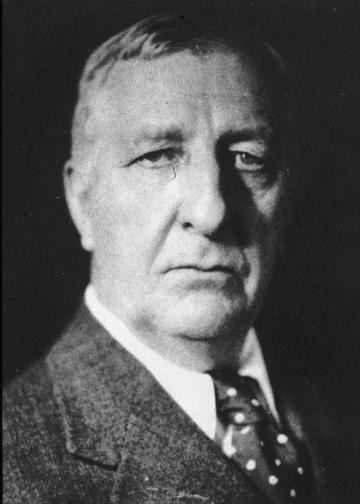
William McDougall (1871-1938): British psychologist, eugenical agitator, and professionalizer of parapsychology.
It is admittedly with some pride I notice that my very first history of science article has now been published. Since I am essentially an autodidact when it comes to history of science/science studies it was important for me to get through the peer review process of the Journal for the History of the Behavioral Sciences. Additionally, a scholarly discourse on psychical research and parapsychology has been developing on the pages of JHBS over the last few years, especially with articles by Heather Wolffram, Courtenay Grean Raia, and Sofie Lachapelle. I hope to make a modestly contribute to this developing discourse with “A nice arrangement of heterodoxies: William McDougall and the professionalization of psychical research”.
What’s “heterodoxy”, anyway?
It’s been a slow day at work. I might as well finish it off (and inaugurate the weekend) with sharing some simple reflections that are relevant for this blog: What the heck does “heterodox” mean, anyway?




 Heterodoxology