Giants’ Shoulders #29: Esoteric Science Special

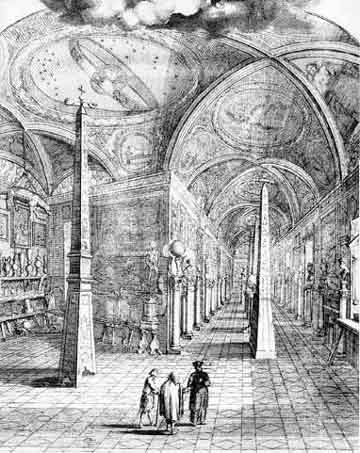
Athanasius Kircher's museum

Heterodoxology is proud to present the twenty-ninth installment of your favourite History of Science Blog Carnival: The Giant’s Shoulders. This time featuring an Esoteric Science Special, dedicated to all those esoteric pursuits of superior knowledge; a celebration of all strange, alien, and counterintuitive methods that have been attempted to dissect, read, or tame nature’s secrets, from renaissance natural philosophy to present-day Grand Unified Theories – from the cleverly inventive, through the hopelessly megalomaniac, to the simply misguided.

(more…)

Types of scientism, types of religious doubt?

I am preparing a set of upcoming guest lectures for a course on Contemporary Western Religiosity / New Religious Movements at NTNU, Trondheim. The last two of these concern, once again, science and esotericism. Briefly reading up on the literature for the course, however, gave me occasion to revisit the concept(s) of  “scientism”, which have also been discussed earlier on this blog.

(more…)

IAHR: Two panels

As mentioned a couple of times before, I am going to Toronto next weekend to join the IAHR World Congress. It only happens every five years, and is a big happening in the fields of religious studies/Religionswissenschaft. This year there will also be a considerable presence of esotericism research. Marco Pasi, Cathy Gutierrez and Allison Coudert are hosting a large panel on “Western esotericism and its boundaries”, which, by systematically tackling the issue of the cultural and geographical boundaries of this concept will no doubt be an important occasion for this field of research. In addition there is the “Seduced by Science” panel, which I co-host with Tessel M. Bauduin. For anybody who’s interested, I attach more details about these two panels below.

(more…)

Gnosticism in Antiquity: book presentation in a historical environment

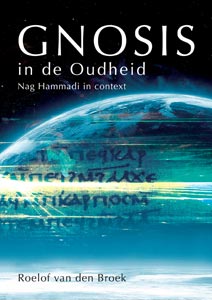
The blog has been silent for a while as I have been busy with finishing up classes and managing upcoming deadlines, among other things. To get going again, I’ll take this opportunity to write about a book presentation I went to last week. The specialist of gnosticism, hermetism and early Christianity, Roelof van den Broek, presented his latest book, Gnosis in de Oudheid: Nag Hammadi in Context in the magnificent Huis met de Hoofden (“house with the heads”) in Amsterdam. Below follows a few words about the book, the house, and the occasion.

(more…)

Frederic W. F. Myers and Gothic Psychology

F. W. H. Myers

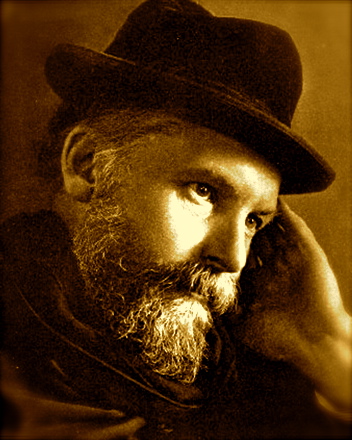
“Frederic Myers will always be remembered in psychology as the pioneer who staked out a vast tract of mental wilderness and planted the flag of genuine science upon it.” With these words the far more famous American psychologist and philosopher, William James, concluded his 1901 obituary of British classicist, amateur psychologist and founding member of the Society for Psychical Research (SPR), Frederic W. F. Myers (1843-1901). According to James, Myers’ work would set a new standard for the psychological sciences of the 20th century. More than a decade into the 21st, the name is mostly remembered by parapsychologists and historians with an interest  in the quirkier twists that psychology could have taken.

(more…)

“Alchemy: Between Science and Religion” – a workshop

On 24 June the European Society for the Study of Western Esotericism (ESSWE) will organize a one-day workshop on alchemy in Amsterdam. Some of the top experts of alchemy will present papers, including Professor Lawrence Principe of John Hopkins University. Although the main focus is on alchemy and its ambiguous relation to early modern natural philosophy and religion, the workshop is intended for graduate and postgraduate students working with themes related to esotericism more generally. Since it coincides with the board meeting of the ESSWE, virtually all the leading scholars of western esotericism will be present, including Antoine Faivre, Wouter Hanegraaff, Nicholas Goodrick-Clarke, Boaz Huss, Mark Sedgwick, and Gyorgy Szonyi. They will all happily engage in discussions with students and young researchers.

In short: A great opportunity if you’re doing an MA or PhD in this area, and can make it to Amsterdam in June. Another notable perk: It’s free. For more details, check out the announcement, which I also post in its entirety below.

(more…)

Naturalistic Spiritualisms

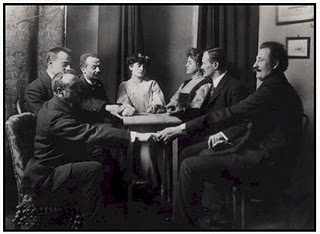
Spiritualism was a symptomatic cultural trend of the Victorian period. For decades mediums captivated the worker, the bourgeois, the nobleman, the socialist utopian, the Christian apostate, and people from virtually any and all professions, with their table rappings, levitating furniture, full-form materializations, and messages from beyond the grave. When a message was coming through, whether from the ghost of Benjamin Franklin, the archangel Gabriel, or the sitter’s aunt Nelly, the spirit medium provided the goods. But despite this caricature, which no doubt does full justice to much of the movement, spiritualism also became a heated battleground for deeply natural-philosophic questions: what is Nature, how does she operate, and what can we know about her? Where are the boundaries of the natural to be drawn?

(more…)

Some notes on scientism

The word “scientism” gets tossed around a lot in critical public debates about science’s place in society. Usually it is used derogatorily to dismiss a trend in using science which the user of the word doesn’t like. Used in this way, it is a rhetorical label without much analytic content. But it may also be turned into a useful category for analyzing historical data.

(more…)

New Age televangelists?

In the very first blog post I noted in passing that contemporary media are more than happy to place a spotlight on heterodox religion and heterodox science. Well – in the latest issue of the Norwegian journal for culture- and religious studies, Din, there is an interesting article on alternative spirituality and television. Anne Kalvig focuses on the presence and function of alternative religiosity in Norwegian television media. What’s particularly interesting about it is her analysis of the sister TV channels, TV Norge and Kanal FEM as basing themselves on an “alternative-theological agenda”.

(more…)

Published in: on March 10, 2010 at 11:32 am  Comments (4)  
Tags: , ,

Positivism and the Religion of Humanity

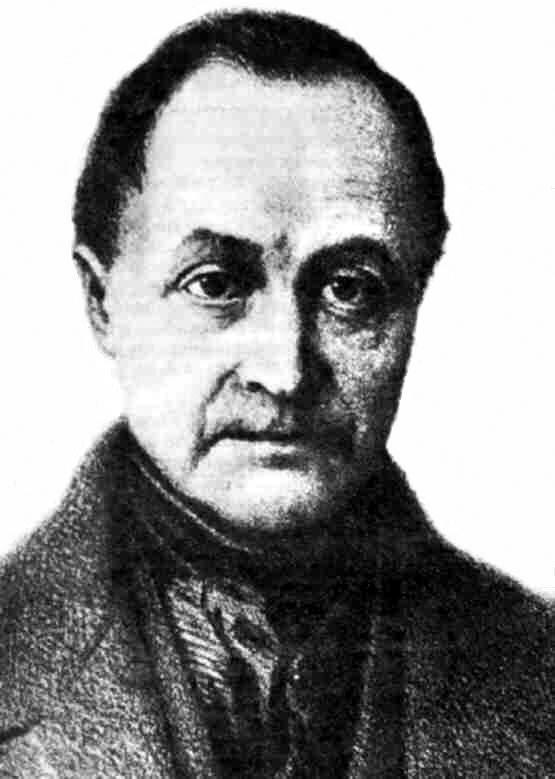
Auguste Comte (1798-1857) formulated some very influential ideas, and some ideas that were plain weird. The “father of sociology” argued for a full science of society, and invented the progressivist “Law of Three Stages”.  By the 1840s Comte had founded the highly influential philosophy and ideology of Positivism. What next? He founded a Church and proclaimed himself High Priest.

(more…)