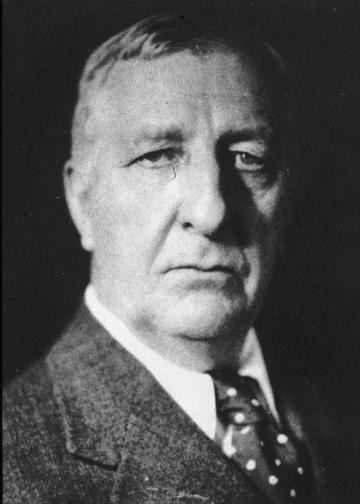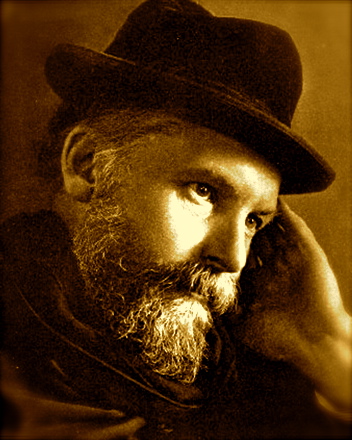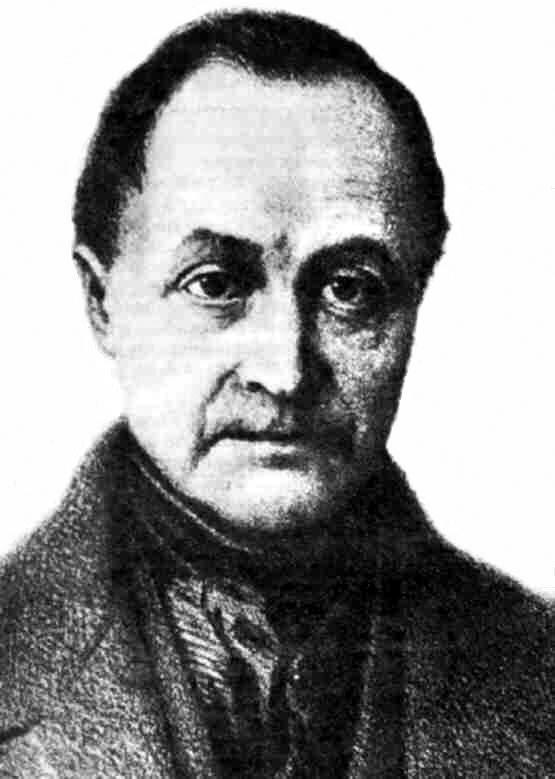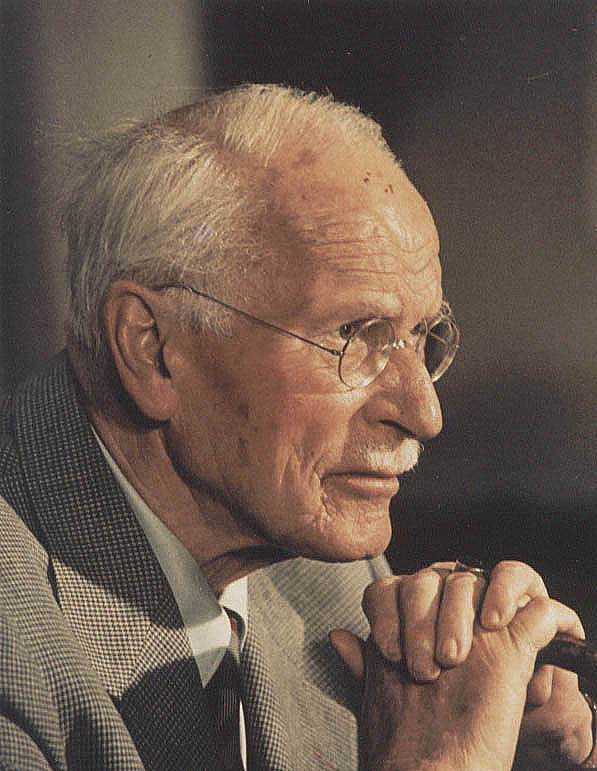
Last week in the MA course we are currently running on “Esotericism and modern science” (I’ve written about previous classes here, here, here, here and here) we talked about the encounter between two influential thinkers of very different impact: psychologist Carl Gustav Jung (1875-1961) and theoretical physicist Wolfgang Pauli (1900-1958). Two men who led at the surface very different careers; one a disciple of Freud and crown-prince of psychoanalysis, the other a student of Bohr and a co-creator of quantum mechanics. While Pauli gave name to the exclusion principle, Jung developed concepts of psychological archetypes and the collective unconscious, established his own school of “analytic psychology”, and arguably founded a charismatic cult of personality which still greatly influences new age religion, pagan spirituality and other occultural belief systems.
Frederic W. F. Myers and Gothic Psychology
“Frederic Myers will always be remembered in psychology as the pioneer who staked out a vast tract of mental wilderness and planted the flag of genuine science upon it.” With these words the far more famous American psychologist and philosopher, William James, concluded his 1901 obituary of British classicist, amateur psychologist and founding member of the Society for Psychical Research (SPR), Frederic W. F. Myers (1843-1901). According to James, Myers’ work would set a new standard for the psychological sciences of the 20th century. More than a decade into the 21st, the name is mostly remembered by parapsychologists and historians with an interest in the quirkier twists that psychology could have taken.
“Alchemy: Between Science and Religion” – a workshop
On 24 June the European Society for the Study of Western Esotericism (ESSWE) will organize a one-day workshop on alchemy in Amsterdam. Some of the top experts of alchemy will present papers, including Professor Lawrence Principe of John Hopkins University. Although the main focus is on alchemy and its ambiguous relation to early modern natural philosophy and religion, the workshop is intended for graduate and postgraduate students working with themes related to esotericism more generally. Since it coincides with the board meeting of the ESSWE, virtually all the leading scholars of western esotericism will be present, including Antoine Faivre, Wouter Hanegraaff, Nicholas Goodrick-Clarke, Boaz Huss, Mark Sedgwick, and Gyorgy Szonyi. They will all happily engage in discussions with students and young researchers.
In short: A great opportunity if you’re doing an MA or PhD in this area, and can make it to Amsterdam in June. Another notable perk: It’s free. For more details, check out the announcement, which I also post in its entirety below.
Naturalistic Spiritualisms
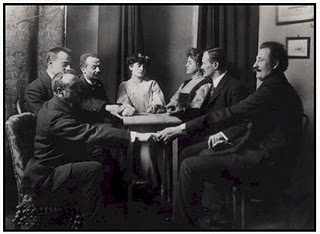
Spiritualism was a symptomatic cultural trend of the Victorian period. For decades mediums captivated the worker, the bourgeois, the nobleman, the socialist utopian, the Christian apostate, and people from virtually any and all professions, with their table rappings, levitating furniture, full-form materializations, and messages from beyond the grave. When a message was coming through, whether from the ghost of Benjamin Franklin, the archangel Gabriel, or the sitter’s aunt Nelly, the spirit medium provided the goods. But despite this caricature, which no doubt does full justice to much of the movement, spiritualism also became a heated battleground for deeply natural-philosophic questions: what is Nature, how does she operate, and what can we know about her? Where are the boundaries of the natural to be drawn?
Some notes on scientism
The word “scientism” gets tossed around a lot in critical public debates about science’s place in society. Usually it is used derogatorily to dismiss a trend in using science which the user of the word doesn’t like. Used in this way, it is a rhetorical label without much analytic content. But it may also be turned into a useful category for analyzing historical data.
Galison in Utrecht
I just got home from Peter Galison’s first talk as Visiting Professor at Utrecht University. As advertised in a previous post, the lecture focused on the role of secrecy in modern science. Actually, the focus was a lot broader than that. Galison’s interest was to trace what he saw as some significant historical changes in the legitimization and enforcement of secrecy in western societies, roughly from the early 20th century until today. A significant part of his argument was that scientific discourse became subjected to secretive forms of political regulation from WWII onwards.
Conference panel: Seduced by Science
This has already been disseminated through other channels, but I’ll post it here anyway. My colleague Tessel Bauduin and I are organizing a panel at the next Quinquennial World Congress of the International Association for the History of Religions (IAHR). It’s in Toronto, it’s in August, and the title of the panel is “Seduced by Science: The culture of religion and science in the early 20th century”. We’re accepting paper proposals until April 15. See below for the details.