Launching the ESSWE4 conference website

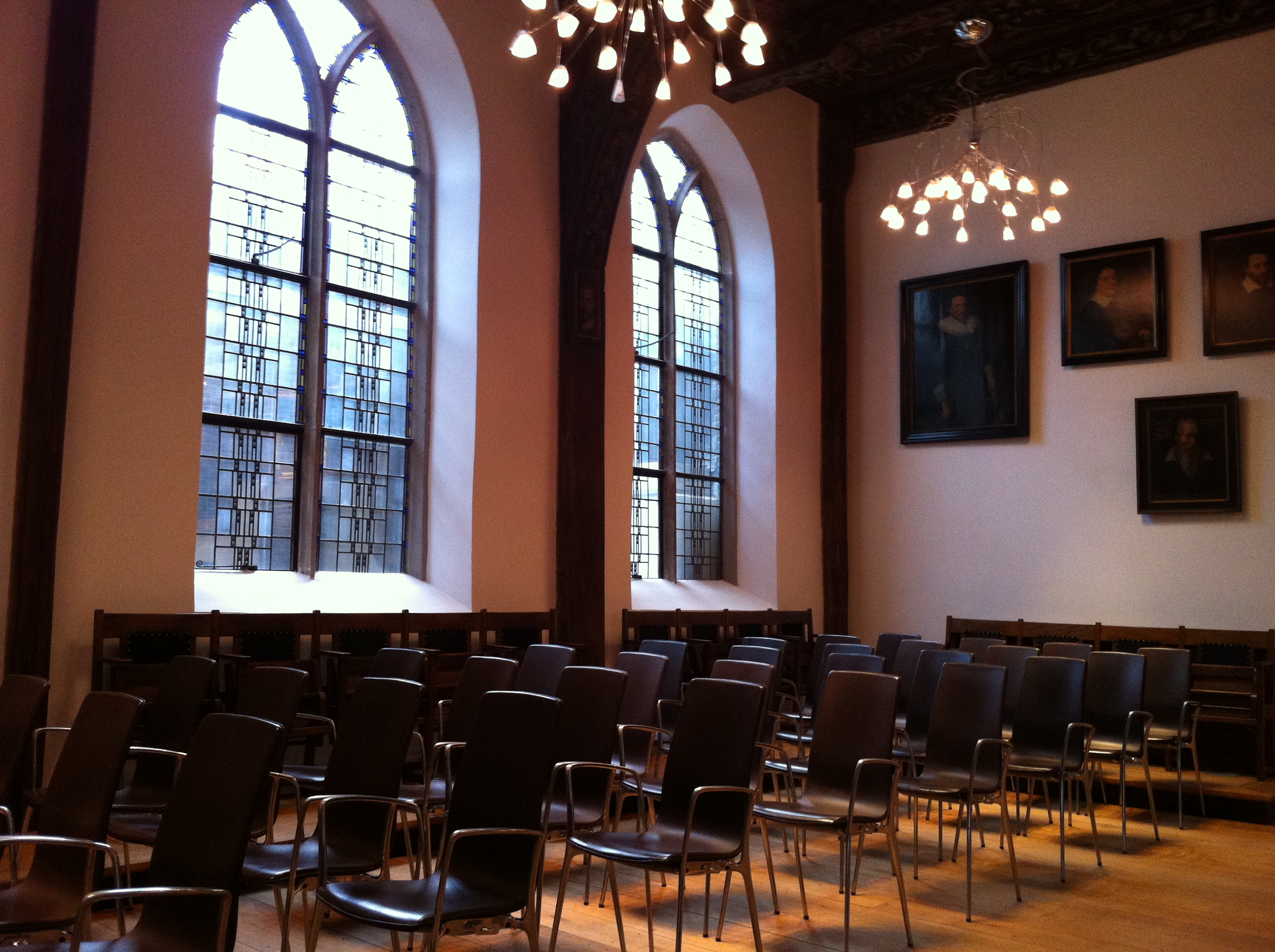
Esotericism and Health: ESSWE4 Conference, University of Gothenburg, Sweden, June 26-29, 2013.

Esotericism and Health: ESSWE4 Conference, University of Gothenburg, Sweden, June 26-29, 2013.

The fourth biannual international conference of the European Society for the Study of Western Esotericism (ESSWE) is fast approaching. It’s focused on “Esotericism and Health”, takes place in Gothenburg, Sweden, and – it’s just gotten its own website. The website has all you need to know, from online registration and conference accommodation, to a list of all accepted papers and speakers. Do check it out!

The ESSWE conferences are big events in the relatively small community of esotericism scholarship. With  about one hundred accepted papers, plus keynote lectures, roundtable events, and a secret surprise conference concert, this year’s is going to be a major one. So if you’re still on the fence about whether to go or not, take some time to browse the website. You might also want to keep track of developments, as more events might still be added to the programme. Taking on my ESSWE membership secretary hat, I should also remind you that there are substantial fee reductions for Full and Student members of the Society (application forms here)… In any case: Hope to see some readers in Gothenburg in June!

 

Scientific delusions, or delusions about science? (Part four: on natural laws and resonating habits)

law-of-gravity-enforced

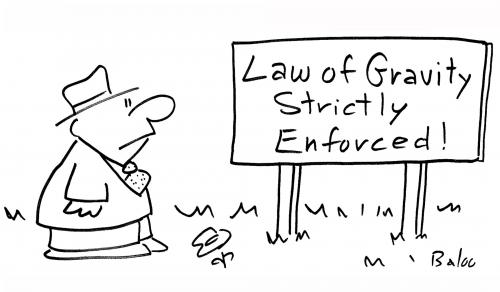
Laws as a bad metaphor: Who’s enforcing what on whom?

It has been a while since my last post on Rupert Sheldrake’s Science Delusion, or, as it is called in the United States version (published by none other than Deepak Chopra Books – no doubt a token of proper peer-reviewed science), Science Set Free. For new readers as well as for old ones who need to refresh their memories, previous installations in the series are found here, here, and here. Without further ado, let me get started on an evaluation of the fourth dogma ascribed to science: “The laws of nature are fixed”. As in previous posts, evaluating this dogma (and whether it is one to begin with) will occasion a few short excursions in the philosophy and history of science. But this time we are also led, finally, to confront Sheldrake’s own key thesis, namely his theory of “morphic resonance”. Read on if you’re still curious.

(more…)

There’s a new doctor in town

On February 5, 2013, I was initiated into the higher mysteries of Academia, after publicly defending my dissertation entitled “The Problem of Disenchantment: Scientific Naturalism and Esoteric Discourse, 1900-1939”. Here’s a recollection of the ceremony in images.

Before it all began

Before it all began

(more…)

Scientific delusions, or delusions about science? (Part three: muddled conservations)

In the previous post on Sheldrake’s Science Delusion I discussed the first two dogma, concerning the “mechanical philosophy” and its challenges, and the question of whether matter is conscious. As we saw there, Sheldrake comes out as a sort of modern-day vitalist (even though he claims to be an organicist I think his anti-materialism is actually more radical, placing him in the vitalist camp), and a mild supporter of panpsychism. In the present installment we shall look at the third dogma, where Sheldrake takes on a central conceptions of physics: that the matter and energy of the universe is constant, and subjected to laws of conservation and conversion.

(more…)

The Problem of Disenchantment – invitation to a PhD defence

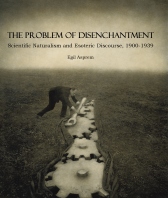
Problem of DIsenchantment cover

Last autumn I completed my PhD dissertation, and now it’s time to defend it. The defence is public, and will take place on February 5, 2013, at 12:00 in the Agnietenkapel of the University of Amsterdam. The event is open to anyone (with a max. capacity of 90 people), and I will give a short public lecture on the topic of my research prior to defending it in front of the committee.

While I have given hints about my research in a number of posts here at Heterodoxology, I am now happy to present an official abstract of the final product – the dissertation itself:

(more…)

Two conferences in June, 2013: CESNUR and ESSWE4

This June will be a busy conference month, as often is the case. This year, as last August (EASR and Contemporary Esotericism), Sweden is the place to be for big international events having to do with (“alternative”) religion and esotericism. Two big conferences are planned, and it is still possible to submit proposals for both of them – although not for very long. Below is the information you need.

(more…)

Published in: on January 7, 2013 at 1:16 pm  Leave a Comment  
Tags: ,

Scientific delusions, or delusions about science? (part two: Mechanism, life, and consciousness)

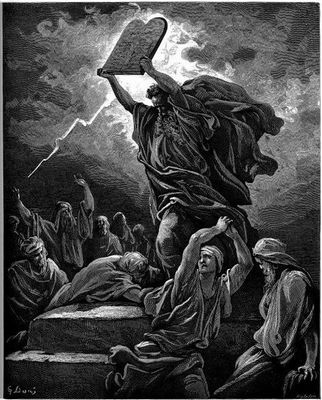
moses-and-the-ten-commandments

Do you know the meaning of dogmatic?

In the previous post on Rupert Sheldrake’s Science Delusion, I noted that the overall argument is based on a number of misrepresentations and stereotypes of what “science” is up to. The reader gets the impression of a monolithic structure, big-S-“Science”, now dominated by Ten Dogmas, like commandments cut in stone tablets. The history of science has, of course, been rather more complicated. Several of the dogmas do not even correspond well with the actual theories that are pursued today: at best they represent a pointed caricature,  at worst, they build on stereotypes crafted about a century or longer ago, that hardly have any relevance for contemporary scientific practice. Even to the extent that some of the “dogmas” refer to presently widespread theoretical or methodological conventions, holding these to be fixed dogmas obscures the fact that they are the outcome of long and sometimes complicated historical developments, both internal and external to science. In short: that is a widely held belief does not make a “dogma”; that is a commonly recommended way of pursuing a task does not make a dogmatic procedure.

As promised in the previous post, I will go through the ten dogmas one by one to demonstrate some of these points. In the present one we shall focus on the first two, which have to do with questions about mechanism, vitalism, scientific method, materialism, and the problems of defining “consciousness”. We will visit some historical backgrounds and parallels to Sheldrake’s criticism of science, and test his claim that science has closed certain questions “dogmatically”, by holding them up against the actual historical developments of some of the special sciences. Without further ado, here goes dogma #1:

(more…)

Scientific delusions, or delusions about science? Rupert Sheldrake’s ten dogmas (part one)

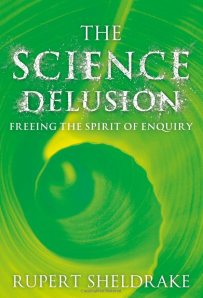
The Science Delusion (Coronet, 2012)

The Science Delusion (Coronet, 2012)

Rupert Sheldrake’s latest book, The Science Delusion (2012; Science Set Free in the US), has been given quite a lot of attention this year. Through its UK title, the book is clearly situated in the market as a sort of counter-manifesto to Dawkins’ God Delusion, or more precisely to the so-called “New Atheism’s” attempt to monopolize discourses on science for a wholly secular, atheistic, and anti-“magical” worldview. Sheldrake’s book has indeed worked as a sort of battle cry for a certain segment of the educated population left cold by creationists and new atheists alike, in fact a rather big group that wants to retain a worldview hospitable to irreducible mysteries without compromising their identity as modern, scientific-minded, rational people.

Sometimes, this rather precarious situation – of wanting science to be something else than what the scientists appear to make it – triggers a form of “ressentiment” against what is perceived as a dominating elite: “Materialist” elite scientists are exercising a “corrupting” influence across the fields of science. Had they not, everyone would have seen it our way. This sort of ressentiment is evident in much of Sheldrake’s polemic. There is much talk of “Science” as a gargantuan single entity, and what “it” dogmatically says and does. Perhaps that is what one would expect from someone who ditched a mainstream scientific career decades ago to pursue the elusive promises of parapsychology, while tirelessly expanding and pushing his own neo-vitalistic theories of “morphic resonance” and the “morphogenetic field” (rejected by his peers) in books and articles published for a wider and much more enthusiastic audience. His popular image as a persecuted visionary was greatly enhanced by the senior editor of Nature John Maddox, who foolishly entitled his review of Sheldrake’s A New Science of Life (1981)  “a book for burning?”. Commercially speaking, it was probably the best review Sheldrake could ever have hoped for.

(more…)

The discovery of esotericism in Italy in the 20th century – from the ContERN cyberproceedings

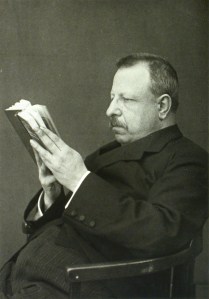
Benedetto Croce (1866-1952)

Benedetto Croce (1866-1952)

The latest addition to the cyberproceedings of August’s conference on contemporary esotericism is slightly different from previous installations in the series. It is not too contemporary, but it adds a discussion that should be quite interesting to anyone involved in the definition debate and the broader history of the academic study of esotericism. Francesco Baroni’s paper focuses on what one might call the  discovery of esotericism in Italy during the early-to-mid 20th century, by a generation of idealistically (in the philosophical sense) oriented scholars. Baroni shows how Benedetto Croce, Adolfo Omodeo and Piero Martinetti were all involved with uncovering esoteric aspects of e.g. Renaissance natural philosophy, early Christianity, and Western idealist philosophy, even while despising the “irrationalism” of modern and contemporary esoteric currents such as spiritualism and Theosophy.

(more…)

Towards Esotericism 3.0 – W. J. Hanegraaff reviews seven esotericism textbooks

If you’re new to the field of Western esotericism, planning to set up an introductory course somewhere, or wondering what to  read as a crash-course to the field, here is something you have to read first. The upcoming issue of the journal Religion (“iFirst” version available online now for subscribers) publishes a lengthy review article by Wouter J. Hanegraaff, a leading expert in the field, going through as many as seven introductory level textbooks that have been published over the last eight years (since 2004). More than just a review of introductions, the article engages critically with the theoretical and methodological challenges of the field, and takes a clear stand on where one should go from here. The result is an article that analyses the present situation of esotericism research, provides an overview of strengths and weaknesses in the basic literature that newcomers are likely to encounter, and offers a pronounced and programmatic statement for future researchers and teachers.

(more…)