Scientific delusions, or delusions about science? (part two: Mechanism, life, and consciousness)

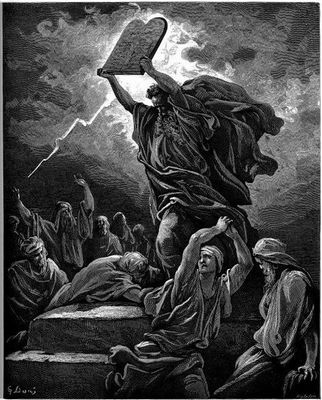
moses-and-the-ten-commandments

Do you know the meaning of dogmatic?

In the previous post on Rupert Sheldrake’s Science Delusion, I noted that the overall argument is based on a number of misrepresentations and stereotypes of what “science” is up to. The reader gets the impression of a monolithic structure, big-S-“Science”, now dominated by Ten Dogmas, like commandments cut in stone tablets. The history of science has, of course, been rather more complicated. Several of the dogmas do not even correspond well with the actual theories that are pursued today: at best they represent a pointed caricature,  at worst, they build on stereotypes crafted about a century or longer ago, that hardly have any relevance for contemporary scientific practice. Even to the extent that some of the “dogmas” refer to presently widespread theoretical or methodological conventions, holding these to be fixed dogmas obscures the fact that they are the outcome of long and sometimes complicated historical developments, both internal and external to science. In short: that is a widely held belief does not make a “dogma”; that is a commonly recommended way of pursuing a task does not make a dogmatic procedure.

As promised in the previous post, I will go through the ten dogmas one by one to demonstrate some of these points. In the present one we shall focus on the first two, which have to do with questions about mechanism, vitalism, scientific method, materialism, and the problems of defining “consciousness”. We will visit some historical backgrounds and parallels to Sheldrake’s criticism of science, and test his claim that science has closed certain questions “dogmatically”, by holding them up against the actual historical developments of some of the special sciences. Without further ado, here goes dogma #1:

(more…)

The discovery of esotericism in Italy in the 20th century – from the ContERN cyberproceedings

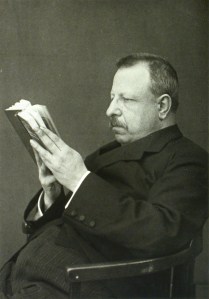
Benedetto Croce (1866-1952)

Benedetto Croce (1866-1952)

The latest addition to the cyberproceedings of August’s conference on contemporary esotericism is slightly different from previous installations in the series. It is not too contemporary, but it adds a discussion that should be quite interesting to anyone involved in the definition debate and the broader history of the academic study of esotericism. Francesco Baroni’s paper focuses on what one might call the  discovery of esotericism in Italy during the early-to-mid 20th century, by a generation of idealistically (in the philosophical sense) oriented scholars. Baroni shows how Benedetto Croce, Adolfo Omodeo and Piero Martinetti were all involved with uncovering esoteric aspects of e.g. Renaissance natural philosophy, early Christianity, and Western idealist philosophy, even while despising the “irrationalism” of modern and contemporary esoteric currents such as spiritualism and Theosophy.

(more…)

Michael Maier’s Atalanta Fugiens – a Webinar with Peter Forshaw

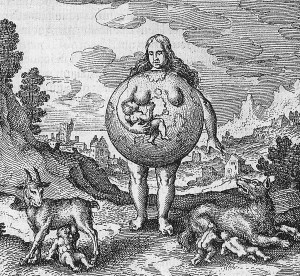
Atalanta_Fugiens_-_Emblem_2dEver wondered what those enigmatic emblems in Michael Maier’s Atalanta Fugiens (1617) are all about? Well, you could do much worse than watching  Peter Forshaw speak about it in the latest BPH webinar. Peter places Maier in the context of 16th and 17th century alchemy, emblematics, the Rosicrucian furore, early printing culture, and the broader political contexts of both continental Europe and England at the time. He also takes the time to go through a few of the 50 emblems in the book.

For the book itself, there is a transcription of an English translation of the original Latin available at the Levity website.

A tour of the BPH with its founder, Joost Ritman

In the spirit of its new policy of openness (“Hermetically open”), the Bibliotheca Philosophica Hermetica has posted a video on its YouTube channel that contains a 53-minute tour of the library’s collection, given by the founder Joost Ritman himself. This gives an excellent opportunity for non-Amsterdammers to have a peak at what the BPH looks like, and what the collection contains. But more than that, it gives an interesting insight into the mind of Ritman himself. As he guides online viewers through parts of his collection, we get to know quite a bit about how Ritman conceives of his collection, what it means to him, and what he has been trying to achieve with the library from the beginning. Worth checking out if you are curious about this legendary library and its founder.

“Correspondences” – Launching a new journal for esotericism research

The rumour already broke yesterday on Twitter and Facebook (a bit earlier than planned, I think), that a new journal is being launched: Correspondences: An Online Journal for the Academic Study of Western Esotericism.

This is an innovative initiative in several respects. By being all online and open access, it aims to provide “a wider forum of debate regarding issues and currents in Western esotericism than has previously been possible”. Furthermore, however, it also aims to mobilize a currently unused demographic potential in the study of esotericism:

Correspondences is committed to publishing work of a high academic standard as determined by a peer-review process, but does not require academic credentials as prerequisite for publication. Students and non-affiliated academics are encouraged to join established scholars in submitting insightful, well-researched articles that offer new ideas, positions, or information to the field.

In other words, it is a refreshing initiative that aims to be true to some of the most basic ideals of academic/scientific scholarship: that knowledge is available to everyone (thus must also be free), and that it is produced by a rigid application of “organized scepticism”, a communal, critical practice that is embodied by the peer-review process and otherwise blind to social, institutional, geographic, or political background. (Yes, I am echoing old Merton’s CUDOS here). In the the field of esotericism, I think these are very good norms to hold on to, and I am hopeful that this journal may establish itself as a nice and fresh competitor to already existing journals (e.g. Aries), catering to a somewhat different, expanded demographic, and allowing for a much more flexible and up-to-date exchange by being web-based, open, and free.

(more…)

W. J. Hanegraaff on Arguing with Angels

Wouter Hanegraaff has typed up a nice little review of my book, Arguing with Angels, over at his Creative Reading blog. He has many kind words, but I am first of all pleased that there are some very good observations about what I attempted to achieve in it: first to expel some common myths in the historiography of Dee reception, and secondly to highlight the “authenticity problem” struggled with in modern and contemporary ritual magic in general, and Enochian magic in particular. Wouter’s observations even point out wider connections that I did not explore explicitly in the book – namely that the authenticity dilemma finds similar responses in Western religious history more broadly, as prototypically expressed in the camps variously emphasising  scripture, tradition, or personal experience during and following the Christian Reformation. (Incidentally, I recently explored these themes in an article on (neo)shamanism that is still to appear in a Norwegian journal – that one, in turn, influenced by Wouter’s own work. The non-vicious, beneficent spirals  of academia.)

(more…)

More books for modern heterodoxologists

Inspired by my colleague Asbjørn Dyrendal’s recent spur of book blogging (i.e. this, this and this), I will further bring to the attention three recent collective volumes on themes that should be relevant to many readers of this blog. While some are more groundbreaking than others, they are all important contributions to their fields, namely: NRM studies, Satanism studies, and the academic study of Aleister Crowley.

(more…)

“Fernando Pessoa and Western esotericism”, a public lecture by Marco Pasi

Curious about the relationship between modern literature and Western esotericism? On December 7, my colleague Dr. Marco Pasi will be giving a public lecture in Amsterdam, on his ongoing research into Fernando Pessoa’s intricate but little understood engagement with esotericism. Marco has been working on this for some time, and co-organised (with Jerónimo Pizarro) an international and interdisciplinary workshop on the subject earlier this year. The upcoming Amsterdam lecture is open to the public, and entirely free of charge. For an abstract and more information, see below – or download this flyer.

(more…)

What’s the deal with Glastonbury?

Glastonbury Tor; or the island of Avalon emerging from a sea of mist?

Glastonbury in Somerset is known as a pilgrimage site for neopagans and adherents of various “alternative spiritualities” world wide. The mythology of the place is full of stories about Arthurian knights, primeval British Christians, druids, the lost tribes of Israel, healing wells, and the Holy Grail. Theories about secret connections between ancient monuments, and hidden correspondences or “lay lines” connecting features in the landscape of Glastonbury are easy to find.

What is the history of all this local myth? How did this small village become such a major centre of heterodox pilgrimage? What does the phenomenon of Glastonbury tell us about religion generally, and its British history specifically? These are among the questions that Hereward Tilton explores in an ongoing research project. He spoke about it at the Contemporary Esotericism conference in Stockholm this August, and the paper has now been made available online at the ContERN website.

Tilton explores the development of a lively folklore around Glastonbury, and explains its origins in the sociocultural and economic contexts of the middle ages, the impact of the reformation, and much later the rediscovery of Glastonbury by a generation of occultists at the end of the 19th century. In addition to many intriguing historical details, about which one can read more in the published paper, Tilton seeks to explore some concerns that are of broader interest. One of these is the intriguing confluence of British Israelism (the notion that the British people is in fact one of the lost tribes of Israel, and the British monarchs descend from king David) with esoterically oriented notions of prisca theologia (i.e. the notion of “primitive revelation” and ancient wisdom), and local myths at Glastonbury:

“While the origins of British Israelism proper can be traced to the early nineteenth century and writers such as John Wilson and Edward Hine, the relationship of their work to earlier post-Reformation narratives concerning the lost Semitic tribe of the British and the Druidic prisca theologia is clearly of central import to an understanding of the history of esotericism at Glastonbury. Of particular interest is the legend of Christ’s visit to Glastonbury, and his building of the first British church there, which as we may recall descended from on high like the New Jerusalem.”

Another intriguing aspect Tilton mentions, but unfortunately did not get to explore in any detail in the present paper, concerns the place of psychological factors in accounting for “esoteric” motifs. In particular, Tilton is interested in schizotypy and apophenia – both of which come to mind when one considers the associative, pattern-seeking, sometimes paranoid reading of signs and symbols in buildings, text, nature, and culture, so characteristic of esoteric material. Tilton connects them to Faivre’s old characteristics:

“The esoteric mindset as defined by Faivre corresponds in many particulars with what may be termed an ‘esoteric schizotypy’, in accordance with a contemporary psychiatric category encompassing a broad spectrum of personalities exhibiting schizotypal traits (e.g. visual and auditory hallucinations, paranoid or conspiratorial ideation, a tendency to distant associations); of particular significance in this regard is the phenomenon of ‘apophenia’, the discovery of meaningful patterns in apparently random data that we find exemplified in the creative interpretations of Glastonbury’s sacred landscape … . My purpose in this regard is not to psychopathologize esotericism, but rather to understand the interaction of dominant and deviant psychologies within those processes of marginalization that currently constitute a central historiographical concern of our field.”

It is interesting work, even if it is no doubt going to be controversial in certain circles. But there is already a lot of related research in the cognitive study of religion that might serve as a basis for further research along these lines. It was, for example, only a month ago that the journal Applied Cognitive Psychology published a study that found “religious” and “believers in the paranormal” to be more prone to apophenia (illusory face perception in this case) than “sceptics” and “non-believers”. Tom Rees recently blogged about this research at Epiphenom  (which, by the way, is an excellent resource for staying up to date on research that explores the relations between psychological,  sociological and cultural factors in accounting for the disparate phenomena we call “religion”). Studies exploring the relation of conspiracy belief and schizotypy are also not hard to come by (see e.g. this recent paper from Personality and Individual Differences). One should not exclude the possibility that research along similar lines might have a role to play in future theorising about esotericism as well. I for one certainly look forward to see what Tilton will do with these connections in the future.
Creative Commons License
This blog post by Egil Asprem was first published on Heterodoxology. It is licensed under a Creative Commons Attribution-ShareAlike 3.0 Unported License.
Towards Esotericism 3.0 – W. J. Hanegraaff reviews seven esotericism textbooks

If you’re new to the field of Western esotericism, planning to set up an introductory course somewhere, or wondering what to  read as a crash-course to the field, here is something you have to read first. The upcoming issue of the journal Religion (“iFirst” version available online now for subscribers) publishes a lengthy review article by Wouter J. Hanegraaff, a leading expert in the field, going through as many as seven introductory level textbooks that have been published over the last eight years (since 2004). More than just a review of introductions, the article engages critically with the theoretical and methodological challenges of the field, and takes a clear stand on where one should go from here. The result is an article that analyses the present situation of esotericism research, provides an overview of strengths and weaknesses in the basic literature that newcomers are likely to encounter, and offers a pronounced and programmatic statement for future researchers and teachers.

(more…)