William McDougall and the Professionalization of Parapsychology

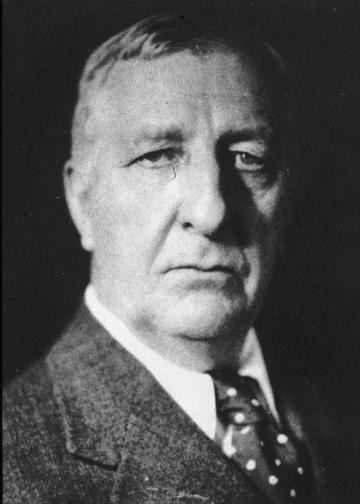
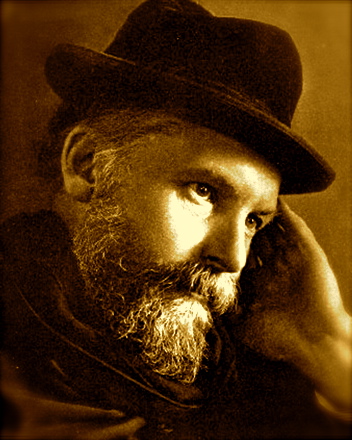
William McDougall (1871-1938): British psychologist, eugenical agitator, and professionalizer of parapsychology.

It is admittedly with some pride I notice that my very first history of science article has now been published. Since I am essentially an autodidact when it comes to history of science/science studies it was important for me to get through the peer review process of the Journal for the History of the Behavioral Sciences. Additionally, a scholarly discourse on psychical research and parapsychology has been developing on the pages of JHBS over the last few years, especially with articles by Heather Wolffram, Courtenay Grean Raia, and Sofie Lachapelle. I hope to make a modestly contribute to this developing discourse with “A nice arrangement of heterodoxies: William McDougall and the professionalization of psychical research”.

(more…)

Frederic W. F. Myers and Gothic Psychology

F. W. H. Myers

“Frederic Myers will always be remembered in psychology as the pioneer who staked out a vast tract of mental wilderness and planted the flag of genuine science upon it.” With these words the far more famous American psychologist and philosopher, William James, concluded his 1901 obituary of British classicist, amateur psychologist and founding member of the Society for Psychical Research (SPR), Frederic W. F. Myers (1843-1901). According to James, Myers’ work would set a new standard for the psychological sciences of the 20th century. More than a decade into the 21st, the name is mostly remembered by parapsychologists and historians with an interest  in the quirkier twists that psychology could have taken.

(more…)

“Alchemy: Between Science and Religion” – a workshop

On 24 June the European Society for the Study of Western Esotericism (ESSWE) will organize a one-day workshop on alchemy in Amsterdam. Some of the top experts of alchemy will present papers, including Professor Lawrence Principe of John Hopkins University. Although the main focus is on alchemy and its ambiguous relation to early modern natural philosophy and religion, the workshop is intended for graduate and postgraduate students working with themes related to esotericism more generally. Since it coincides with the board meeting of the ESSWE, virtually all the leading scholars of western esotericism will be present, including Antoine Faivre, Wouter Hanegraaff, Nicholas Goodrick-Clarke, Boaz Huss, Mark Sedgwick, and Gyorgy Szonyi. They will all happily engage in discussions with students and young researchers.

In short: A great opportunity if you’re doing an MA or PhD in this area, and can make it to Amsterdam in June. Another notable perk: It’s free. For more details, check out the announcement, which I also post in its entirety below.

(more…)

Naturalistic Spiritualisms

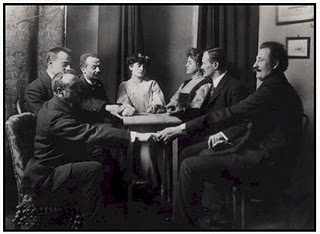
Spiritualism was a symptomatic cultural trend of the Victorian period. For decades mediums captivated the worker, the bourgeois, the nobleman, the socialist utopian, the Christian apostate, and people from virtually any and all professions, with their table rappings, levitating furniture, full-form materializations, and messages from beyond the grave. When a message was coming through, whether from the ghost of Benjamin Franklin, the archangel Gabriel, or the sitter’s aunt Nelly, the spirit medium provided the goods. But despite this caricature, which no doubt does full justice to much of the movement, spiritualism also became a heated battleground for deeply natural-philosophic questions: what is Nature, how does she operate, and what can we know about her? Where are the boundaries of the natural to be drawn?

(more…)

Goetia and Theurgy, magic black and white?

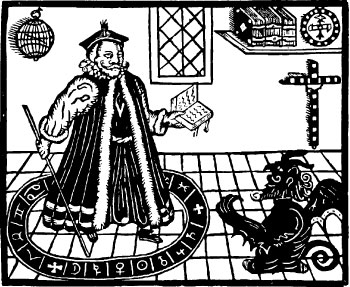
From Christopher Marlowe's Doctor Faustus

I was recently reminded of an article I was commissioned to write a long time ago. The topic is Goetia and modern western ritual magic. With the deadline approaching it is time to start brainstorming a bit. So be patient: rambling speech ahead!

(more…)

Magic in the desert – and more misplaced psychologisms

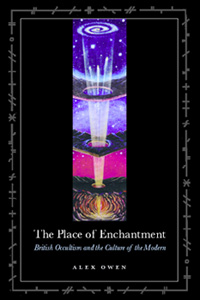
Aleister Crowley (1875-1947) is a hot name for heterodoxologists. He is also the most famous English occultist to have lived, his life having been told in about a dozen biographies. Today I taught a class on Crowley, magic, modernity and psychology, drawing on a chapter from Alex Owen’s book, The Place of Enchantment: British Occultism and the Culture of the Modern (2004).

(more…)

Published in: on March 18, 2010 at 10:36 pm  Comments (9)  
Tags: , , ,

New Age televangelists?

In the very first blog post I noted in passing that contemporary media are more than happy to place a spotlight on heterodox religion and heterodox science. Well – in the latest issue of the Norwegian journal for culture- and religious studies, Din, there is an interesting article on alternative spirituality and television. Anne Kalvig focuses on the presence and function of alternative religiosity in Norwegian television media. What’s particularly interesting about it is her analysis of the sister TV channels, TV Norge and Kanal FEM as basing themselves on an “alternative-theological agenda”.

(more…)

Published in: on March 10, 2010 at 11:32 am  Comments (4)  
Tags: , ,

Writing Mesmeria – comments on psycho-centrism

I’m not all done with Mesmerism yet. Besides providing a series of historical episodes that are interesting in their own right, Mesmerism also provokes some difficulties of interpretation for scholars who write about it. I’d like to draw attention to a methodological problem which arise in parts of the secondary literature.

(more…)

The Divided Lands of Mesmeria

As part of a course I am teaching together with Dr. Marco Pasi we have spent the last three weeks discussing the significance of Mesmerism and animal magnetism in the overlapping contexts of Enlightenment science and esotericism. It is an interesting topic in many respects. For starters, the status of Mesmerism is not uncontroversial in esotericism studies. Why?

(more…)