In the previous post I shared my enthusiasm about possible applications for digital, quantitative tools for studying historical data. Focusing on how Google’s N-gram Viewer may lead to interesting findings in the field of esotericism, both in order to gauge trends in popularity or spread of a certain term (such as “esotericism” itself) in various languages, and in order to research philological matters. In the latter case, one of the preliminary results seemed much more like a breakthrough at first sight than it really appears to have been. In fact, now instead we have an illustration of a serious difficulty with this kind of research, which emphasises the necessity of the critically-minded, suspicious human scholar in the middle of all digital tools.
Quantitative heterodoxology
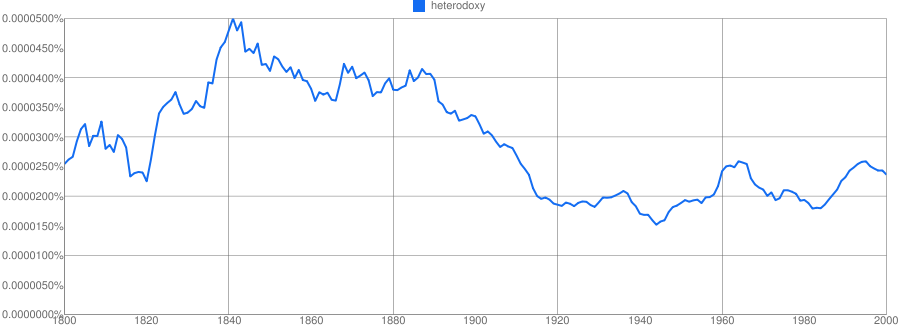 Last week Science published an article introducing the term “culturomics” – the quantitative study of cultural trends. By constructing a database out of the by now 15 million books that Google have digitized over the past years, a Harvard based research team led by Jean-Baptiste Michel have created a powerful searchable tool which makes it possible to create quantitative date for analysing cultural trends. As they state in the abstract:
We constructed a corpus of digitized texts containing about 4% of all books ever printed. Analysis of this corpus enables us to investigate cultural trends quantitatively. We survey the vast terrain of ‘culturomics,’ focusing on linguistic and cultural phenomena that were reflected in the English language between 1800 and 2000. We show how this approach can provide insights about fields as diverse as lexicography, the evolution of grammar, collective memory, the adoption of technology, the pursuit of fame, censorship, and historical epidemiology. Culturomics extends the boundaries of rigorous quantitative inquiry to a wide array of new phenomena spanning the social sciences and the humanities.
In short, this is a tool which has the potential to revolutionise research methods in a vast number of fields. The best part: Google Labs have made the tool (the Ngram viewer) publicly available. Before even starting reading the article I found myself thinking about a number of applications for my own research and field. Below follow some rough examples, and preliminary results which already seem to challenge established knowledge in the history of esotericism.

Giants’ Shoulders #29: Esoteric Science Special
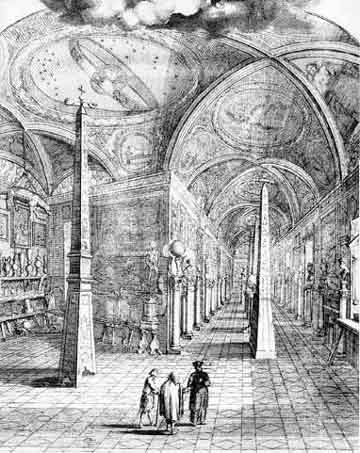
Athanasius Kircher's museum
Heterodoxology is proud to present the twenty-ninth installment of your favourite History of Science Blog Carnival: The Giant’s Shoulders. This time featuring an Esoteric Science Special, dedicated to all those esoteric pursuits of superior knowledge; a celebration of all strange, alien, and counterintuitive methods that have been attempted to dissect, read, or tame nature’s secrets, from renaissance natural philosophy to present-day Grand Unified Theories – from the cleverly inventive, through the hopelessly megalomaniac, to the simply misguided.
“Emic historiography of science” – a possibly useful term
 It’s been silent here for a while. My excuse is a lot of traveling and lecturing over the past month. In trying to get back to blogging, I’ll give some thoughts on a concept I’ve been thinking about in connection with one of the lectures in Trondheim a few weeks ago: “emic historiography of science”.
Esotericism, Religion and Science in Toronto – report on the IAHR (part 2)
Following up the last post, here comes a report on the esotericism panels at the IAHR in Toronto, organized by Marco Pasi. As you can read about below, they go straight into a central debate in the field of esotericism studies at the moment.
Esotericism, Religion and Science in Toronto – report on the IAHR (part 1)
 As shamelessly advertised on this blog before, there were several esotericism-and-science-related things happening at this years quinquennial world congress of the International Association of the History of Religion (IAHR) in Toronto. There was a three-session panel on esotericism, organized by my colleague Marco Pasi, and a two-session panel on science, religion and the arts in the early 20th century (under the title Seduced by Science), organised by my colleague Tessel Bauduin and myself. Having had more than a week now to overcome what was only a minor jet lag after all, it is time for a short report on events.
Heteropraxis – a new blog on esotericism
 Under a familiarly sounding name, but with a twist worthy of notice, a new blog focusing on the academic study of Western esotericism has just been released. That doesn’t happen too often, so I found it worthy of a nod.
Occult Trajectories towards Science: the conclusion of a course
Last semester I taught an MA course on the troubled relationship between science and esotericism in the post-Enlightenment era. I blogged about some of the classes earlier, particularly on mesmerism (here and here), spiritualism, the interactions with the ideological superstructures of naturalism and positivism (here and here), Frederic Myers, William James and psychical research, and the encounter between Jung and Pauli. It’s a diverse subject, which can go in very different directions. To show a bit of the diversity, I will briefly present some of the papers that were submitted. (more…)
British magic after Crowley: review
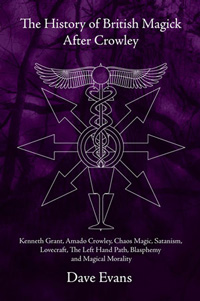 Although Aleister Crowley has become the icon of modern ritual magic and occultism, magic did not end with his death in 1947. While approximately a dozen books have been devoted to Crowley, surprisingly little has been written about his legacy in contemporary occultism. His impact on later currents such as contemporary witchcraft, Satanism, and various pagan groups has often been mentioned, but vast areas still remain uncharted, from Chaos Magic and cyber paganism to the recent history of the Ordo Templi Orientis, the Golden Dawn, and Crowley’s A\A\. The result is that a relatively broad range of contemporary western esotericism remains essentially unstudied. Below follows my review of Dave Evans’ contribution to this field of study, recently published in Aries 10.2. Hyperlinked for the occasion.
IAHR: Two panels
 As mentioned a couple of times before, I am going to Toronto next weekend to join the IAHR World Congress. It only happens every five years, and is a big happening in the fields of religious studies/Religionswissenschaft. This year there will also be a considerable presence of esotericism research. Marco Pasi, Cathy Gutierrez and Allison Coudert are hosting a large panel on “Western esotericism and its boundaries”, which, by systematically tackling the issue of the cultural and geographical boundaries of this concept will no doubt be an important occasion for this field of research. In addition there is the “Seduced by Science” panel, which I co-host with Tessel M. Bauduin. For anybody who’s interested, I attach more details about these two panels below.




 Heterodoxology