Occultism in Global Perspective – an anthropologist’s review

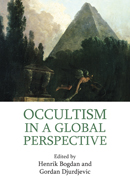
9781844657162-Case.inddGordan Djurdjevic just spread a link to a review of the book he edited with Henrik Bogdan on Occultism in Global Perspective. I found it interesting enough to mention here because the review was written by anthropologist Jack David Eller in Anthropology Review Database. This is a good sign for those of us who want to see more collaboration between esotericism scholars and anthropologists. Eller clearly agrees with this from the anthropological side, concluding that:

Occultism in a Global Perspective is a book of profound significance for anthropologists, despite the fact that none of its contributors are anthropologists. Indeed, other than the Comaroff’s work on “occult economies” (which does not take ‘the occult’ particularly seriously), anthropologists have paid fairly little attention to occultism, which is strange and unfortunate. These essays illustrate that occultism is a widely practiced congeries of ideas and rituals, and occultism clearly raises issues of syncretism, globalization, and the porosity if not inadequacy of standard categories like ‘religion.’ Hopefully this collection will inspire more research and theorizing on occultism, esotericism, and such modern forms of vernacular religion, psychology, and social change.

Kennet Granholm and I made a parallel argument for our Contemporary Esotericism volume, which included a call to esotericism scholars taking anthropology more seriously.

Read the whole review of Occultism in Global Perspective here.

Book review editor of Correspondences

As was just announced at the Correspondences website, the journal has a new book review editor. It’s me. As is well known, I’ve been enthusiastic about this new journal from the start. Taking on a more active role in developing it further is going to be a great pleasure. I hope to build a strong review section that fully exploits the speed in online publication and the open-access format. We can publish reviews of the very latest literature, and we can make this available to a large population that goes beyond those who happen to be employed at privileged institutions with subscriptions to the existing journals. For book reviews, this is a very attractive feature. I think that authors, publishers, students, researchers and independent readers will all appreciate this fact. So keep an eye on this, but give me a few issues to get it going!

Oh, and I should add: if you are an author or a publisher looking to get a book reviewed, you may email me at egil.asprem@correspondencesjournal.com. Review copies can be sent to my office address: Egil Asprem, Department of Religious Studies, Humanities and Social Sciences Building, University of California Santa Barbara, CA 93106-3130, USA.

If you are a student or otherwise have been working on a book review that you would like to see published, I’d love to hear from you as well. We are very interested in considering independent initiatives like that. Just drop me an email.

By the way: I hear issue 2.1 is soon ready. Remember to consider article submissions for 2.2! There will be an official call for submissions later, but here’s an extra early reminder. Have a look at the first issue, 1.1, for an idea.

Published in: on January 16, 2014 at 8:48 pm  Comments (5)  
Tags: , ,

Looking through the Occult – talks available as podcasts

Voices through the ether

Voices through the ether

Last November I took part in an interesting interdisciplinary conference at the Humboldt in Berlin, on “Looking through the Occult: Instrumentation, Esotericism, and Epistemology“. It moved in the landscape of media studies, history of science and technology, religious studies, art history, and esotericism, and was organized by a scholarly network interested in what they call “nonhegemonic knowledge”:

(more…)

Transhuman Visions – Heterodoxology goes to Silicon Valley

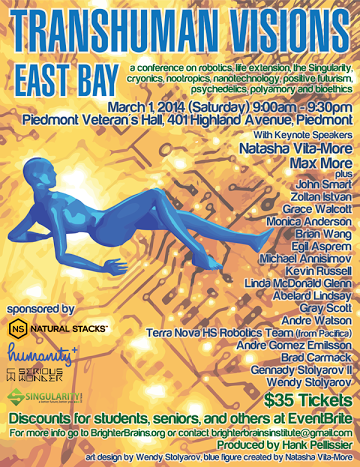
I haven’t been long in the vicinity of high tech’s ground zero, but here it is: my occasional work on transhumanism is getting a new spin. It appears I’m scheduled to speak at a transhumanist conference in the East Bay – with such profiles as Max More and Natasha Vita-More giving keynotes. The headline teaser promises a spectacular circus of speakers:

Transhuman Visions poster

BRAIN-HACKING CHEMIST / POWERLIFTING CRYONICIST / PSYCHEDELIC PHILOSOPHER / IMMORTAL CARTOONIST / SINGULARITY PROPHET / POLYGAMIST / MORMON / AI REVOLUTIONARY / TRANSCENDENCE HYPOTHESIZER / SCANDINAVIAN OCCULTIST/ + Much Much More

Guess which one is me.

(more…)

Satan in the academy (again)

I ended 2013 with a retrospective on some personal favourites from the wealth of publications on esotericism last year. Of course there were many omissions, some of which I’ve payed tribute to on Twitter. Julian Strube’s (German) book on Vril is notable, and has attracted some attention in the German press lately. Also from Germany, Monika Neugebauer-Wölk’s massive collected volume on Aufklärung und Esoterik: Wege in die Moderne is a milestone that will take time to digest and assess (I admit that I forgot about this one because the prohibitive price has made it inaccessible to me until now). Then in the antiquities section, there’s the English edition of Roelof van den Broek’s book on Gnosticism, Gnostic Religion in Antiquity. And still there’s much more that could’ve been mentioned (such as this milestone of a source work: Andrew Weeks’ new translation of Böhme’s Aurora).

(more…)

2013 in review: Ten notable esotericism related publications

With only a few hours left of 2013, I feel relatively safe that no new earth-shattering breakthroughs in the field of esotericism will be published this year. With that certainty in mind, I want to share with you a list of my favourite esotericism related publications that have appeared this year. The list is obviously biased in many ways, and I am even going to be obnoxious enough to put some personal darlings on the list. Judge this as you may; in any case I think you will agree that 2013 has been a good year for the academic study of esotericism. So here goes, my personal highlights of 2013 – ordered by subjective level of excitement:

(more…)

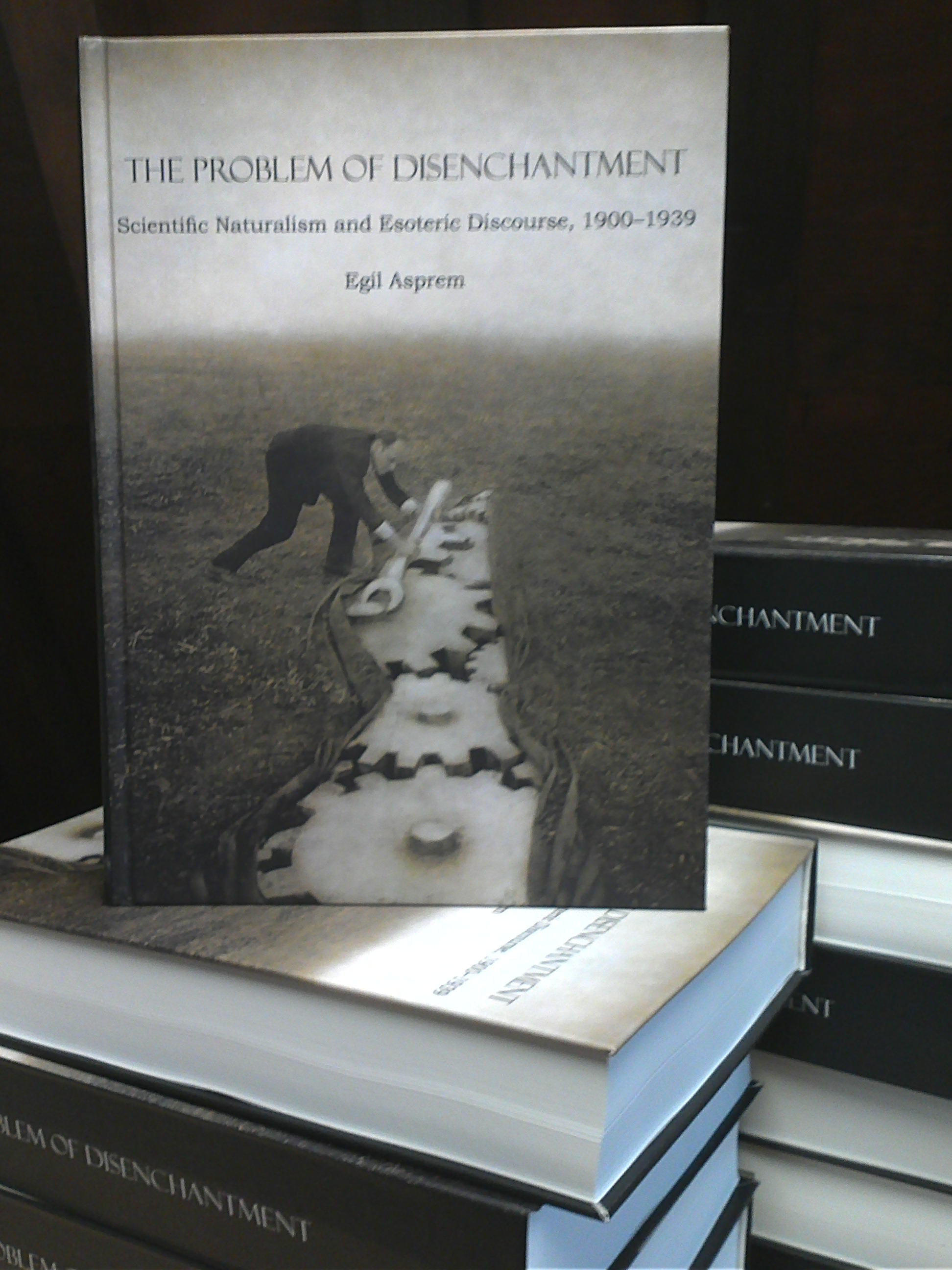
Gerardus van der Leeuw Award to The Problem of Disenchantment

"The Problem of Disenchantment" wins the first Gerardus van der Leeuw Award.

“The Problem of Disenchantment” wins the first Gerardus van der Leeuw Award.

My PhD dissertation, The Problem of Disenchantment, has just won its second award. The Dutch Association for the Study of Religion (NGG – Nederlands Genootschap voor Godsdienstwetenschap), one of the oldest such national organisations in the world, recently publicised the winner of the Gerardus van der Leeuw Award. It’s the first time this prize, named after the famous Dutch phenomenologist of religion (and founder of the NGG), is awarded, which makes it a great honour.

The prize will formally be awarded at next year’s NGG meeting, which in 2014 will coincide with the big conference of the European Association for the Study of Religion (EASR) at the University of Groningen. (That conference is by the way promising to be a very exciting, as well as busy, event. Among the keynote lecturers are Bruno Latour and Carlo Ginzburg. In the shadow of such celebrity names, I’ve now been asked to put together a panel on some central concepts of my dissertation – which comes in addition to a panel session I’m already arranging together with Markus Davidsen and Carole Cusack. So lots to do.)

Last summer, The Problem of Disenchantment won ESSWE’s PhD Thesis Prize, making this the second award.

New Antiquities (extended deadline for CfP)

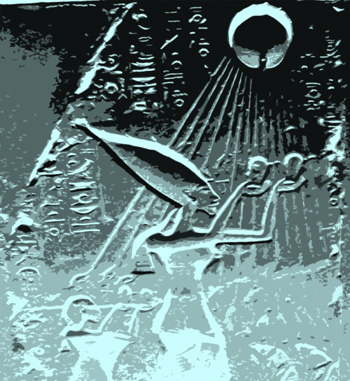
Akhenaten futuristicBack in September the call for papers for a very interesting workshop was released at the Ancient Esotericism blog (and elsewhere). “New Antiquities: Transformations of the Past in the New Age and Beyond”, put together by Almut-Barbara Renger (Freie Universität Berlin) and my good colleague Dylan Burns (Universität Leipzig), calls attention to the myriad uses and imaginings of antiquity in contemporary religious discourses.  A fascinating field that has received quite some attention from religious studies scholars interested in such things as the construction of tradition or mnemohistory. What’s particularly interesting about this workshop is that it aims to mobilize the antiquity specialists as well, who, a bit too often perhaps, have tended to avoid dealing with questions related to such modern “reception history”. It’s also an excellent platform for bridging the studies of ancient and contemporary esotericism.

The deadline for submitting paper proposals has now been extended to January 31. Below follows the description of the workshop, pasted from the extension notice:

(more…)

Religious Studies Project (RSP) launches research article: online self-presentations of the study of religion/s

The Religious Studies Project is closing up on its second birthday. It has been a strong presence for the academic study of religion online since launching in January 2012, having released about 60 podcast interviews,  numerous blog-style essays, book reviews, reports from conferences and so forth. Now the gentlemen Cotter and Robertson expand business in the direction of scholarly publishing, with the release of an online open-access research article. Knut Melvær and Michael Stausberg (both University of Bergen) have the honour of pioneering what could become a very exciting new development at RSP, with an article fittingly reporting on research into the online self-presentations of the study of religion/s.

(more…)

On choosing between alternative futures (and the solution to a luxury dilemma)

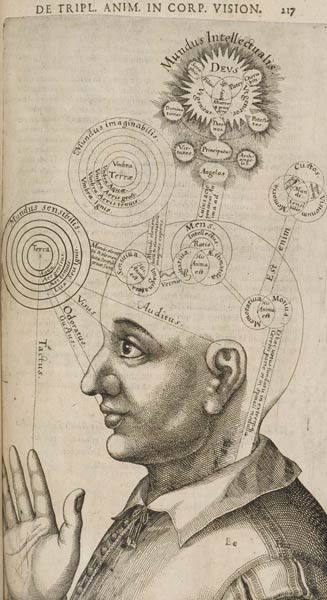
The future: "Occult Minds"

The future: “Occult Minds”

2013 has been a very busy year on my end, characterised by several relocations, the opening and closing of projects and the managing of very different possible futures. By the end of the year I will have worked on 5-6 different contracts (depending on how you count), in three different countries. Right now I am in the middle of the final great transition of the year, which is the main reason why not much new material is turning up here these days. Let me, at least, let you in on the developments.

(more…)