 There is a call for papers out for an upcoming special issue of The European Legacy, the official organ of the International Society for the Study of European Ideas (ISSEI). The issue will focus on the problem of marginality in European intellectual history – both posed as an empirical problem and as a problem for methodological and theoretical reflection in humanities disciplines which too often focus on “canons” (whether in art, literature, philosophy, religion, politics, or science). The topic should interest readers of this blog as much as it does me. The deadline is shortly after next vernal equinox, and the issue should be out shortly before the end of the world. More information (official CFP) below. (Thanks to Renaud Evrard for bringing this to my attention).
Marginality in The European Legacy

An etiology of angelic vision: Article on John Dee and Edward Kelly in Aries
 A couple of weeks ago I promised to take a closer look at one of the articles from the present issue of Aries. Now I finally found an occasion to look at James Justin Sledge’s contribution, “Between Loagaeth and Cosening: Towards an Etiology of John Dee’s Spirit Diaries”. As the title suggests, it’s about the Elizabethan philosopher, mathematician and magus John Dee’s famous conversations with angels, and his favourite skryer, Edward Kelly.
Gnosticism in Antiquity: book presentation in a historical environment
 The blog has been silent for a while as I have been busy with finishing up classes and managing upcoming deadlines, among other things. To get going again, I’ll take this opportunity to write about a book presentation I went to last week. The specialist of gnosticism, hermetism and early Christianity, Roelof van den Broek, presented his latest book, Gnosis in de Oudheid: Nag Hammadi in Context in the magnificent Huis met de Hoofden (“house with the heads”) in Amsterdam. Below follows a few words about the book, the house, and the occasion.
New articles from Aries
 The latest issue (10.1) of Aries: The Journal for the Study of Western Esotericism has recently been published. It contains four research articles, on John Dee’s angel conversations (J. J. Sledge), a little-known text by Martinès de Pasqually ( Dominique Clairembault), the curious link between engineering and spiritualism in the case of John Murray Spear (Joseph Laycock), and some aspect of Aleister Crowley’s sexual magic and the connection with some yogic traditions (Gordan Djurdjevic). Also seven book reviews. See below for bibliographic details and short reviews of the articles.
New Journal: Preternature
 This had escaped me, but it seems that the Journal for the Academic Study of Magic has been discontinued and replaced by a new project: Preternature: Critical and Historical Studies on the Preternatural. It sounds promising. The new journal is housed at Pennsylvania State University, but like its predecessor it’s published from Oxford, UK. They are currently accepting submissions and book review requests.
According to the website, the new journal is:
Physics, Psychology, and a 20th Century Esoteric Concept
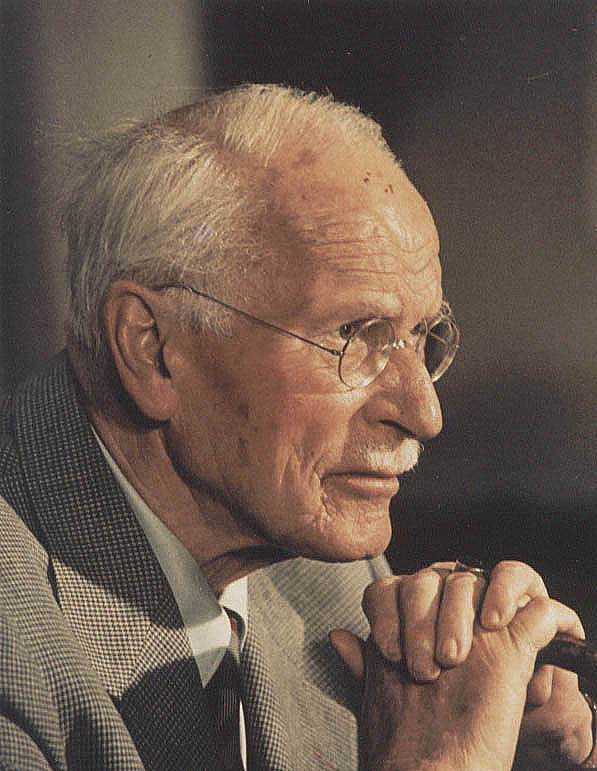
Carl Gustav Jung
Last week in the MA course we are currently running on “Esotericism and modern science” (I’ve written about previous classes here, here, here, here and here) we talked about the encounter between two influential thinkers of very different impact: psychologist Carl Gustav Jung (1875-1961) and theoretical physicist Wolfgang Pauli (1900-1958). Two men who led at the surface very different careers; one a disciple of Freud and crown-prince of psychoanalysis, the other a student of Bohr and a co-creator of quantum mechanics. While Pauli gave name to the exclusion principle, Jung developed concepts of psychological archetypes and the collective unconscious, established his own school of “analytic psychology”, and arguably founded a charismatic cult of personality which still greatly influences new age religion, pagan spirituality and other occultural belief systems.
William McDougall and the Professionalization of Parapsychology
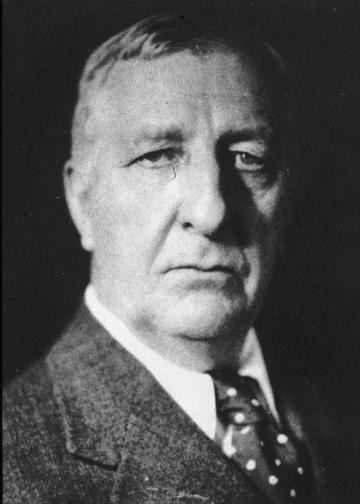
William McDougall (1871-1938): British psychologist, eugenical agitator, and professionalizer of parapsychology.
It is admittedly with some pride I notice that my very first history of science article has now been published. Since I am essentially an autodidact when it comes to history of science/science studies it was important for me to get through the peer review process of the Journal for the History of the Behavioral Sciences. Additionally, a scholarly discourse on psychical research and parapsychology has been developing on the pages of JHBS over the last few years, especially with articles by Heather Wolffram, Courtenay Grean Raia, and Sofie Lachapelle. I hope to make a modestly contribute to this developing discourse with “A nice arrangement of heterodoxies: William McDougall and the professionalization of psychical research”.
A bright day for freedom of speech in science

Courtesy of Richard Wiseman
After two years’ struggle, the British Chiropractic Association finally dropped their libel case against science writer Simon Singh. This has been a high profile case in the campaign (which has only just begun!) to reform the UK’s ridiculous libel laws. This is a great step in the right direction. For the man who’s occupied centre stage, the victory will still be a costly one. Singh has spent 200.000 pounds to defend himself in the case, which started after he wrote an article in the Guardian in 2008 criticising the (lacking) scientific basis for chiropractic treatments. Instead of meeting him with arguments and evidence, the BCA attempted to sue the criticism to silence.
Eugenics and Progressive Social Policies in Norway

Jon Alfred Mjøen explaining Mendel's law in Oslo, ca. 1920. (American Philosophical Society, Eugenic Archives)
While I was researching something completely different I came across a note in Science from 1917 that caught my attention. It informed readers about the launching of a state sponsored race hygiene program in Norway, under the leadership of biologist Jon Alfred Mjøen (1860-1939). After reading up a little I started wondering about the relation between Mjøen’s politically quite active laboratory, Vindern Biologisk Laboratorium (VBL; established 1906), and the heritage of Norway’s progressive legislation in areas such as healthcare, public loans, targeted taxation policies, etc, which are still deeply felt today. Could there be a discernible eugenic motivation behind them?
Frederic W. F. Myers and Gothic Psychology
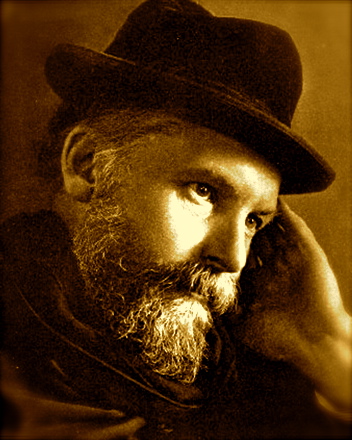
F. W. H. Myers
“Frederic Myers will always be remembered in psychology as the pioneer who staked out a vast tract of mental wilderness and planted the flag of genuine science upon it.” With these words the far more famous American psychologist and philosopher, William James, concluded his 1901 obituary of British classicist, amateur psychologist and founding member of the Society for Psychical Research (SPR), Frederic W. F. Myers (1843-1901). According to James, Myers’ work would set a new standard for the psychological sciences of the 20th century. More than a decade into the 21st, the name is mostly remembered by parapsychologists and historians with an interest in the quirkier twists that psychology could have taken.




 Heterodoxology