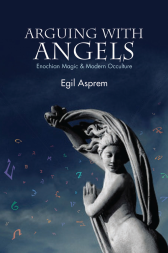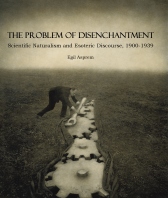
The Problem of Disenchantment – invitation to a PhD defence

Problem of DIsenchantment cover

Last autumn I completed my PhD dissertation, and now it’s time to defend it. The defence is public, and will take place on February 5, 2013, at 12:00 in the Agnietenkapel of the University of Amsterdam. The event is open to anyone (with a max. capacity of 90 people), and I will give a short public lecture on the topic of my research prior to defending it in front of the committee.

While I have given hints about my research in a number of posts here at Heterodoxology, I am now happy to present an official abstract of the final product – the dissertation itself:

(more…)

Scientific delusions, or delusions about science? (part two: Mechanism, life, and consciousness)

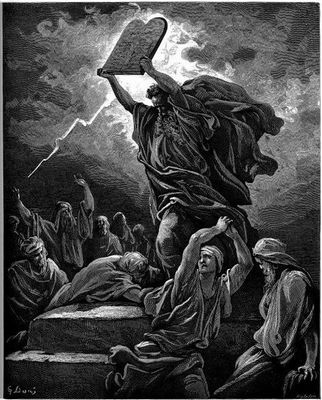
moses-and-the-ten-commandments

Do you know the meaning of dogmatic?

In the previous post on Rupert Sheldrake’s Science Delusion, I noted that the overall argument is based on a number of misrepresentations and stereotypes of what “science” is up to. The reader gets the impression of a monolithic structure, big-S-“Science”, now dominated by Ten Dogmas, like commandments cut in stone tablets. The history of science has, of course, been rather more complicated. Several of the dogmas do not even correspond well with the actual theories that are pursued today: at best they represent a pointed caricature,  at worst, they build on stereotypes crafted about a century or longer ago, that hardly have any relevance for contemporary scientific practice. Even to the extent that some of the “dogmas” refer to presently widespread theoretical or methodological conventions, holding these to be fixed dogmas obscures the fact that they are the outcome of long and sometimes complicated historical developments, both internal and external to science. In short: that is a widely held belief does not make a “dogma”; that is a commonly recommended way of pursuing a task does not make a dogmatic procedure.

As promised in the previous post, I will go through the ten dogmas one by one to demonstrate some of these points. In the present one we shall focus on the first two, which have to do with questions about mechanism, vitalism, scientific method, materialism, and the problems of defining “consciousness”. We will visit some historical backgrounds and parallels to Sheldrake’s criticism of science, and test his claim that science has closed certain questions “dogmatically”, by holding them up against the actual historical developments of some of the special sciences. Without further ado, here goes dogma #1:

(more…)

The discovery of esotericism in Italy in the 20th century – from the ContERN cyberproceedings

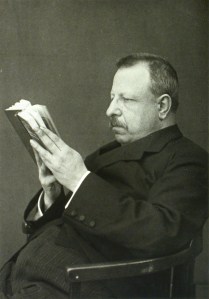
Benedetto Croce (1866-1952)

Benedetto Croce (1866-1952)

The latest addition to the cyberproceedings of August’s conference on contemporary esotericism is slightly different from previous installations in the series. It is not too contemporary, but it adds a discussion that should be quite interesting to anyone involved in the definition debate and the broader history of the academic study of esotericism. Francesco Baroni’s paper focuses on what one might call the  discovery of esotericism in Italy during the early-to-mid 20th century, by a generation of idealistically (in the philosophical sense) oriented scholars. Baroni shows how Benedetto Croce, Adolfo Omodeo and Piero Martinetti were all involved with uncovering esoteric aspects of e.g. Renaissance natural philosophy, early Christianity, and Western idealist philosophy, even while despising the “irrationalism” of modern and contemporary esoteric currents such as spiritualism and Theosophy.

(more…)

What’s the deal with Glastonbury?

Glastonbury Tor; or the island of Avalon emerging from a sea of mist?

Glastonbury in Somerset is known as a pilgrimage site for neopagans and adherents of various “alternative spiritualities” world wide. The mythology of the place is full of stories about Arthurian knights, primeval British Christians, druids, the lost tribes of Israel, healing wells, and the Holy Grail. Theories about secret connections between ancient monuments, and hidden correspondences or “lay lines” connecting features in the landscape of Glastonbury are easy to find.

What is the history of all this local myth? How did this small village become such a major centre of heterodox pilgrimage? What does the phenomenon of Glastonbury tell us about religion generally, and its British history specifically? These are among the questions that Hereward Tilton explores in an ongoing research project. He spoke about it at the Contemporary Esotericism conference in Stockholm this August, and the paper has now been made available online at the ContERN website.

Tilton explores the development of a lively folklore around Glastonbury, and explains its origins in the sociocultural and economic contexts of the middle ages, the impact of the reformation, and much later the rediscovery of Glastonbury by a generation of occultists at the end of the 19th century. In addition to many intriguing historical details, about which one can read more in the published paper, Tilton seeks to explore some concerns that are of broader interest. One of these is the intriguing confluence of British Israelism (the notion that the British people is in fact one of the lost tribes of Israel, and the British monarchs descend from king David) with esoterically oriented notions of prisca theologia (i.e. the notion of “primitive revelation” and ancient wisdom), and local myths at Glastonbury:

“While the origins of British Israelism proper can be traced to the early nineteenth century and writers such as John Wilson and Edward Hine, the relationship of their work to earlier post-Reformation narratives concerning the lost Semitic tribe of the British and the Druidic prisca theologia is clearly of central import to an understanding of the history of esotericism at Glastonbury. Of particular interest is the legend of Christ’s visit to Glastonbury, and his building of the first British church there, which as we may recall descended from on high like the New Jerusalem.”

Another intriguing aspect Tilton mentions, but unfortunately did not get to explore in any detail in the present paper, concerns the place of psychological factors in accounting for “esoteric” motifs. In particular, Tilton is interested in schizotypy and apophenia – both of which come to mind when one considers the associative, pattern-seeking, sometimes paranoid reading of signs and symbols in buildings, text, nature, and culture, so characteristic of esoteric material. Tilton connects them to Faivre’s old characteristics:

“The esoteric mindset as defined by Faivre corresponds in many particulars with what may be termed an ‘esoteric schizotypy’, in accordance with a contemporary psychiatric category encompassing a broad spectrum of personalities exhibiting schizotypal traits (e.g. visual and auditory hallucinations, paranoid or conspiratorial ideation, a tendency to distant associations); of particular significance in this regard is the phenomenon of ‘apophenia’, the discovery of meaningful patterns in apparently random data that we find exemplified in the creative interpretations of Glastonbury’s sacred landscape … . My purpose in this regard is not to psychopathologize esotericism, but rather to understand the interaction of dominant and deviant psychologies within those processes of marginalization that currently constitute a central historiographical concern of our field.”

It is interesting work, even if it is no doubt going to be controversial in certain circles. But there is already a lot of related research in the cognitive study of religion that might serve as a basis for further research along these lines. It was, for example, only a month ago that the journal Applied Cognitive Psychology published a study that found “religious” and “believers in the paranormal” to be more prone to apophenia (illusory face perception in this case) than “sceptics” and “non-believers”. Tom Rees recently blogged about this research at Epiphenom  (which, by the way, is an excellent resource for staying up to date on research that explores the relations between psychological,  sociological and cultural factors in accounting for the disparate phenomena we call “religion”). Studies exploring the relation of conspiracy belief and schizotypy are also not hard to come by (see e.g. this recent paper from Personality and Individual Differences). One should not exclude the possibility that research along similar lines might have a role to play in future theorising about esotericism as well. I for one certainly look forward to see what Tilton will do with these connections in the future.
Creative Commons License
This blog post by Egil Asprem was first published on Heterodoxology. It is licensed under a Creative Commons Attribution-ShareAlike 3.0 Unported License.

Towards Esotericism 3.0 – W. J. Hanegraaff reviews seven esotericism textbooks

If you’re new to the field of Western esotericism, planning to set up an introductory course somewhere, or wondering what to  read as a crash-course to the field, here is something you have to read first. The upcoming issue of the journal Religion (“iFirst” version available online now for subscribers) publishes a lengthy review article by Wouter J. Hanegraaff, a leading expert in the field, going through as many as seven introductory level textbooks that have been published over the last eight years (since 2004). More than just a review of introductions, the article engages critically with the theoretical and methodological challenges of the field, and takes a clear stand on where one should go from here. The result is an article that analyses the present situation of esotericism research, provides an overview of strengths and weaknesses in the basic literature that newcomers are likely to encounter, and offers a pronounced and programmatic statement for future researchers and teachers.

(more…)

Cyberproceedings from the Contemporary Esotericism conference

The ContERN website is slowly becoming active. Today we have published the first papers of the cyberproceedings from the Contemporary Esotericism conference in Stockholm this August. The first four papers to appear include two on Freemasonry and initiatic societies (J. Scott Kenney and Aslak Rostad), one on methodological issues in the study of contemporary Satanism (Jesper Aa. Petersen), and one on occulture in Brazilian pop music (Francisco Santos Silva). All of them should offer a lot of food for thought, so I suggest you go check them out: Is fraternalism a form of “moral elitism”? How do Masons experience the influence of joining the craft on the direction of their  lives? How are we to draw boundaries between different types of “Satanism“? And what does Aleister Crowley have to do with Brazilian pop music of the 1970s? Read and find out.

Hermetic feminism revisited

Yesterday I recommended Joyce Pijnenburg’s excellent discussion of Cornelius Agrippa and the Hermetic/Platonic/Kabbalistic influence on Renaissance feminism. Today, Sarah Veale of Invocatio added some reflections on what the ancient hermetic sources actually have to say about women. The argument is that the Hermetica had to be read rather selectively for Agrippa to find support for his proto-feminist project. In other words: here, as elsewhere, we must clearly separate the Hermetica from the hermeticists of the Renaissance. This point, of course, is always valid when we are dealing with reception, particularly in the case of normative projects in religion or philosophy. It’s little use  reading the gospels alone if one wants to  find out what various Christian denominations of today actually preach. And it’s foolish to expect contemporary ethicists who (sometimes) identify as neo-Aristotelians (say, Martha Nussbaum) to buy every detail of Aristotle’s doctrines of the soul, or indeed his views on women.

At any rate – nice to see a discussion taking shape online on esoterica and feminism, which is generally a very little studied topic.

A violent turn in 2012 apocalypticism

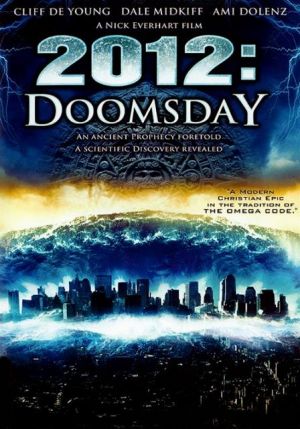
2012: Doomsday (2008) – another forgettable film in a cultural imaginary that is closing in on its final doom.

Finally it has happened: the first report of a 2012-apocalypse movement turning violent. The so-called “2012 phenomenon”, an occultural apocalyptic mythology with roots in the psychedelic gnosis of Terrence McKenna, the New Age prophesies of José Argüelles, and creative fringe-archaeological interpretations of the Maya “Long Count” calendar, has for the most part been oriented towards peaceful prophecies of a “global change in consciousness” or a “massive awakening”. But with countless improvisations on the theme by UFO-logists, conspiracy theorists, survivalists, and other denizens of the  darker segments of occulture, grimmer visions are hardly difficult to come by. Often enough, the boundaries between “positive”  expectations of global consciousness change (or the messianic arrival of friendly ETs) and the “negative” expectation of polar shifts, massive geological destruction, or the final enslavement of humanity by evil aliens, is not that easy to draw. What happens if the promised change for the better does not occur? What are the strategies of rationalizing such an (after all, realistically anticipated) theodicy? Could it be that the evil aliens are already here, and always were, working  in secret with the Illuminati, the Freemasons, the Bilderbergers and the world’s shadow governments to thwart the promised salvation?

(more…)

More esotericism at the Religious Studies Project: reflections on discursive (and other) methodologies

“Esotericism” – strange shapes and sights.

Just a couple of days after the Religious Studies Project posted a podcast interview with Wouter Hanegraaff on the academic study of esotericism, there is a follow-up in the form of a short-length essay, debating the possibilities and challenges of esotericism research. Its author, Damon Lycourinos, a current PhD candidate at the University of Edinburgh,  brings up a number of concerns – related to questions of European cultural identities (e.g. “reason” vs. “faith”), “the West”, definitional problems related to emic self-designations and typological constructs, etc.

(more…)

Wouter Hanegraaff was interviewed by the Religious Studies Project in Stockholm this August, on the topic of what the field “Western esotericism” is all about and where it is currently going. Since Sarah already did a good job (re)-introducing it at Invocatio, I’m simply going to reblog her post here. Do check it out – it’s a crash-course introduction to what the academic study of esotericism is about, by a/the major authority in the field.

Published in: on October 23, 2012 at 7:52 am  Comments (4)  
Tags: ,