What’s the deal with Glastonbury?

Glastonbury Tor; or the island of Avalon emerging from a sea of mist?

Glastonbury in Somerset is known as a pilgrimage site for neopagans and adherents of various “alternative spiritualities” world wide. The mythology of the place is full of stories about Arthurian knights, primeval British Christians, druids, the lost tribes of Israel, healing wells, and the Holy Grail. Theories about secret connections between ancient monuments, and hidden correspondences or “lay lines” connecting features in the landscape of Glastonbury are easy to find.

What is the history of all this local myth? How did this small village become such a major centre of heterodox pilgrimage? What does the phenomenon of Glastonbury tell us about religion generally, and its British history specifically? These are among the questions that Hereward Tilton explores in an ongoing research project. He spoke about it at the Contemporary Esotericism conference in Stockholm this August, and the paper has now been made available online at the ContERN website.

Tilton explores the development of a lively folklore around Glastonbury, and explains its origins in the sociocultural and economic contexts of the middle ages, the impact of the reformation, and much later the rediscovery of Glastonbury by a generation of occultists at the end of the 19th century. In addition to many intriguing historical details, about which one can read more in the published paper, Tilton seeks to explore some concerns that are of broader interest. One of these is the intriguing confluence of British Israelism (the notion that the British people is in fact one of the lost tribes of Israel, and the British monarchs descend from king David) with esoterically oriented notions of prisca theologia (i.e. the notion of “primitive revelation” and ancient wisdom), and local myths at Glastonbury:

“While the origins of British Israelism proper can be traced to the early nineteenth century and writers such as John Wilson and Edward Hine, the relationship of their work to earlier post-Reformation narratives concerning the lost Semitic tribe of the British and the Druidic prisca theologia is clearly of central import to an understanding of the history of esotericism at Glastonbury. Of particular interest is the legend of Christ’s visit to Glastonbury, and his building of the first British church there, which as we may recall descended from on high like the New Jerusalem.”

Another intriguing aspect Tilton mentions, but unfortunately did not get to explore in any detail in the present paper, concerns the place of psychological factors in accounting for “esoteric” motifs. In particular, Tilton is interested in schizotypy and apophenia – both of which come to mind when one considers the associative, pattern-seeking, sometimes paranoid reading of signs and symbols in buildings, text, nature, and culture, so characteristic of esoteric material. Tilton connects them to Faivre’s old characteristics:

“The esoteric mindset as defined by Faivre corresponds in many particulars with what may be termed an ‘esoteric schizotypy’, in accordance with a contemporary psychiatric category encompassing a broad spectrum of personalities exhibiting schizotypal traits (e.g. visual and auditory hallucinations, paranoid or conspiratorial ideation, a tendency to distant associations); of particular significance in this regard is the phenomenon of ‘apophenia’, the discovery of meaningful patterns in apparently random data that we find exemplified in the creative interpretations of Glastonbury’s sacred landscape … . My purpose in this regard is not to psychopathologize esotericism, but rather to understand the interaction of dominant and deviant psychologies within those processes of marginalization that currently constitute a central historiographical concern of our field.”

It is interesting work, even if it is no doubt going to be controversial in certain circles. But there is already a lot of related research in the cognitive study of religion that might serve as a basis for further research along these lines. It was, for example, only a month ago that the journal Applied Cognitive Psychology published a study that found “religious” and “believers in the paranormal” to be more prone to apophenia (illusory face perception in this case) than “sceptics” and “non-believers”. Tom Rees recently blogged about this research at Epiphenom  (which, by the way, is an excellent resource for staying up to date on research that explores the relations between psychological,  sociological and cultural factors in accounting for the disparate phenomena we call “religion”). Studies exploring the relation of conspiracy belief and schizotypy are also not hard to come by (see e.g. this recent paper from Personality and Individual Differences). One should not exclude the possibility that research along similar lines might have a role to play in future theorising about esotericism as well. I for one certainly look forward to see what Tilton will do with these connections in the future.
Creative Commons License
This blog post by Egil Asprem was first published on Heterodoxology. It is licensed under a Creative Commons Attribution-ShareAlike 3.0 Unported License.

Towards Esotericism 3.0 – W. J. Hanegraaff reviews seven esotericism textbooks

If you’re new to the field of Western esotericism, planning to set up an introductory course somewhere, or wondering what to  read as a crash-course to the field, here is something you have to read first. The upcoming issue of the journal Religion (“iFirst” version available online now for subscribers) publishes a lengthy review article by Wouter J. Hanegraaff, a leading expert in the field, going through as many as seven introductory level textbooks that have been published over the last eight years (since 2004). More than just a review of introductions, the article engages critically with the theoretical and methodological challenges of the field, and takes a clear stand on where one should go from here. The result is an article that analyses the present situation of esotericism research, provides an overview of strengths and weaknesses in the basic literature that newcomers are likely to encounter, and offers a pronounced and programmatic statement for future researchers and teachers.

(more…)

Hermetic feminism revisited

Yesterday I recommended Joyce Pijnenburg’s excellent discussion of Cornelius Agrippa and the Hermetic/Platonic/Kabbalistic influence on Renaissance feminism. Today, Sarah Veale of Invocatio added some reflections on what the ancient hermetic sources actually have to say about women. The argument is that the Hermetica had to be read rather selectively for Agrippa to find support for his proto-feminist project. In other words: here, as elsewhere, we must clearly separate the Hermetica from the hermeticists of the Renaissance. This point, of course, is always valid when we are dealing with reception, particularly in the case of normative projects in religion or philosophy. It’s little use  reading the gospels alone if one wants to  find out what various Christian denominations of today actually preach. And it’s foolish to expect contemporary ethicists who (sometimes) identify as neo-Aristotelians (say, Martha Nussbaum) to buy every detail of Aristotle’s doctrines of the soul, or indeed his views on women.

At any rate – nice to see a discussion taking shape online on esoterica and feminism, which is generally a very little studied topic.

A violent turn in 2012 apocalypticism

2012: Doomsday (2008) – another forgettable film in a cultural imaginary that is closing in on its final doom.

Finally it has happened: the first report of a 2012-apocalypse movement turning violent. The so-called “2012 phenomenon”, an occultural apocalyptic mythology with roots in the psychedelic gnosis of Terrence McKenna, the New Age prophesies of José Argüelles, and creative fringe-archaeological interpretations of the Maya “Long Count” calendar, has for the most part been oriented towards peaceful prophecies of a “global change in consciousness” or a “massive awakening”. But with countless improvisations on the theme by UFO-logists, conspiracy theorists, survivalists, and other denizens of the  darker segments of occulture, grimmer visions are hardly difficult to come by. Often enough, the boundaries between “positive”  expectations of global consciousness change (or the messianic arrival of friendly ETs) and the “negative” expectation of polar shifts, massive geological destruction, or the final enslavement of humanity by evil aliens, is not that easy to draw. What happens if the promised change for the better does not occur? What are the strategies of rationalizing such an (after all, realistically anticipated) theodicy? Could it be that the evil aliens are already here, and always were, working  in secret with the Illuminati, the Freemasons, the Bilderbergers and the world’s shadow governments to thwart the promised salvation?

(more…)

Jesus was a … shaman (heterodox Christologies II)

Jesus the shaman

Jesus the shaman

Next up in what is quickly becoming a series on heterodox Christologies: Jesus was really a shaman. This claim was found in Norwegian media last week – more precisely in the Sami branch of the state channel NRK’s online news site. The (neo)shamanic healer Eirik Myrhaug went on record saying that he saw Jesus as “a great shaman”: “after all he was 40 days and 40 nights in the desert, and that’s a typical shamanic seance”.

This news item caught my attention because I have recently been working on an article on neoshamanism – or rather, on the genealogy and mythology of shamanism, as created by a motley crew of explorers, romantics, nationalists, psychedlelic gurus, anthropologists and historians since the 1600s – before it finally became a new religious movement in the 1960s. Myrhaug himself is of Sami descent, but his shamanic techniques appear to be derived from the anthropologist Michael Harner’s “core shamanism” – as is the case with the entire “revival” of shamanism in a Sami context. What struck me the most, however, was that Myrhaug’s shamanic interpretation of Jesus – which was heavily and predictably criticised by a Lutheran minister in the same news article – has a long history. “Jesus was a shaman” is in fact a stock element in the continuously expanding “universal shamanism” franchise.

(more…)

“Jesus was a mushroom” – Interview with John Allegro

In the last post I mentioned that Creative Reading has a post up on the biblical scholar John M. Allegro, who committed academic suicide in 1970 when he published a book arguing that Christianity had been a fertility cult with the  ingestion of psilocybin hallucinogenic mushrooms (fly agaric) as its central rite – the true “body of Christ”, as it were. That post has now been updated with a link to an interview with Allegro, conducted by two Dutch comedians for their satirical show, “Het Simplistisch Verbond” (the Simplistic Alliance), in 1976.

As Wouter points out in his blog post, the intention with the interview was no doubt to poke fun at what to any regular viewer comes across as a hilariously insane theory. Allegro swallows the bait whole and swims away with it. The interview is an intriguing insight into the scale of Allegro’s  theory of religion in general: religion has its origin in solar-phallic worship and entheogenic practices. An educational video for one of the theories of religion that is generally not taught in religious studies programmes. Perhaps for good reason. Watch it and find out why Jesus was a mushroom.

Coptic scholars are in a strange position compared to most other researchers of arcane and obscure corners of history: their field occasionally makes world-wide news headlines, especially when there is some text claiming something about a certain carpenter from Nazareth. Last week newspapers across the world announced that someone writing in  coptic on a piece of papyrus some time possibly in the 4th century had insinuated that the carpenter might have had a wife. Sensational, but well: it turns out the papyrus fragment is most likely not authentic. Read more about the arguments in this excellent post by Hugo Lundhaug and Alin Suciu. (For the record – this is the first time I reblog anything, so bear with me).

Alin Suciu's avatarAlin Suciu

First of all, it should be clearly stated that, although in the following lines we shall express our doubts concerning the authenticity of the so-called Gospel of Jesus’s Wife, our suggestions remain hypothetical until the ink of the document has been properly tested. Secondly, our analysis does not refer either to the figure of the historical Jesus, or to his marital status, which are beyond our field of expertise, but only to a literary fragment written in Coptic, whose identity is suspicious.

During the 10th International Congress of Coptic Studies, which took place September 17-22, 2012 in Rome, the Harvard Professor Karen L. King introduced to us a previously unknown Coptic papyrus fragment.

(SOURCE OF THE PHOTOGRAPH)

Her paper was delivered on Tuesday, September 18, from 7.00 o’clock P.M., in one of the rooms of the Patristic Institute ‘Augustinianum.’  We estimate that about…

View original post 1,476 more words

Religion and Scientific Change: The Case of the New Natural Theologies between the World Wars (2/2)

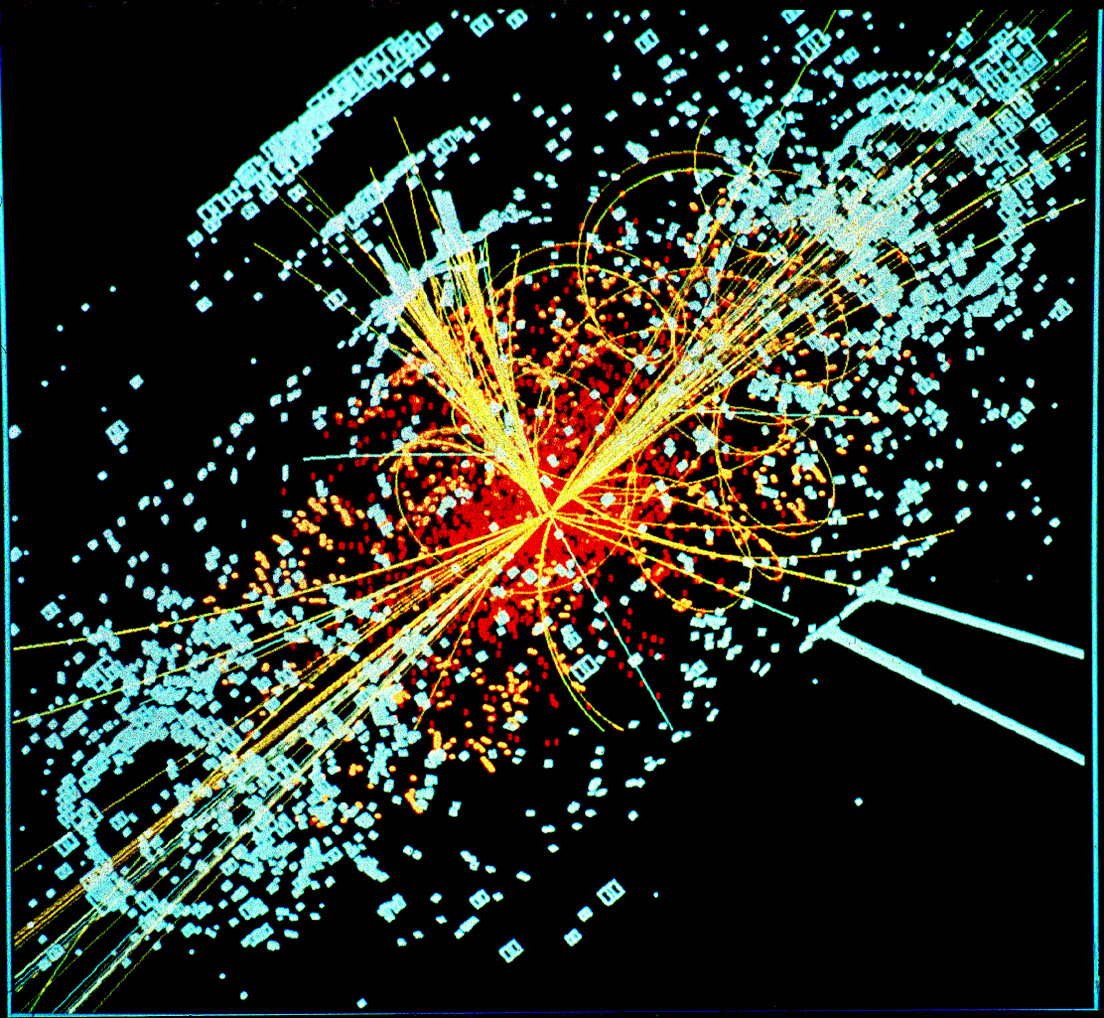
Today, July 4 2012, Cern announced the likely detection of the elusive Higgs boson – known by the popular press as the “God particle”.

Last installment of my lecture on “Religion and Scientific Change” closed by introducing three levels on which claims about relationships between religion and science should be analysed: the institutional, the socio-cultural, and the individual. I was going to wait a couple of days with releasing the rest, but since news headlines today have been all about the discovery of the “God particle” in the bowels of the Large Hydron Collider at Cern, it  seemed highly appropriate to continue. Why is it that such a (truth be told, rather ridiculous) religious pet-name has been put on the elusive boson? Read on, and you might find out. (And: happy Higgs boson day!)

(more…)

Registered for Contemporary Esotericism yet?

There is still time, but the early bird registration for the first international conference on Contemporary Esotericism is about to expire on May 31. So if you are considering to attend what looks to be a very interesting conference with many juicy topics on the agenda, you may save some euros if you register now.

If you still need more convincing, do take some time to check out the list of confirmed speakers and titles that has now been made available. There are about fifty of them, and thematically they range from afro-american esoteric milieus, to occultism in the occupy movement, to Philip K. Dick’s newly released Exegesis, to the films of Alejandro Jodorowski,  to  ancient astronauts, entheogens, esotericism in the environmentalist movement, Satanism, left-hand path magic(k), right-wing paganism, left-wing paganism, chaos, anarchy, underground distribution practices, and much, much else besides. Have a look.

Also while you are at it, you may check out the full abstracts for the four keynote lectures. Quoted below for convenience:

(more…)

Published in: on May 13, 2012 at 10:22 pm  Leave a Comment  
Tags:

Update: Paganism and European Identity Politics at “Regimes of Religious Pluralism” Conference

The conference on “Regimes of Religious Pluralism” is now only a week away. The final programme has just been released, and you can check it in pdf here: Regimes of Religious Pluralism Conference Programme.

As announced here earlier, we will be having a workshop on “European Identity Politics and the Memory of Paganism” on Friday, April 20. This panel/workshop will take place at 14.30 in the afternoon, and we will be hearing about the “pagan” emphasis of the European New Right, the occultist and pagan-revivalist influences on early-twentieth century Irish nationalism, and, not least, about contemporary New Age Nazism and the Aryan Jesus from outer space.  In short, a perfectly satisfying way to spend an afternoon.