Heterodoxology is proud to present the twenty-ninth installment of your favourite History of Science Blog Carnival: The Giant’s Shoulders. This time featuring an Esoteric Science Special, dedicated to all those esoteric pursuits of superior knowledge; a celebration of all strange, alien, and counterintuitive methods that have been attempted to dissect, read, or tame nature’s secrets, from renaissance natural philosophy to present-day Grand Unified Theories – from the cleverly inventive, through the hopelessly megalomaniac, to the simply misguided.
Physics, Psychology, and a 20th Century Esoteric Concept
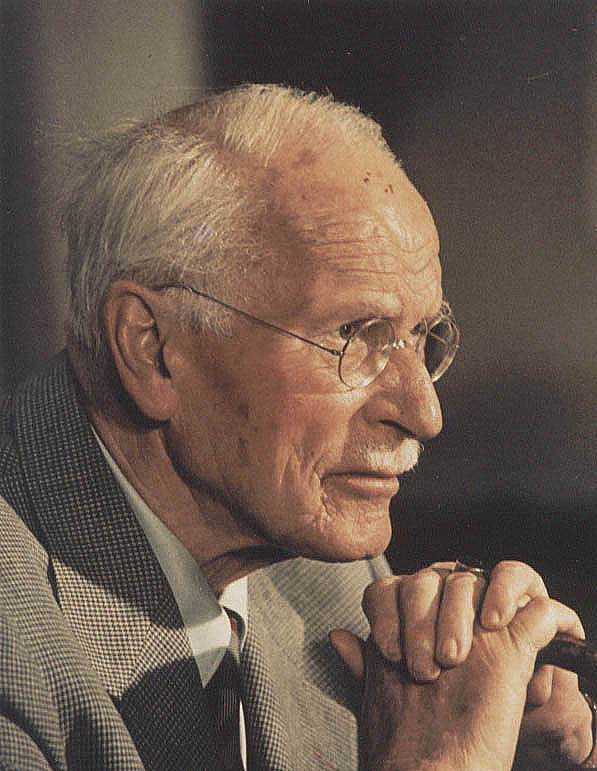
Last week in the MA course we are currently running on “Esotericism and modern science” (I’ve written about previous classes here, here, here, here and here) we talked about the encounter between two influential thinkers of very different impact: psychologist Carl Gustav Jung (1875-1961) and theoretical physicist Wolfgang Pauli (1900-1958). Two men who led at the surface very different careers; one a disciple of Freud and crown-prince of psychoanalysis, the other a student of Bohr and a co-creator of quantum mechanics. While Pauli gave name to the exclusion principle, Jung developed concepts of psychological archetypes and the collective unconscious, established his own school of “analytic psychology”, and arguably founded a charismatic cult of personality which still greatly influences new age religion, pagan spirituality and other occultural belief systems.
Frederic W. F. Myers and Gothic Psychology
“Frederic Myers will always be remembered in psychology as the pioneer who staked out a vast tract of mental wilderness and planted the flag of genuine science upon it.” With these words the far more famous American psychologist and philosopher, William James, concluded his 1901 obituary of British classicist, amateur psychologist and founding member of the Society for Psychical Research (SPR), Frederic W. F. Myers (1843-1901). According to James, Myers’ work would set a new standard for the psychological sciences of the 20th century. More than a decade into the 21st, the name is mostly remembered by parapsychologists and historians with an interest in the quirkier twists that psychology could have taken.
Writing Mesmeria – comments on psycho-centrism
I’m not all done with Mesmerism yet. Besides providing a series of historical episodes that are interesting in their own right, Mesmerism also provokes some difficulties of interpretation for scholars who write about it. I’d like to draw attention to a methodological problem which arise in parts of the secondary literature.
The Divided Lands of Mesmeria
As part of a course I am teaching together with Dr. Marco Pasi we have spent the last three weeks discussing the significance of Mesmerism and animal magnetism in the overlapping contexts of Enlightenment science and esotericism. It is an interesting topic in many respects. For starters, the status of Mesmerism is not uncontroversial in esotericism studies. Why?