Bibliotheca Philosophica Hermetica opens again!

Rumour has circulated in Amsterdam for a while that Mr. Joost Ritman somehow has managed to re-acquire a sizable portion of his old collection, and has been planning to open the library again. Today, almost exactly one year after the Bibliotheca Philosophica Hermetica was shut down, the story has become official. In the mail I found an invitation to the opening of a new exhibition – Oneindig Vuur (“Infinite Fire”) –  on December 16, 2011, hosted by the Ritman library, in its original rooms in Bloemstraat 13-19, Amsterdam.

For those who will be in Amsterdam in three weeks, the doors open at 13:30. There will be an opening lecture at 14:00, by Wouter Hanegraaff, entitled “Per aspera ad fontes” (“Through hardships to the sources”).

It remains unclear at this point how the library will function once the doors are open again. In the summer I reported that most of the books seized by Friesland bank were being moved back to the BPH location in Amsterdam. This most likely forms the background for the new exhibit that will be put on display in a few weeks. However, as noted previously, the library had to see its staff go during the crisis, and it is very unclear how it will be possible to keep the library open to the public on a daily basis as before. The leaflet I received this morning states that 23.000 manuscripts and printed works are currently in the possession of the new foundation, governed by the Ritman family. It also mentions several grandiose plans and ambitions for the future of the library, including the use of innovative technology, digitization, and online communication.

If this means that the library is going to be more of a virtual than a physical resource in the future remains to be seen. Meanwhile, a new website is being built, and we have to wait for the opening to see how this story is going to proceed.

Creative Commons License
This blog post by Egil Asprem was first published on Heterodoxology. It is licensed under a Creative Commons Attribution-ShareAlike 3.0 Unported License.

News in the blog roll

When I got around to buy the heterodoxology.com domain earlier this year, the idea was to start some renovations of the site. Now, finally, one small step: updating the blog roll. Some inactive old blogs have been removed, and a few new, heterodoxologically relevant ones have been added.

First, the additions: Invocatio is a fairly frequently updated and well informed blog (mostly) about Western esotericism. It is run by Sarah Veale in Toronto, and well worth checking out, among other things for its weekly “Myseria Misc. Maxima” installments. Religion Dispatches is perhaps the leading blog/online magazine for research on religion and contemporary debates about religion, and should have been added long ago. To keep up to date on what happens in the modern pagan communities as well as the occulture surrounding it, Jason Pritzl-Waters’  The Wild Hunt is a must-read. For all lovers of dusty old books I have added the bibliophile blog 8vO. Finally, to satisfy a twin appetite for science fiction and historiography, Mark Novak’s wonderful Paleofuture  blog is now available in the blog roll. It is a great resource for exploring the history of futures past.

Out goes a few blogs that have become inactive (Grimoires, Heteropraxis, Knokkelklang, Dodologist, SNASWE Blog), or turned out to be heterodoxologically less relevant (The Necromancer). More additions are likely to follow.


Creative Commons License This blog post by Egil Asprem was first published on Heterodoxology. It is licensed under a Creative Commons Attribution-ShareAlike 3.0 Unported License.
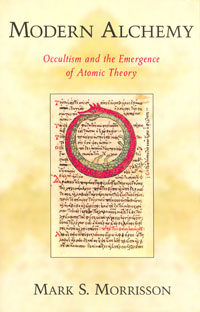
Review: Mark Morrisson’s “Modern Alchemy”

(The following is my review of Mark Morrisson’s Modern Alchemy. The final version was published in Aries 11.1).

In 1901 physicist Ernest Rutherford and chemist Frederick Soddy, tucked away in a laboratory at McGill University, Montreal, Canada, were struck with amazement as they watched the element thorium transform into an inert gas. Soddy, exclaiming that they had witnessed nothing less than transmutation, was warned by his more temperate colleague: “For Mike’s sake, Soddy, don’t call it transmutation. They’ll have our heads off as alchemists”.

Alchemy would, however, be invoked frequently during the decades to come; not with reference to obscure occultists in the secret vaults of hermetic societies, but in connection to new discoveries concerning radioactive decay. Indeed, in its the early decades, what would become nuclear physics was commonly labelled “modern alchemy”. The crucible and athanor had been replaced by cloud chambers, spectroscopes, and ionization chambers,  but there was a nagging feeling that the ancient and modern alchemists ultimately shared the same goal: the transmutation of elements.

(more…)

Science, fables and chimera

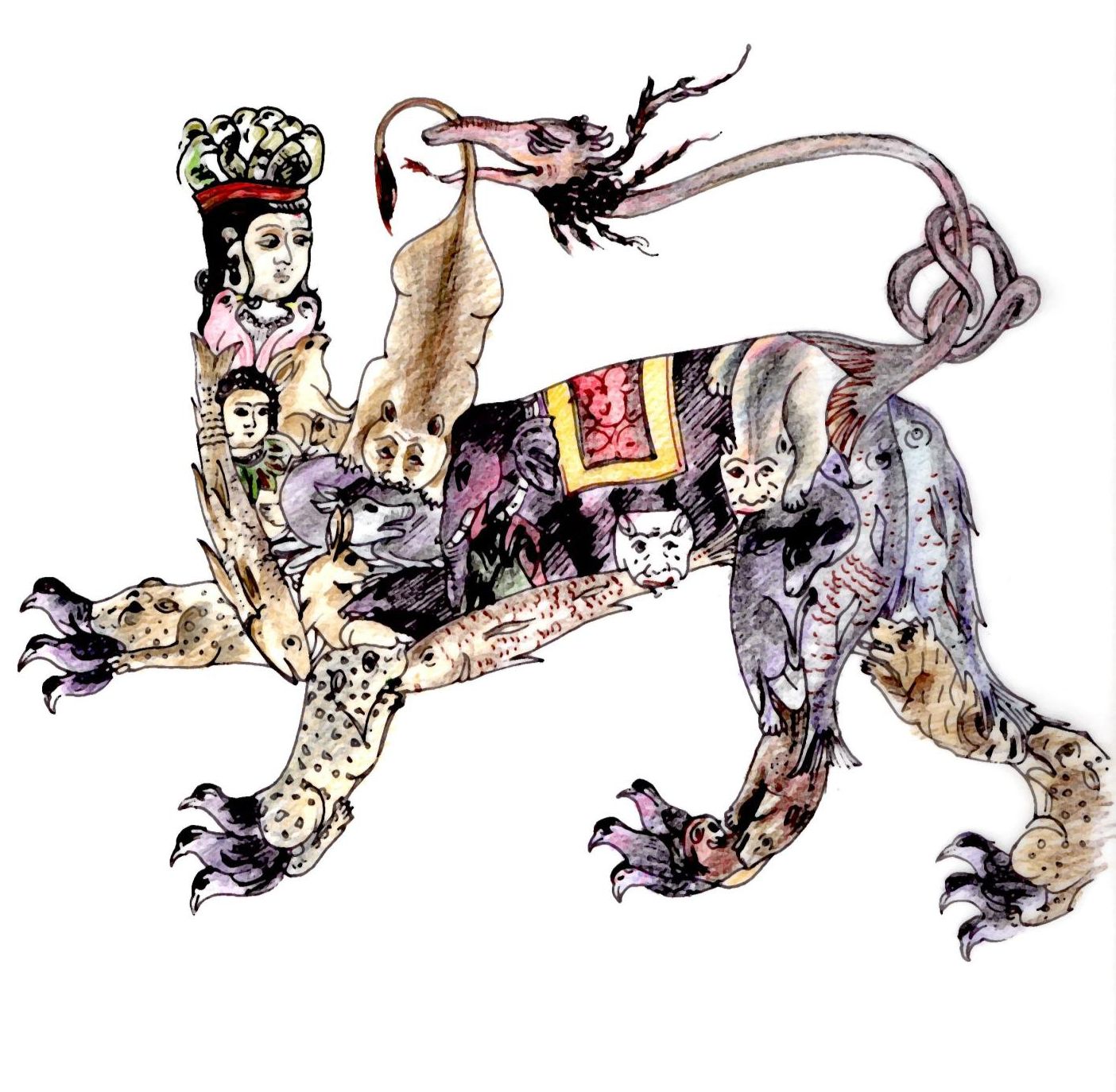
The conference season begins. My first stop this year is Toulouse, and a history of science/cultural history conference entitled “Science, fables et chimères: croissements” / “Science, fables and chimera: a strange encounter”.

A description is available from the conference website:

(more…)

Published in: on June 9, 2011 at 6:07 am  Leave a Comment  
Tags: ,

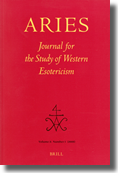
Aries 11.1

Heterodoxology has aimed to establish the practice of reviewing new publications and releases in the field of esotericism, particularly notifying about current issues of the journal Aries. Aries 11.1 has been out for a couple of months already, so this comes somewhat late.

(more…)

Blind Spots of Disenchantment (3/3)

The third and last part of my paper on the “Blind Spots of Disenchantment” focuses on the somewhat neglected concept of Weber’s 1918 “Wissenschaft als Beruf” paper: “the intellectual sacrifice”. It looks particularly at the Scottish Gifford Lectures’ attempt to promote a new “natural theology”, and suggests that this whole attempt defies Weber’s emphasis that science and religion are being/ought to be kept apart in a disenchanted modern world. It also includes the complete bibliography for all three parts.

(more…)

Blind Spots of Disenchantment (2/3)

Following up the previous post about Weber’s notion of disenchantment, and its normative implications, this second part of the installment provides some snapshots of episodes in the early 20th century – that is, of Weber’s contemporaries – which all seem to be in conflict with the disenchanted perspective of science. We start by considering some episodes in physics, then move on to the life sciences, before ending with some remarks on the controversial borderland which is psychical research.

(more…)

Blind Spots of Disenchantment (1/3)

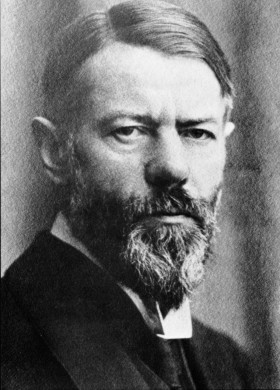
Max Weber (1864-1920)

The way things have turned out, the content of my PhD dissertation will revolve around a concept which Max Weber somewhat unsystematically formulated almost 100 years ago: the disenchantment of the world. Disenchantment has usually been described as a socio-cultural process, driven by rationalisation and intellectualisation processes which Weber traced back to the invention of monotheism, and the development of monotheistic theology. It has been embraced by sociologists and historians of religion in particular, who have seen in it (as did Weber) certain consequences for the condition of religion, magic, and their relation to intellectual life (and particularly science) in the modern world. My dissertation is increasingly becoming a criticism of the concept of disenchantment, and an exploration of a more nuanced approach to it as it relates to interfaces between religion, science, and that vast unsystematic and poorly defined set of “the occult”, “esoteric”, and “magical”. In April I had two opportunities to discuss these ideas in workshop settings, first with a commentary from the social historian of knowledge Peter Burke, and later in a research workshop for cultural history PhDs in the Netherlands called the Barchem symposium. In this post, and in two following installments, I will share the text of my lecture(s), intended to give an overview of my general approach, illustrated with snapshots of relevant cases from early 20th century history of science and culture. This first post discusses, historicises and criticises Weber’s concept of disenchantment in what is a brief theoretical introduction proposing that we take a different approach to it. Part two will concern the place of this revised notion in early 20th century scientific discourses, particularly in their broader cultural reception and context. The third part discusses briefly the attempt to create a “new natural theology” in this period.

(more…)

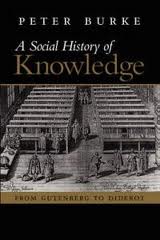
Peter Burke, the social history of knowledge, and “agnotology” – notes on a lecture

It’s been a busy spring so far, and unfortunately not much time for keeping this blog running. In an attempt to get started again I will give a brief report on Professor Peter Burke’s visit to Amsterdam last week, and particularly one lecture (out of two) he gave on that occasion.

(more…)

Giants’ Shoulders #29: Esoteric Science Special

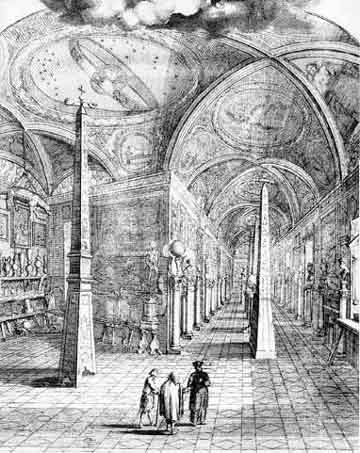
Athanasius Kircher's museum

Heterodoxology is proud to present the twenty-ninth installment of your favourite History of Science Blog Carnival: The Giant’s Shoulders. This time featuring an Esoteric Science Special, dedicated to all those esoteric pursuits of superior knowledge; a celebration of all strange, alien, and counterintuitive methods that have been attempted to dissect, read, or tame nature’s secrets, from renaissance natural philosophy to present-day Grand Unified Theories – from the cleverly inventive, through the hopelessly megalomaniac, to the simply misguided.

(more…)