Summer time has been upon me and Heterodoxology has been dead silent for a while. Unfortunately, when I look at the pile of things to do these coming months I fear it may stay that way. This is nevertheless an honest attempt at getting things rolling again. I’ll just kick off with some whimsically chosen (perhaps relevant) news:
Lux in Tenebris: Call for papers for the 3rd international congress of the ESSWE

The Visual and the Symbolic in Western Esotericism
The call for papers is out for next year’s biannual conference of the ESSWE. This is the third one: after Tübingen in 2007 and Strasbourg 2009, the 2011 conference will be held in Szeged, Hungary, on 6-10 July. The title is “Lux in Tenebris: The Visual and the Symbolic in Western Esotericism”, and should open for some interesting cross-disciplinary perspectives (art history, film studies, literary studies, cultural analysis?) on esoteric discourse, from late antiquity to contemporary times. (Also, the program includes a visit to the catacombs of the Buda castle in Budapest – wouldn’t miss it!) Deadline for proposals is November 15, 2010. I attach the full call for papers below.

Alchemy, and how to write about it: ESSWE thesis workshop
 As advertised before on this blog, the European Society for the Study of Western Esotericism (ESSWE) has been organising a thesis workshop on alchemy. It took place in Amsterdam on June 24; here is a short report.
More on Goetic Magic: Three 20th century developments
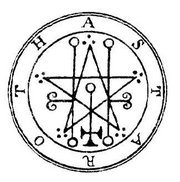 In a previous post, now a couple of months ago, I wrote about the distinction between goetia and theurgy in ceremonial magic. I tried to trace the development of the distinction, in very broad strokes, from neo-platonic discussions in late antiquity through the renaissance rehabilitation of magic, through to 19th century occultism. This was part of developing my thoughts for an article on «Goetia in Modern Western Magic», the deadline for which has now (as it usually goes with academic anthologies) been postponed. This gives me opportunity to try out some more ideas here.
Lawrence Principe and the Rehabilitation of Alchemy – another lecture in Utrecht
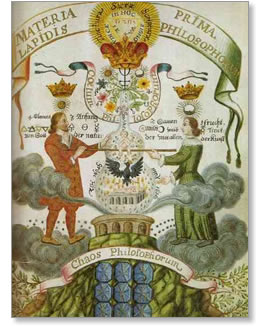 Utrecht has apparently become the place for me to see visiting historians of science. A couple months back Peter Galison gave lectures and a workshop on secrecy and science, and now last week, the alchemy specialist Lawrence Principe gave the third Descartes-Huygens lecture on “Uncovering the Secrets of Alchemy and its Role in the History of Science”. It was quite a ceremonial occasion, as Principe, who is ordinarily based at John Hopkins University, was officially given an honorary fellowship at Utrecht Unversity. As the man himself opened by saying, this was probably the first time since the 17th century that the oration of a new fellow would be devoted to the art of alchemy.
Marginality in The European Legacy
 There is a call for papers out for an upcoming special issue of The European Legacy, the official organ of the International Society for the Study of European Ideas (ISSEI). The issue will focus on the problem of marginality in European intellectual history – both posed as an empirical problem and as a problem for methodological and theoretical reflection in humanities disciplines which too often focus on “canons” (whether in art, literature, philosophy, religion, politics, or science). The topic should interest readers of this blog as much as it does me. The deadline is shortly after next vernal equinox, and the issue should be out shortly before the end of the world. More information (official CFP) below. (Thanks to Renaud Evrard for bringing this to my attention).
An etiology of angelic vision: Article on John Dee and Edward Kelly in Aries
 A couple of weeks ago I promised to take a closer look at one of the articles from the present issue of Aries. Now I finally found an occasion to look at James Justin Sledge’s contribution, “Between Loagaeth and Cosening: Towards an Etiology of John Dee’s Spirit Diaries”. As the title suggests, it’s about the Elizabethan philosopher, mathematician and magus John Dee’s famous conversations with angels, and his favourite skryer, Edward Kelly.
Gnosticism in Antiquity: book presentation in a historical environment
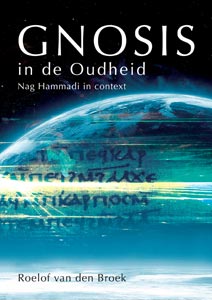 The blog has been silent for a while as I have been busy with finishing up classes and managing upcoming deadlines, among other things. To get going again, I’ll take this opportunity to write about a book presentation I went to last week. The specialist of gnosticism, hermetism and early Christianity, Roelof van den Broek, presented his latest book, Gnosis in de Oudheid: Nag Hammadi in Context in the magnificent Huis met de Hoofden (“house with the heads”) in Amsterdam. Below follows a few words about the book, the house, and the occasion.
New articles from Aries
 The latest issue (10.1) of Aries: The Journal for the Study of Western Esotericism has recently been published. It contains four research articles, on John Dee’s angel conversations (J. J. Sledge), a little-known text by Martinès de Pasqually ( Dominique Clairembault), the curious link between engineering and spiritualism in the case of John Murray Spear (Joseph Laycock), and some aspect of Aleister Crowley’s sexual magic and the connection with some yogic traditions (Gordan Djurdjevic). Also seven book reviews. See below for bibliographic details and short reviews of the articles.
Physics, Psychology, and a 20th Century Esoteric Concept
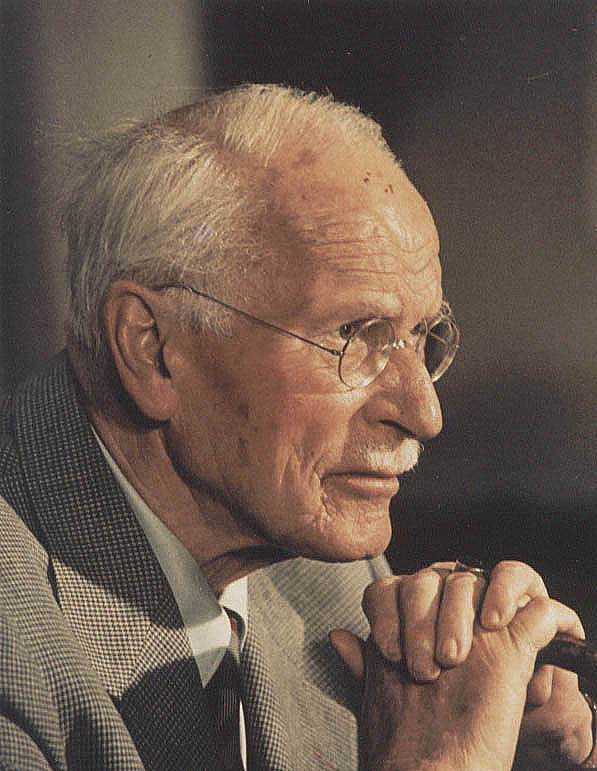
Carl Gustav Jung
Last week in the MA course we are currently running on “Esotericism and modern science” (I’ve written about previous classes here, here, here, here and here) we talked about the encounter between two influential thinkers of very different impact: psychologist Carl Gustav Jung (1875-1961) and theoretical physicist Wolfgang Pauli (1900-1958). Two men who led at the surface very different careers; one a disciple of Freud and crown-prince of psychoanalysis, the other a student of Bohr and a co-creator of quantum mechanics. While Pauli gave name to the exclusion principle, Jung developed concepts of psychological archetypes and the collective unconscious, established his own school of “analytic psychology”, and arguably founded a charismatic cult of personality which still greatly influences new age religion, pagan spirituality and other occultural belief systems.




 Heterodoxology