Arguing with Angels – first chapter available for free

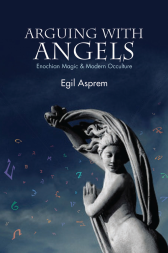
Arguing with Angels book cover

Arguing with Angels about to be released

My first book, Arguing with Angels: Enochian Magic and Modern Occulture, is due to be released by SUNY Press next month (May 2012). The publisher has now released the first chapter of the book in electronic form on their website, so that you can read it there for free. This chapter is entitled “The Magus and the Seer”, and deals with John Dee’s angel conversations, the cultural and intellectual context, the role of the skryer, Edward Kelley, and some interpretations and explanations of what happened. When I wrote this chapter, already several years ago, it was intended as a “state of research” on Dee’s  angelic diaries, and serve as an important reference for the rest of the book.

The book itself is not primarily about Dee and Kelley (or his other skryers), but is concerned rather with the reception history of the angel conversations in Western ritual magic. In particular, it makes a contribution to the ongoing discussion about the relation between ritual magic and modernity, about the struggle for legitimacy, about reinterpretations of magic in the face of a “disenchanted” world, and so on. It is also the first academic work to give full attention to what has come to be “Enochian” angel magic as a proper subset of occultist ritual magic, putting it properly on the map of academic scholarship.

As the publisher writes:

(more…)

European Identity Politics and the Memory of Paganism – a conference panel in Amsterdam, 20 April 2012

Last December I was approached by Markha Valenta, a colleague in the history department of the UvA and an occasional contributor to the OpenDemocracy project, asking if I wanted to organize a panel for the upcoming international conference on “Regimes of Religious Pluralism in 20th-Century Europe”. The invitation was inspired by some of the things I wrote on this blog concerning Behring Breivik and religion last summer, and my role would be to compose a “heterodox” component for the conference. I said yes, and started contacting some people. Now, one month before the conference starts, we have three speakers and a juicy topic: “European Identity Politics and the Memory of Paganism”. Below follows a description of the panel’s theme, and a list of speakers and titles.

(more…)

Contemporary Esotericism: Updated call for papers

contemporary esotericism

The 1st International Conference on Contemporary Esotericism will be held in Stockholm this August. The deadline for submitting papers is drawing closer (March 30), and there have been a couple of updates – including a new keynote speaker. Check out the call for papers below.

(more…)

Esoteric news, January 2012

Among the updates: 1st International Conference on Contemporary Esotericism

A number of newsworthy things have popped up in the world of esotericism scholarship lately, but as I have been tied up with reaching deadlines, they have not found their way to Heterodoxology yet. The solution? A brief list of updates, below. Some of it you may already have read about over at Invocatio, the Phoenix Rising website, or some other etheric place, but no harm is done in hearing something twice.

(more…)

Hermetically opened

Before Christmas, esoterica and hermetica aficionados in Holland and abroad got a nice present: The Bibliotheca Philosophica Hermetica opened again, after facing complete destruction for a year. Unfortunately I was hindered from attending the opening on December 16 due to teaching obligations, so I have no first-hand experiences to share this time. Apparently the library in Bloemstraat, Amsterdam, was packed full of people, and the new incarnation of the Ritman library got off to a good start. For now, the Ritman family is running the library on their own, keeping the doors open all weekdays as before. There is also a splendidly looking new website. While browsing it, make sure to read Wouter Hanegraaff’s opening lecture, published in the website’s new blog section.

Welcome back!

Published in: on December 30, 2011 at 4:54 pm  Comments (1)  
Tags: , ,

“Varieties of Magical Experience” – a new article on Crowley, magic, and psychologisation

Magic, Ritual, and Witchcraft (Penn Press)

The November issue of Magic, Ritual, and Witchcraft ran an article by my colleague Marco Pasi, titled ”Varieties of Magical Experience: Aleister Crowley’s Views on Occult Practice”. It may safely be characterised as the most complete academic treatment of Crowley’s magical thought and practice that has so far been published in a peer-reviewed journal. It also ties in neatly with a discussion here at Heterodoxology and a couple of other blogs earlier this year (Tyromanteia and Invocatio), namely the question of the “psychologisation of magic”. A review is definitely in order.

(more…)

Bibliotheca Philosophica Hermetica opens again!

Rumour has circulated in Amsterdam for a while that Mr. Joost Ritman somehow has managed to re-acquire a sizable portion of his old collection, and has been planning to open the library again. Today, almost exactly one year after the Bibliotheca Philosophica Hermetica was shut down, the story has become official. In the mail I found an invitation to the opening of a new exhibition – Oneindig Vuur (“Infinite Fire”) –  on December 16, 2011, hosted by the Ritman library, in its original rooms in Bloemstraat 13-19, Amsterdam.

For those who will be in Amsterdam in three weeks, the doors open at 13:30. There will be an opening lecture at 14:00, by Wouter Hanegraaff, entitled “Per aspera ad fontes” (“Through hardships to the sources”).

It remains unclear at this point how the library will function once the doors are open again. In the summer I reported that most of the books seized by Friesland bank were being moved back to the BPH location in Amsterdam. This most likely forms the background for the new exhibit that will be put on display in a few weeks. However, as noted previously, the library had to see its staff go during the crisis, and it is very unclear how it will be possible to keep the library open to the public on a daily basis as before. The leaflet I received this morning states that 23.000 manuscripts and printed works are currently in the possession of the new foundation, governed by the Ritman family. It also mentions several grandiose plans and ambitions for the future of the library, including the use of innovative technology, digitization, and online communication.

If this means that the library is going to be more of a virtual than a physical resource in the future remains to be seen. Meanwhile, a new website is being built, and we have to wait for the opening to see how this story is going to proceed.

Creative Commons License
This blog post by Egil Asprem was first published on Heterodoxology. It is licensed under a Creative Commons Attribution-ShareAlike 3.0 Unported License.

Want to do a PhD on Western esotericism? Two vacancies in Amsterdam

Two PhD positions will become vacant at the Centre for the History of Hermetic Philosophy and Related Currents in Amsterdam in early 2012. If you want to do a PhD in the field of Western esotericism, this is a top chance which cannot be missed, so check out the application procedures here. The two positions are reserved for two different areas of expertise – one focusing on the early modern period (in practice, late medieval to the Enlightenment), the other on esotericism from the Enlightenment to the present.

(more…)

Published in: on November 9, 2011 at 1:46 pm  Comments (3)  

Who was Fräulein Sprengel? New evidence on the origin of the Golden Dawn, or: “Vale Soror! Ave Frater!”

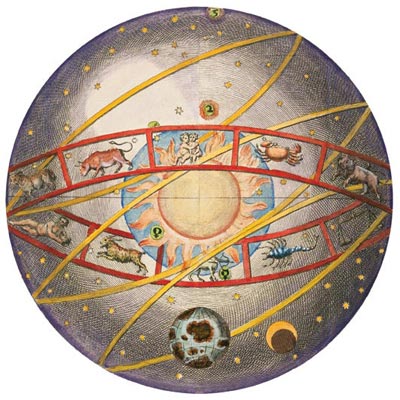
"Sapiens Dominabitur Astris". From 17th century emblem, by George Wither, A collection of emblemes.

In the history of the Hermetic Order of the Golden Dawn, one of the supremely most influential esoteric and magical orders in modern occultism, the question of origins has been a matter of much dispute. This is, of course, a common story for esoteric orders, or even for religious movements more broadly. If there is one thing you can count on, it’s that their founders and their followers will tend to invent mythologies, lineages, and exotic provenances to bolster their group’s sense of importance.

In the case of the Golden Dawn, founded in 1887 by a group of London based high degree Freemasons and occultists, the emic historiography has centred upon a claim to Rosicrucian lineage. The direct link was a mysterious Fräulein Sprengel of Stuttgart, also known under her magical motto Sapiens Dominabitur Astris (“the wise will rule the stars”). The evidence for this lineage was a letter communication between Sprengel and the G.D. co-founder, coroner William Wynn Westcott, which ostensibly ensued after Westcott found her address on a sheet of paper tucked together with the mysterious “cipher manuscript” on which the G.D. rituals would later be based (for the uninitiated: there’s a brief overview of the controversy around them on Wikipedia). The notorious “Sprengel letters” that ensued, and the possible background of the order have been discussed for decades by scholars such as Elic Howe and Robert A. Gilbert – the general consensus being that the letters were forged and Sprengel a fiction. In the latest issue of Aries, Christopher McIntosh publishes brand new evidence in this mystery, evidence which has been there all along but curiously overlooked by all previous investigators.

The discovery is surprising, and makes an already confusing story even more so.

(more…)

Ex-BPH books on auction in Rome

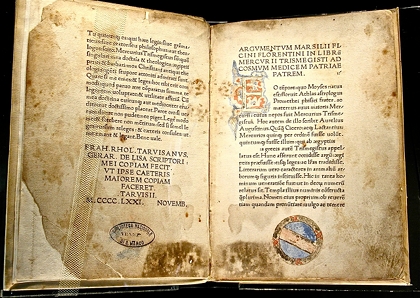
Ex-BPH incunables for sale in Rome.

In June I wrote that some of the more expensive books and incunables that belonged to the Bibliotheca Philosophica Hermetica (Ritman Library), which was dissolved almost a year ago, surfaced at an auction in London. As Brooke Palieri at the 8vo blog noted then, the auctioned material included the 1st edition of Marsilio Ficino’s translation of Corpus Hermeticum, which used to be one of the gems of the Ritman collection. 

Now it appears that other items are very soon (October 11) to be auctioned in Rome, by Bloomsbury Auctions. The BPH items on sale seem to include later 15th century editions of the Hermetic texts, alongside first editions of Iamblichus, Plotinus (in Ficino’s translation – may go for up to € 25,000), early editions of Pico’s works, and much more. Scroll around on the page, and if you have a few (or many) thousand euros to spare this is the chance to get some rare and exotic esoteric books.

Again, this piece of news comes from Brooke Palmieri and the 8vo blog. Big thanks.

Creative Commons License
This blog post by Egil Asprem was first published on Heterodoxology. It is licensed under a Creative Commons Attribution-ShareAlike 3.0 Unported License.