What’s the deal with Glastonbury?

Glastonbury Tor; or the island of Avalon emerging from a sea of mist?

Glastonbury in Somerset is known as a pilgrimage site for neopagans and adherents of various “alternative spiritualities” world wide. The mythology of the place is full of stories about Arthurian knights, primeval British Christians, druids, the lost tribes of Israel, healing wells, and the Holy Grail. Theories about secret connections between ancient monuments, and hidden correspondences or “lay lines” connecting features in the landscape of Glastonbury are easy to find.

What is the history of all this local myth? How did this small village become such a major centre of heterodox pilgrimage? What does the phenomenon of Glastonbury tell us about religion generally, and its British history specifically? These are among the questions that Hereward Tilton explores in an ongoing research project. He spoke about it at the Contemporary Esotericism conference in Stockholm this August, and the paper has now been made available online at the ContERN website.

Tilton explores the development of a lively folklore around Glastonbury, and explains its origins in the sociocultural and economic contexts of the middle ages, the impact of the reformation, and much later the rediscovery of Glastonbury by a generation of occultists at the end of the 19th century. In addition to many intriguing historical details, about which one can read more in the published paper, Tilton seeks to explore some concerns that are of broader interest. One of these is the intriguing confluence of British Israelism (the notion that the British people is in fact one of the lost tribes of Israel, and the British monarchs descend from king David) with esoterically oriented notions of prisca theologia (i.e. the notion of “primitive revelation” and ancient wisdom), and local myths at Glastonbury:

“While the origins of British Israelism proper can be traced to the early nineteenth century and writers such as John Wilson and Edward Hine, the relationship of their work to earlier post-Reformation narratives concerning the lost Semitic tribe of the British and the Druidic prisca theologia is clearly of central import to an understanding of the history of esotericism at Glastonbury. Of particular interest is the legend of Christ’s visit to Glastonbury, and his building of the first British church there, which as we may recall descended from on high like the New Jerusalem.”

Another intriguing aspect Tilton mentions, but unfortunately did not get to explore in any detail in the present paper, concerns the place of psychological factors in accounting for “esoteric” motifs. In particular, Tilton is interested in schizotypy and apophenia – both of which come to mind when one considers the associative, pattern-seeking, sometimes paranoid reading of signs and symbols in buildings, text, nature, and culture, so characteristic of esoteric material. Tilton connects them to Faivre’s old characteristics:

“The esoteric mindset as defined by Faivre corresponds in many particulars with what may be termed an ‘esoteric schizotypy’, in accordance with a contemporary psychiatric category encompassing a broad spectrum of personalities exhibiting schizotypal traits (e.g. visual and auditory hallucinations, paranoid or conspiratorial ideation, a tendency to distant associations); of particular significance in this regard is the phenomenon of ‘apophenia’, the discovery of meaningful patterns in apparently random data that we find exemplified in the creative interpretations of Glastonbury’s sacred landscape … . My purpose in this regard is not to psychopathologize esotericism, but rather to understand the interaction of dominant and deviant psychologies within those processes of marginalization that currently constitute a central historiographical concern of our field.”

It is interesting work, even if it is no doubt going to be controversial in certain circles. But there is already a lot of related research in the cognitive study of religion that might serve as a basis for further research along these lines. It was, for example, only a month ago that the journal Applied Cognitive Psychology published a study that found “religious” and “believers in the paranormal” to be more prone to apophenia (illusory face perception in this case) than “sceptics” and “non-believers”. Tom Rees recently blogged about this research at Epiphenom  (which, by the way, is an excellent resource for staying up to date on research that explores the relations between psychological,  sociological and cultural factors in accounting for the disparate phenomena we call “religion”). Studies exploring the relation of conspiracy belief and schizotypy are also not hard to come by (see e.g. this recent paper from Personality and Individual Differences). One should not exclude the possibility that research along similar lines might have a role to play in future theorising about esotericism as well. I for one certainly look forward to see what Tilton will do with these connections in the future.
Creative Commons License
This blog post by Egil Asprem was first published on Heterodoxology. It is licensed under a Creative Commons Attribution-ShareAlike 3.0 Unported License.

Towards Esotericism 3.0 – W. J. Hanegraaff reviews seven esotericism textbooks

If you’re new to the field of Western esotericism, planning to set up an introductory course somewhere, or wondering what to  read as a crash-course to the field, here is something you have to read first. The upcoming issue of the journal Religion (“iFirst” version available online now for subscribers) publishes a lengthy review article by Wouter J. Hanegraaff, a leading expert in the field, going through as many as seven introductory level textbooks that have been published over the last eight years (since 2004). More than just a review of introductions, the article engages critically with the theoretical and methodological challenges of the field, and takes a clear stand on where one should go from here. The result is an article that analyses the present situation of esotericism research, provides an overview of strengths and weaknesses in the basic literature that newcomers are likely to encounter, and offers a pronounced and programmatic statement for future researchers and teachers.

(more…)

Nazi-occultism on the ContERN website

Floor mosaic from Wewelsburg castle – from decorative item to occult world domination…

Next up in the cyberproceedings from the Contemporary Esotericism conference is a paper by Eva Kingsepp on Nazi/SS occultism, the changing perceptions of it in “official memory culture”, and its reception and influence on contemporary occulture. The primary focus is on the heavily mythologized symbol of the “Black Sun”, and the SS’  Wewelsburg castle, alleged to be the magical centre of the Third Reich,  where Heinrich Himmler gathered his SS “knights” and performed sinister rituals under the occult sign of the Black Sun.

Or not. As Kingsepp shows, myths of this kind have by now been properly debunked by real historiography. That, however, does not diminish the effect of the Nazi-occult mythology in popular culture and occulture.

From the introduction:

The aim of this paper is twofold, both related to the uses of history. The first concerns the basic assumptions about Nazi occultism as a phenomenon in itself. -What are the discursive relations between official memory culture and popular culture regarding Nazi occultism? The second is to look at the Temple of Set, more specifically its Order of the Trapezoid, as an example of how an esoteric group relates to Nazi occultism and puts this, as it is being conceived by leading members of the Order, into magical use. -From where do practicing occultists working with elements from National Socialism get the theoretical basis for what might be called their magical ideology

Go read the whole thing here.

Cyberproceedings from the Contemporary Esotericism conference

The ContERN website is slowly becoming active. Today we have published the first papers of the cyberproceedings from the Contemporary Esotericism conference in Stockholm this August. The first four papers to appear include two on Freemasonry and initiatic societies (J. Scott Kenney and Aslak Rostad), one on methodological issues in the study of contemporary Satanism (Jesper Aa. Petersen), and one on occulture in Brazilian pop music (Francisco Santos Silva). All of them should offer a lot of food for thought, so I suggest you go check them out: Is fraternalism a form of “moral elitism”? How do Masons experience the influence of joining the craft on the direction of their  lives? How are we to draw boundaries between different types of “Satanism“? And what does Aleister Crowley have to do with Brazilian pop music of the 1970s? Read and find out.

Arguing with Angels in paperback

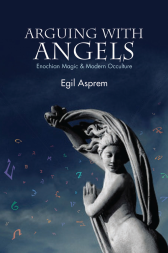
Arguing with Angels book cover

Arguing with Angels – now in paperback

My first book, Arguing with Angels: Enochian Magic and Modern Occulture, is about to be released in paperback. This means that one can finally get it at a more reasonable price: $24,95.  The paperback is officially released by the publisher on January 1, so just a little too late for a Christmas present, but it can already be pre-ordered from the SUNY website.

For more information about the book, with links to  reviews and discussions online, go here.

Cornelius Agrippa and Renaissance feminism at the BPH blog

H. C. Agrippa – occult, sceptical, and feminist philosopher of the Renaissance.

The BPH/Ritman Library’s blog has an article-length post up by my good friend and colleague Joyce Pijnenburg, on the Renaissance humanist and “occult philosopher” Heinrich Cornelius Agrippa and his lesser known treatise on the nobility  of women. I remember being fascinated by this work when I first “discovered” Agrippa in my late teens – back then it was an eye-opener for me to find that the man who had been embraced by modern occultists as “their” intellectual patron, primarily for his Three books of occult philosophy (and the spuriously attributed Fourth book), had also produced works of sceptical philosophy (De incertitudine et vanitate scientiarum et artium), as well as a work that might classify as “Renaissance proto-feminism”. Agrippa is certainly more interesting than he’s often made into.

Joyce takes a closer look at this little-explored Renaissance feminist current, and transposes it  with certain contemporary issues discussed by Slavoj Žižek (whom, I must confess, I generally see as a stand-up comedian rather than a philosopher – some sharp observations, much hyperbole, and a lot of hilarity). The article  is entitled “Does woman exist? Agrippa von Nettesheim and Slavoy Žižek on Women and (their) Presence”. As an additional teaser before you go and read the whole thing, here’s the abstract:

(more…)

From the Amphitheatre of Eternal Wisdom: Peter Forshaw on Khunrath in BPH’s Infinite Fire Webinar

The Bibliotheca Philosophica Hermetica in Amsterdam has, as previously mentioned, gone through a transformation lately, now focusing increasingly on web-based solutions. As a part of this renewal, BPH launched a webinar series entitle  “Infinite Fire”, in which scholars of esotericism will give online lectures on chosen topics, making use of unique material that is available in the library itself.

The first of these lectures is now available. It is given by my colleague Peter Forshaw, an expert of esotericism in early modern intellectual history, and particularly of alchemy. In the lecture, Peter speaks about one of his favourite authors: Heinrich Khunrath (1560-1605). The BPH website blurb has more:

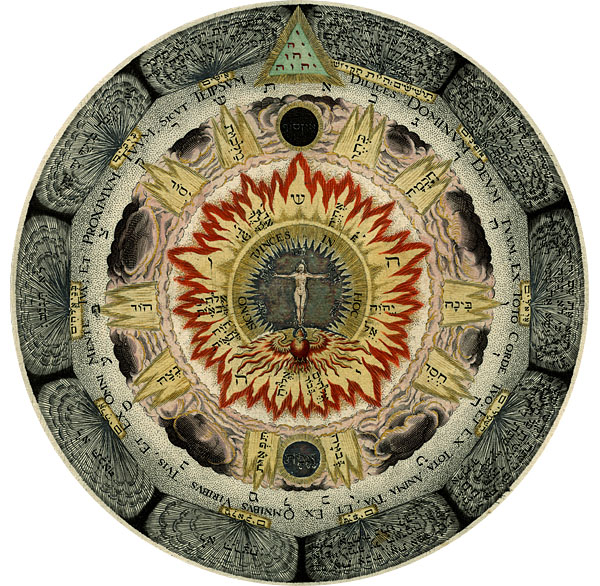
“In the webinar a focus is put on Khunrath’s Amphitheatrum Sapientiae Aeternae – The Amphitheatre of Eternal Wisdom (originally published in 1595), which has traditionally been considered to be a strange mix of Christianity and magic. Peter elaborates on the alchemical symbolism of 4 circular and 5 rectangular engravings integrated in the Amphitheatrum. A famous plate is the Tabula Smaragdina or The Emerald Tablet, to be considered one of the main inspirational works for alchemists, Hermetic philosophers and Rosicrucians. Aldous Huxley even mentions the Tablet contains an in-depth summary of what he calls the ‘Perennial Philosophy’, a timeless science of soul that keeps on surviving through the ages.”

Do check it out. Then wait until November, when Peter will be back with his second webinar lecture on Michael Maier’s Atalanta Fugiens.

William Newman demonstrates alchemical transmutation – with a few notes on whiggishness

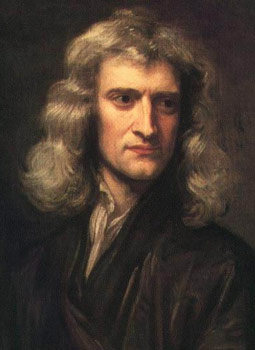
The perpetually mystified Newton

When I press the “publish” button for this post I shall immediately duck and take cover from allegations of whiggishness. The title of the lecture I post below, “Why did Newton believe in alchemy?” is precisely the sort of question-asking that has recently been criticised in the history of science blogging community in a recent upsurge of discussions about whig history and misapplication of categories in narrating or explaining science history. As Rebekah Higgitt wrote on teleskopos back in 2010, the “Newton as alchemist” trope seems to be a perennial surprise, and she suggested (I think convincingly) that the very fact that journalists but also scholars continue to introduce this topic precisely as a surprise – no doubt to attract the attention of their audience – is actually just perpetuating the mystery rather than leaving it behind and moving on. The problem is not only that we should start by acknowledging the state-of-the art established knowledge in the field (which in the case of Newton means at least departing from such works as Robert Westfall’s Never at Rest, and Betty Jo Teeter Dobbs’ The Janus Face of Genius) rather than by perpetuating the research questions of more than half a century ago. The problem is also that by playing the surprise card, we encourage people to ask questions that are poorly formulated and misleading in the first place. Questions such as, “was Newton a scientist or a sorcerer?” As Thony Christie will tell you, that’s a completely silly question, which cannot avoid distorting the material it’s supposed to clarify. To put it in histsci jargon, the question is too far removed from “actor’s categories” to make any sense.

(more…)

ContERN with its own website and blog

Heterodoxology has functioned as an unofficial outlet for ContERN news lately; for those who are not primarily interested in news about this obscure network, I apologize. Now, however, I can announce that the Contemporary Esotericism Research Network has finally gotten its own website and blog, which you can check out here. It’s relatively simple for now, but has the essential information about the fledgling network in a concise form. The blog section of the website will now work as a channel for announcing news (I might occasionally re-post here, too). The link section has references to important scholarly associations and societies, departments, and journals that are of relevance for the study of contemporary esotericism. These are obviously flexible lists, and will be modified as we go. Other pages will also be added to the website in the future, with new features and content, so stay tuned!

Published in: on October 5, 2012 at 10:32 am  Leave a Comment  
Tags:

Another review of the Contemporary Esotericism conference

There is another review up on the 1st International Conference on Contemporary Esotericism, written by Venetia Robertson and published by the Religious Studies Project (for earlier reviews, see this post). Venetia has found out about my secret identity as an agent of the cherubim (was it my flaming sword or my rosy cheeks that gave it away?), and for the rest has a lot of nice things to say about the conference that came out of this esthetic “marriage of heaven and hell”. I particularly think she’s spot on in referring to the  general atmosphere of the conference being  characterised by “tough love”.

Go read the whole thing. There’s also some revealing pictures from the Dragon Rouge temple, tucked away in an unassuming suburban apartment building in Stockholm.