From the Amphitheatre of Eternal Wisdom: Peter Forshaw on Khunrath in BPH’s Infinite Fire Webinar

The Bibliotheca Philosophica Hermetica in Amsterdam has, as previously mentioned, gone through a transformation lately, now focusing increasingly on web-based solutions. As a part of this renewal, BPH launched a webinar series entitle  “Infinite Fire”, in which scholars of esotericism will give online lectures on chosen topics, making use of unique material that is available in the library itself.

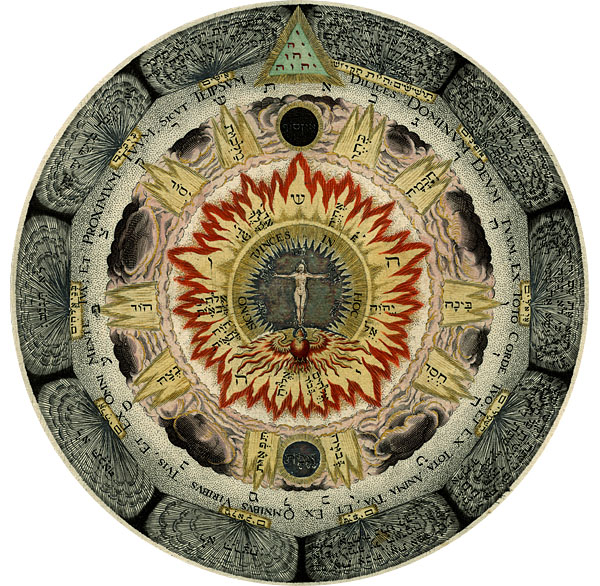
The first of these lectures is now available. It is given by my colleague Peter Forshaw, an expert of esotericism in early modern intellectual history, and particularly of alchemy. In the lecture, Peter speaks about one of his favourite authors: Heinrich Khunrath (1560-1605). The BPH website blurb has more:

“In the webinar a focus is put on Khunrath’s Amphitheatrum Sapientiae Aeternae – The Amphitheatre of Eternal Wisdom (originally published in 1595), which has traditionally been considered to be a strange mix of Christianity and magic. Peter elaborates on the alchemical symbolism of 4 circular and 5 rectangular engravings integrated in the Amphitheatrum. A famous plate is the Tabula Smaragdina or The Emerald Tablet, to be considered one of the main inspirational works for alchemists, Hermetic philosophers and Rosicrucians. Aldous Huxley even mentions the Tablet contains an in-depth summary of what he calls the ‘Perennial Philosophy’, a timeless science of soul that keeps on surviving through the ages.”

Do check it out. Then wait until November, when Peter will be back with his second webinar lecture on Michael Maier’s Atalanta Fugiens.

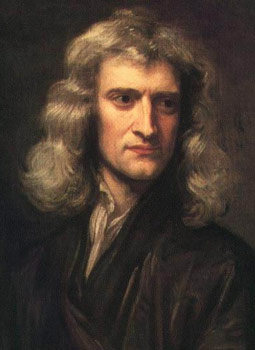
William Newman demonstrates alchemical transmutation – with a few notes on whiggishness

The perpetually mystified Newton

When I press the “publish” button for this post I shall immediately duck and take cover from allegations of whiggishness. The title of the lecture I post below, “Why did Newton believe in alchemy?” is precisely the sort of question-asking that has recently been criticised in the history of science blogging community in a recent upsurge of discussions about whig history and misapplication of categories in narrating or explaining science history. As Rebekah Higgitt wrote on teleskopos back in 2010, the “Newton as alchemist” trope seems to be a perennial surprise, and she suggested (I think convincingly) that the very fact that journalists but also scholars continue to introduce this topic precisely as a surprise – no doubt to attract the attention of their audience – is actually just perpetuating the mystery rather than leaving it behind and moving on. The problem is not only that we should start by acknowledging the state-of-the art established knowledge in the field (which in the case of Newton means at least departing from such works as Robert Westfall’s Never at Rest, and Betty Jo Teeter Dobbs’ The Janus Face of Genius) rather than by perpetuating the research questions of more than half a century ago. The problem is also that by playing the surprise card, we encourage people to ask questions that are poorly formulated and misleading in the first place. Questions such as, “was Newton a scientist or a sorcerer?” As Thony Christie will tell you, that’s a completely silly question, which cannot avoid distorting the material it’s supposed to clarify. To put it in histsci jargon, the question is too far removed from “actor’s categories” to make any sense.

(more…)

Religion and Scientific Change: The Case of the New Natural Theologies between the World Wars (2/2)

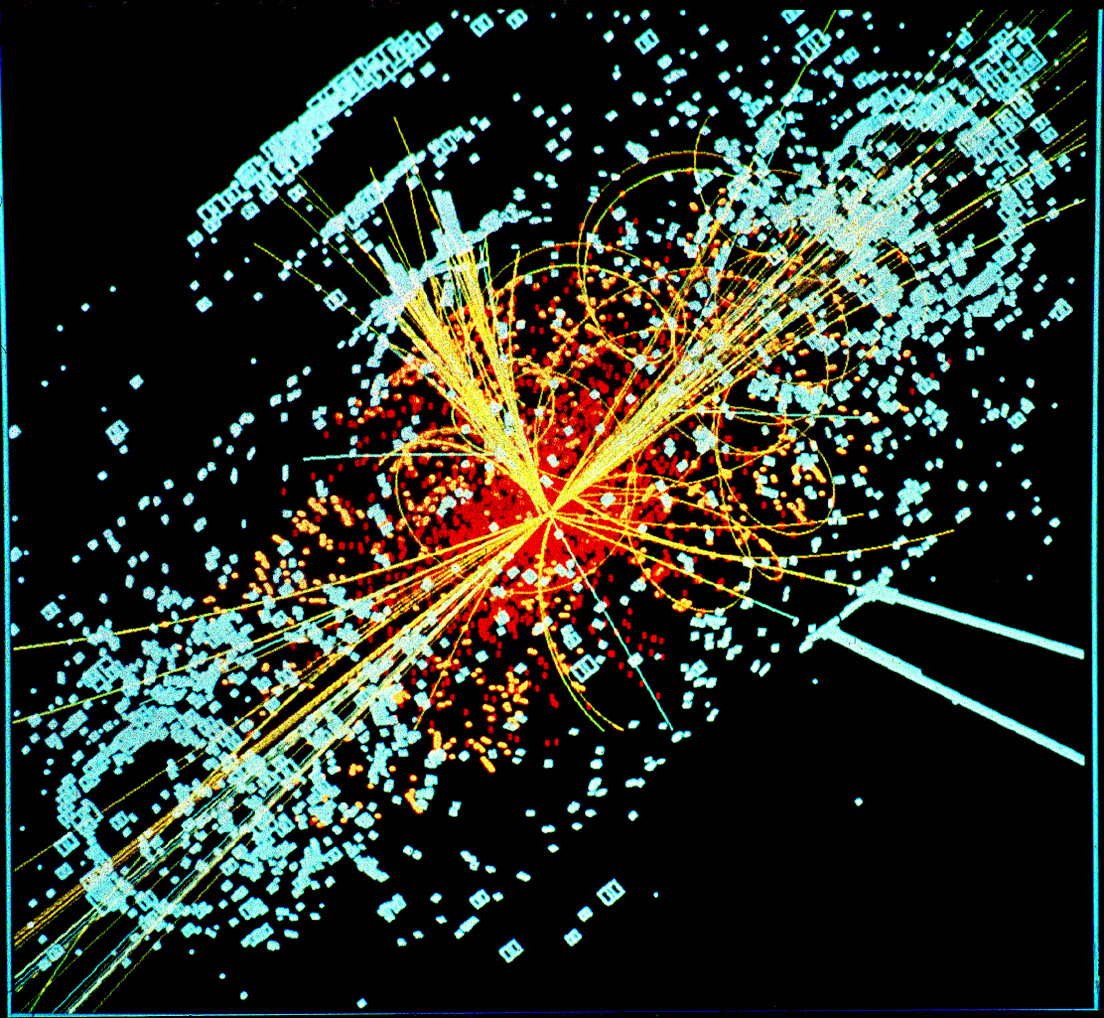
Today, July 4 2012, Cern announced the likely detection of the elusive Higgs boson – known by the popular press as the “God particle”.

Last installment of my lecture on “Religion and Scientific Change” closed by introducing three levels on which claims about relationships between religion and science should be analysed: the institutional, the socio-cultural, and the individual. I was going to wait a couple of days with releasing the rest, but since news headlines today have been all about the discovery of the “God particle” in the bowels of the Large Hydron Collider at Cern, it  seemed highly appropriate to continue. Why is it that such a (truth be told, rather ridiculous) religious pet-name has been put on the elusive boson? Read on, and you might find out. (And: happy Higgs boson day!)

(more…)

Religion and Scientific Change: The Case of the New Natural Theologies between the World Wars (1/2)

Earlier this spring I gave an Illustre School lecture at Spui25 in Amsterdam, on the lofty topic of the relationship between science and religion in the early 20th century. A significant part of my PhD dissertation concerns this topic, and I hope that the lecture provides a relatively accessible  (=popularized) account of some of the questions I grapple with there. There is also a methodological concern in this lecture. As the abstract stated:

Since the European Enlightenment, the relation between science and religion has been a topic of much public interest. Usually, however, it has been a debate formed by heavily vested interests: in the 19th century, scientists attacked organized religion as a part of their emancipation from the church; vice versa, religious spokespersons have been eager to claim compatibility between doctrines of faith and emerging new authoritative views on nature. Even today, it remains the case that most academic research on relations between science and religion are driven either by the current “new atheism” vogue, or funded by religiously motivated organizations, such as the massively influential Templeton Foundation. The result has been a loss of nuance and critical perspective. In order to remedy this situation, one needs, on the one hand, to broaden the scope and look at the wider social contexts of scientific knowledge production and interaction with religious institutions, and, on the other, to be more precise by looking at particular instances of such interaction.

Continuing my practice from an earlier talk on a similar topic, I will make the manuscript of the lecture available here, in two installments. You’ll find the first part below.

(more…)

Magic and how to write about it – 2nd ESSWE thesis workshop, July 6, 2012

This summer the European Society for the Study of Western Esotericism is hosting its second Thesis Workshop in Amsterdam. Participation is free, and the intention is to provide a one-day platform for people involved with academic research in western esotericism on the MA and PhD levels to get together, discuss ideas and research challenges, make connections with other students, and with established scholars in the field. The workshop coincides with the ESSWE board meeting, which means that a number of senior scholars will be present and approachable.

(more…)

European Identity Politics and the Memory of Paganism – a conference panel in Amsterdam, 20 April 2012

Last December I was approached by Markha Valenta, a colleague in the history department of the UvA and an occasional contributor to the OpenDemocracy project, asking if I wanted to organize a panel for the upcoming international conference on “Regimes of Religious Pluralism in 20th-Century Europe”. The invitation was inspired by some of the things I wrote on this blog concerning Behring Breivik and religion last summer, and my role would be to compose a “heterodox” component for the conference. I said yes, and started contacting some people. Now, one month before the conference starts, we have three speakers and a juicy topic: “European Identity Politics and the Memory of Paganism”. Below follows a description of the panel’s theme, and a list of speakers and titles.

(more…)

Science and religion for lunch? Illustre School lecture, 12 April 2012

Lecture at Spui25, Amsterdam

I have been invited to give a public lecture in the Illustre School’s lunch lecture series, “Geesteswetenschappen presenteert” (“The Humanities present…”). The topic is nothing less than “The relationship between science and religion”, which I will of course set forth in a final and authoritative manner in the exactly 18 minutes that I am given…  So if you want a heavy lunch on April 12, please do come to Spui25 in the centre of Amsterdam. Seats are limited, so you need to register at Spui25’s website if you want to come (please note that registration only opens one month in advance of the lecture).

The full program can be found here, but the abstract reads as follows:

(more…)

Published in: on March 5, 2012 at 4:51 pm  Comments (2)  
Tags: ,

Esoteric news, January 2012

Among the updates: 1st International Conference on Contemporary Esotericism

A number of newsworthy things have popped up in the world of esotericism scholarship lately, but as I have been tied up with reaching deadlines, they have not found their way to Heterodoxology yet. The solution? A brief list of updates, below. Some of it you may already have read about over at Invocatio, the Phoenix Rising website, or some other etheric place, but no harm is done in hearing something twice.

(more…)

ESSWE3 coming up

The third biannual international conference of the European Society for the Study of Western Esotericism (ESSWE) is fast approaching. As previously announced, “ESSWE3” will be held in Szeged, Hungary, on July 6-10. A detailed program of the conference, listing speakers, paper titles, place and time, etc., has recently been published by the conference organizers. Check it out.
(more…)

More lectures available from the INASWE inaugural conference

As mentioned recently, the new local network of the ESSWE in Israel recently held their inaugural conference. I already posted Wouter Hanegraaff’s inaugural lecture on Jung and the Eranos circle; however, the conference organizers have taken care to record and make available seven other lectures as well. Most deal with Kabbalah, both Jewish and Christian, as one would perhaps expect given the location and special local competence. The lectures by Isaac Lubelsky and Boaz Huss both discuss Zionism, and esoteric aspects and contexts of Zionist thought and ideology. There is also a sort of introductory lecture on Traditionalism by the specialist of that politicized esoteric current, Mark Sedgwick. If all that is not juicy enough, Julie Chajes’ lecture promises nothing less than a peak into Christian Zionist Sexual Mysticism (the latter, I should add, in a Victorian context). You’ll find them all below.

(more…)