Esotericism and the Academy – a book you should get next year

Next year’s most anticipated publication in the field of esotericism has just been advertised from Cambridge University Press: Wouter Hanegraaff’s much awaited book, Esotericism and the Academy: Rejected Knowledge in Western Culture. The book has briefly been mentioned on Heterodoxology before, but now we can refer to the official abstract from CUP:

“Academics tend to look on ‘esoteric’, ‘occult’ or ‘magical’ beliefs with contempt, but are usually ignorant about the religious and philosophical traditions to which these terms refer, or their relevance to intellectual history. Wouter Hanegraaff tells the neglected story of how intellectuals since the Renaissance have tried to come to terms with a cluster of ‘pagan’ ideas from late antiquity that challenged the foundations of biblical religion and Greek rationality. Expelled from the academy on the basis of Protestant and Enlightenment polemics, these traditions have come to be perceived as the Other by which academics define their identity to the present day. Hanegraaff grounds his discussion in a meticulous study of primary and secondary sources, taking the reader on an exciting intellectual voyage from the fifteenth century to the present day and asking what implications the forgotten history of exclusion has for established textbook narratives of religion, philosophy and science.”

More than just a work on Western esoteric ideas and currents, the book is also a significant contribution to intellectual history more generally, and especially to the history of the humanities. It should therefore deserve attention far beyond the field of esotericism once it is published, in January 2012.

Creative Commons LicenseThis blog post by Egil Asprem was first published on Heterodoxology. It is licensed under a Creative Commons Attribution-ShareAlike 3.0 Unported License.

Published in: on July 15, 2011 at 12:24 pm  Comments (3)  
Tags:

Review: Mark Morrisson’s “Modern Alchemy”

(The following is my review of Mark Morrisson’s Modern Alchemy. The final version was published in Aries 11.1).

In 1901 physicist Ernest Rutherford and chemist Frederick Soddy, tucked away in a laboratory at McGill University, Montreal, Canada, were struck with amazement as they watched the element thorium transform into an inert gas. Soddy, exclaiming that they had witnessed nothing less than transmutation, was warned by his more temperate colleague: “For Mike’s sake, Soddy, don’t call it transmutation. They’ll have our heads off as alchemists”.

Alchemy would, however, be invoked frequently during the decades to come; not with reference to obscure occultists in the secret vaults of hermetic societies, but in connection to new discoveries concerning radioactive decay. Indeed, in its the early decades, what would become nuclear physics was commonly labelled “modern alchemy”. The crucible and athanor had been replaced by cloud chambers, spectroscopes, and ionization chambers,  but there was a nagging feeling that the ancient and modern alchemists ultimately shared the same goal: the transmutation of elements.

(more…)

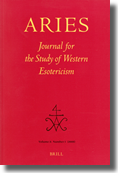
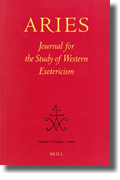
Aries 11.1

Heterodoxology has aimed to establish the practice of reviewing new publications and releases in the field of esotericism, particularly notifying about current issues of the journal Aries. Aries 11.1 has been out for a couple of months already, so this comes somewhat late.

(more…)

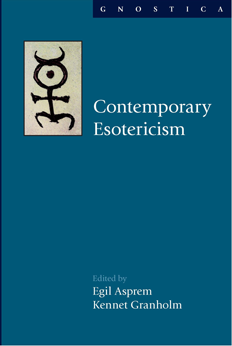
Contemporary Esotericism – a pre-production advertisement

One of the reasons for not writing here very often this spring is that I am co-editing a major volume in my “spare time”. Last week I visited my good friend, colleague and co-editor Kennet Granholm at Stockholm University, to discuss some final issues. This weekend, we ship the manuscript off to Equinox Publishing – a full 689  pages – ending a period with much editorial work. To celebrate this, I’ll kick off some pre-production advertising of the volume, which bears the title Contemporary Esotericism.

(more…)

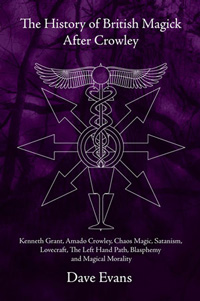
British magic after Crowley: review

Although Aleister Crowley has become the icon of modern ritual magic and occultism, magic did not end with his death in 1947. While approximately a dozen books have been devoted to Crowley, surprisingly little has been written about his legacy in contemporary occultism. His impact on later currents such as contemporary witchcraft, Satanism, and various pagan groups has often been mentioned, but vast areas still remain uncharted, from Chaos Magic and cyber paganism to the recent history of the Ordo Templi Orientis, the Golden Dawn, and Crowley’s A\A\. The result is that a relatively broad range of contemporary western esotericism remains essentially unstudied. Below follows my review of Dave Evans’ contribution to this field of study, recently published in Aries 10.2. Hyperlinked for the occasion.

(more…)

Breaking the silence – and some news

Summer time has been upon me and Heterodoxology has been dead silent for a while. Unfortunately, when I look at the pile of things to do these coming months I fear it may stay that way. This is nevertheless an honest attempt at getting things rolling again. I’ll just kick off with some whimsically chosen (perhaps relevant) news:

(more…)

Marginality in The European Legacy

There is a call for papers out for an upcoming special issue of The European Legacy, the official organ of the International Society for the Study of European Ideas (ISSEI). The issue will focus on the problem of marginality in European intellectual history – both posed as an empirical problem and as a problem for methodological and theoretical reflection in humanities disciplines which too often focus on “canons” (whether in art, literature, philosophy, religion, politics, or science). The topic should interest readers of this blog as much as it does me. The deadline is shortly after next vernal equinox, and the issue should be out shortly before the end of the world. More information (official CFP) below. (Thanks to Renaud Evrard for bringing this to my attention).

(more…)

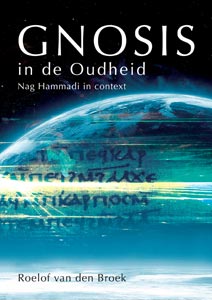
Gnosticism in Antiquity: book presentation in a historical environment

The blog has been silent for a while as I have been busy with finishing up classes and managing upcoming deadlines, among other things. To get going again, I’ll take this opportunity to write about a book presentation I went to last week. The specialist of gnosticism, hermetism and early Christianity, Roelof van den Broek, presented his latest book, Gnosis in de Oudheid: Nag Hammadi in Context in the magnificent Huis met de Hoofden (“house with the heads”) in Amsterdam. Below follows a few words about the book, the house, and the occasion.

(more…)

New articles from Aries

The latest issue (10.1) of Aries: The Journal for the Study of Western Esotericism has recently been published. It contains four research articles, on John Dee’s angel conversations (J. J. Sledge), a little-known text by Martinès de Pasqually ( Dominique Clairembault), the curious link between engineering  and spiritualism in the case of John Murray Spear (Joseph Laycock), and some aspect of Aleister Crowley’s sexual magic and the connection with some yogic traditions (Gordan Djurdjevic). Also seven book reviews. See below for bibliographic details and short reviews of the articles.

(more…)

New Journal: Preternature

This had escaped me, but it seems that the Journal for the Academic Study of Magic has been discontinued and replaced by a new project: Preternature: Critical and Historical Studies on the Preternatural. It sounds promising. The new journal is housed at Pennsylvania State University, but like its predecessor it’s published from Oxford, UK.  They are currently accepting submissions and book review requests.

According to the website, the new journal is:

(more…)