Review of Contemporary Esotericism

A blog review of Contemporary Esotericism

A blog review of Contemporary Esotericism

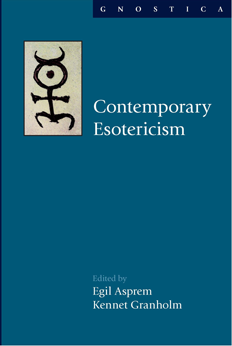
Watch out for the next generation of esotericism scholars! We’re already here; and, according to Wouter J. Hanegraaff, the volume on Contemporary Esotericism that appeared on Equinox earlier this year, edited by Kennet Granholm and myself, is the shape of things to come. We hope he’s right, of course.

The 20 chapters of that volume covered much ground, but, as Wouter comments:

(more…)

The sources of gnosis – an evening of gnosticism scholarship in Amsterdam

van den Broek Gnostic Religion cover

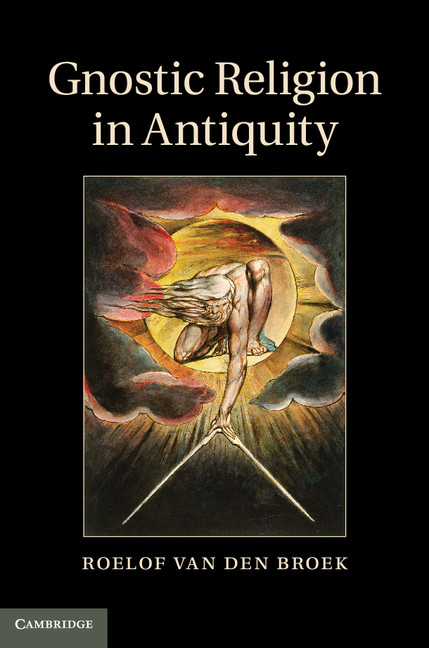
A new book on the primary sources of “gnosticism” by Roelof van den Broek

On the 29th of May there will be an evening of gnosis at the Spui25 venue in Amsterdam. A group of scholars, some known as world-leading specialists of gnosticism and ancient Christianity will meet to discuss the latest book by Roelof van den Broek, Gnostic Religion in Antiquity (Oxford University Press, 2013 – essentially an English version of his 2010 book in Dutch, mentioned previously at Heterodoxology). At the centre of discussion is the primary sources of “gnostic” religion: what’s really in there? How does the content of these sources relate to recent understandings of gnosticism, whether by scholars, educated laypersons or among contemporary spiritual practitioners?

Roelof van den Broek himself is joined by the Nag Hammadi scholar Matthew Dillon (Rice University), the specialist of religions in antiquity Albert De Jong (Leiden University), and Wouter Hanegraaff and Jacqueline Borsje from the Religious Dynamics and Cultural Diversity research group at the University of Amsterdam.

The event is free, but requires registration (see website).

Announcing ContERN session at ESSWE 4 conference

The big event of the year for esotericism scholars in Europe is fast approaching: the ESSWE4 conference. During this event, there will be a special panel session on contemporary esotericism, arranged by the ContERN network. It deals with fundamental challenges for research on contemporary esotericism, and features some well-known scholars of modern and contemporary esoteric and religious movements. Read more about it at the ContERN website.

easprem's avatarContemporary Esotericism Research Network

The ESSWE4 conference in Gothenburg is only a month and a half away, and judging from the conference website it is looking quite promising. As previously mentioned, there will be a ContERN panel session at the conference. We are happy to announce that a time for this event has now been confirmed: June 28, at 13.00-14.00. A full description of the panel event follows below.

ContERN Panel Discussion: Problems and Potentials in the Study of Contemporary Esotericism

(Convened and moderated by Egil Asprem & Kennet Granholm)

In 2012, the hitherto neglected study of contemporary esotericism was put firmly on the research agenda of esotericism scholars: The year saw the foundation of the Contemporary Esotericism Research Network (ContERN), the organization of the 1st International Conference on Contemporary Esotericism in Stockholm, and the publication of a major collected volume, Contemporary Esotericism (Equinox / Acumen, eds. Asprem & Granholm)…

View original post 219 more words

Published in: on May 12, 2013 at 9:31 pm  Leave a Comment  

The (all too) secret history of Vril

Julian Strube's first book, Vril, becomes a standard reference for knowledge about this peculiar concept and its even more peculiar history.

Julian Strube’s first book, Vril, becomes a standard reference for knowledge about this peculiar concept and its even more peculiar history.

It is astonishing how much of modern occultism is dependent on works of fiction. The machinations of secret societies, the malicious rituals of satanic cults, and the magicians’ adventures on the astral plane have all been portrayed in great detail in works of fiction, which have in turn directly influenced the creation of real organisations and inspired new ritual practices among self-styled occultists. The entire current of Rosicrucian initiatory societies even had its main impetus in a text considered by its authors to be a playful ludibrium – although no doubt one that expressed deep convictions. This dynamic of fiction turning to fact is itself perhaps nowhere better explored than in Umberto Eco’s work of fiction, Foucault’s Pendulum. In recent years there has been quite some interest in such dynamics among contemporary scholars of religion as well – focusing on what they call “invented”, “hyperreal”, or “fiction-based” religions. While these scholars tend to focus on relatively recent cases – Jediism, Tolkien-spirituality and the sort – we have every reason to believe that this is a much older process. Particularly, it would seem, in the Western esoteric context.

A case in point is the concept of “vril” – an occult fluid or force that can be manipulated, controlled and directed by spiritually advanced initiates. It was invented by the the author and politician Edward Bulwer-Lytton (1803-1873) in his novel, The Coming Race (1871).

(more…)

Blogging in the Societas Magica newsletter

Societas Magica headerThe Societas Magica (a scholarly society you should know about if you’re into the academic study of magic, esotericism, and related stuff) has been running a great and informative newsletter for many years. In fact, since the society was founded by Richard Kieckhefer and others back in 1995 (check out the back-issues here). In addition to informing about conferences and publications, it usually comes with a slightly longer essay. The 2013 Spring issue that has just been released runs a nice article by Laura Mitchell on academic blogging in the field of esotericism and magic. I was of course  pleased to see the nice discussion of Heterodoxology there, but more importantly it is excellent that a scholarly society brings the question of blogs to the full attention of its membership. Mitchell discusses some of the advantages and possibilities of research blogging, and classifies different types based on how they are run and what sort of material they include (individual, group-blogs; research, personal experiences, academic life etc.). The blogs mentioned in the essay should all be familiar to readers of Heterodoxology: Invocatio, the Religious Studies Project, Whewell’s Ghost, the Hermetic Library, and the Ritman Library Blog are all old friends and virtual neighbours.

Somehow it is also a bit amusing that the virtues and potentials of these blogs are being discussed in the old medium of a newsletter – one that is digitized and distributed by hyperlink in addition to paper. One gets the feeling of standing somewhat hesitantly in between different forms of media. Thus another great piece of news in this issue is Claire Fanger’s announcement that  the Societas Magica is about to launch a new blog of its own. Damon Lycourinos at the University of Edinburgh is going to take the first shift at running it. It’s something to look forward to (I previously commented on an esoterica blogpost of his here). It promises to be a valuable addition to the slowly growing number of academic blogs in this area.

Thanks to Sarah for bringing this to my attention.