On Enoch, metal, and lonely girls: a response to Dan Harms’ review of Arguing with Angels

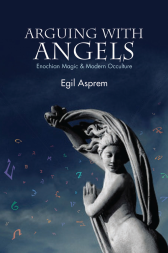
Arguing with Angels book cover

A first review of Arguing with Angels

Dan Harms, a well-known scholar of Western magical traditions, has recently published a brief review of my book, Arguing with Angels. Harms will perhaps be best known as a connoisseur of Lovecraftiana, having co-written  The Necronomicon Files with John Wisdom Gonce III, and published the Cthulhu Mythos Encyclopedia a few years ago.

You can read the review for yourself on Harms’ blog. It is generally positive:

 “the book is well-written and comprehensively [and] covers the area in question in ways that are helpful for both scholars and more casual readers. … It does an admirable job of covering the complexities of Enochian magic, both in regard to the system itself and the textual transmission thereof.”

Despite being generally positive, Harms also finds that the book had a larger potential which it did not fulfill, and he points to a few  omissions that he would have liked to see addressed. I will allow myself a brief response, as I find that Harms’ questions are important and likely to be addressed by other attentive readers with some background knowledge of the topic.

Arguing with Angels is, to begin with, a book that covers a pretty long time span, and deals with a number of different historical contexts, so it shouldn’t be surprising that some readers will be left wanting for more in certain cases. Harms mentions two cases in particular, one, so to speak, in each end of the historical narrative.

To begin with the earliest example, Harms would have liked to see a proper discussion on the Enoch figure, which could “have helped the reader with regard to the Biblical roots of Dee’s project”. The Biblical figure of Enoch, the patriarch in the seventh generation after Adam, who according to Genesis was taken to heaven and “walked with God”, and according to the apochryphal Book of Enoch acted as a mediator between God and the fallen angels, and, who according to certain Jewish mystical traditions was apotheosised by transforming into the archangel Metatron, does indeed constitute a context for Enochian magic. Besides that, he is a fascinating mythological figure in his own right. However, the most fascinating material about Enoch was simply not available to Dee: the Book of Enoch did not survive in the West, and only became available to European scholars in 1773, when Scottish adventurer James Bruce returned with three copies translated into Ethiopian that he had presumably plundered  from a monastery in Abyssinia.

Not adding a longer discussion of Enoch was, however, a conscious choice. Why? Because the relation between Enoch and Dee & Kelley’s angel conversations has typically been made into something that it was not – a trap which I wanted to avoid. In fact, the argument could be made that the term “Enochian” is a bit of a misnomer for the magical systems, language, and metaphysical speculations they “received”. While discussions of Enoch appear in the angel diaries, he is only one exotic reference among many others. Enoch was rumoured to have been the previous person to have known the secrets that were revealed to Dee and Kelly, for example, but their ultimate source was divine. The language, furthermore, had also been known to Enoch’s great-great-great-great grandfather: Adam. At any rate, in the first chapter on Dee and Kelley’s conversasions, it is more pertinent to focus on the actual immediate historical contexts, and what is known about Dee’s intensions, agendas, and use of sources. In that context, a preoccupation with Enoch is not all that important, except as a mythological example of someone who had achieved an unusual communication with God and the angels. Enoch was, however, far from alone in that achievement: other Biblical examples include Jacob, Esdras, Daniel, and Tobit. Ultimately, the contexts of natural philosophy and “low-culture” catoptromantic practices are much more important for understanding where Dee’s angel conversations come from.

The second omission Harms points to concerns contemporary references to Enochian in popular occulture. There are, for example, a number of bands in genres spanning metal, goth, and electronica that have used the Enochian language or other references to the system in their music and lyrics. Some might also remember the mystery youtube phenomenon “Lonelygir15”, who was seen cramming the Enochian alphabet in preparation for a mysterious and sinister ceremony.  The popcultural significance is indeed important and interesting, and again, it was seriously considered for inclusion (the extremely careful reader will even find me excusing myself on this very point in footnote 11 to the introduction). In the end I decided not to write about this as it diverged too much from the general argument and drift of the book as a whole. It should be remembered that Arguing with Angels is, above all, a contribution to the slowly emerging academic literature on the reinterpretation and legitimacy of ritual magic in the modern world, with the history of Enochian as a convenient case. Of course, interplay with popular culture is immensely important also for this type of research, and much remains to be done. In the present work, however, emphasis was put on internal debates and conflicts among those who truly practice magic, and less with the broader pop-occultural landscape which has been forming approximately since the 1970s.


For other readers who may have missed the same things as Harms did, I hope this response helps to fill the picture slightly.

 
Creative Commons LicenseThis work by Egil Asprem was first published on Heterodoxology. It is licensed under a Creative Commons Attribution-ShareAlike 3.0 Unported License.


Religion and Scientific Change: The Case of the New Natural Theologies between the World Wars (2/2)

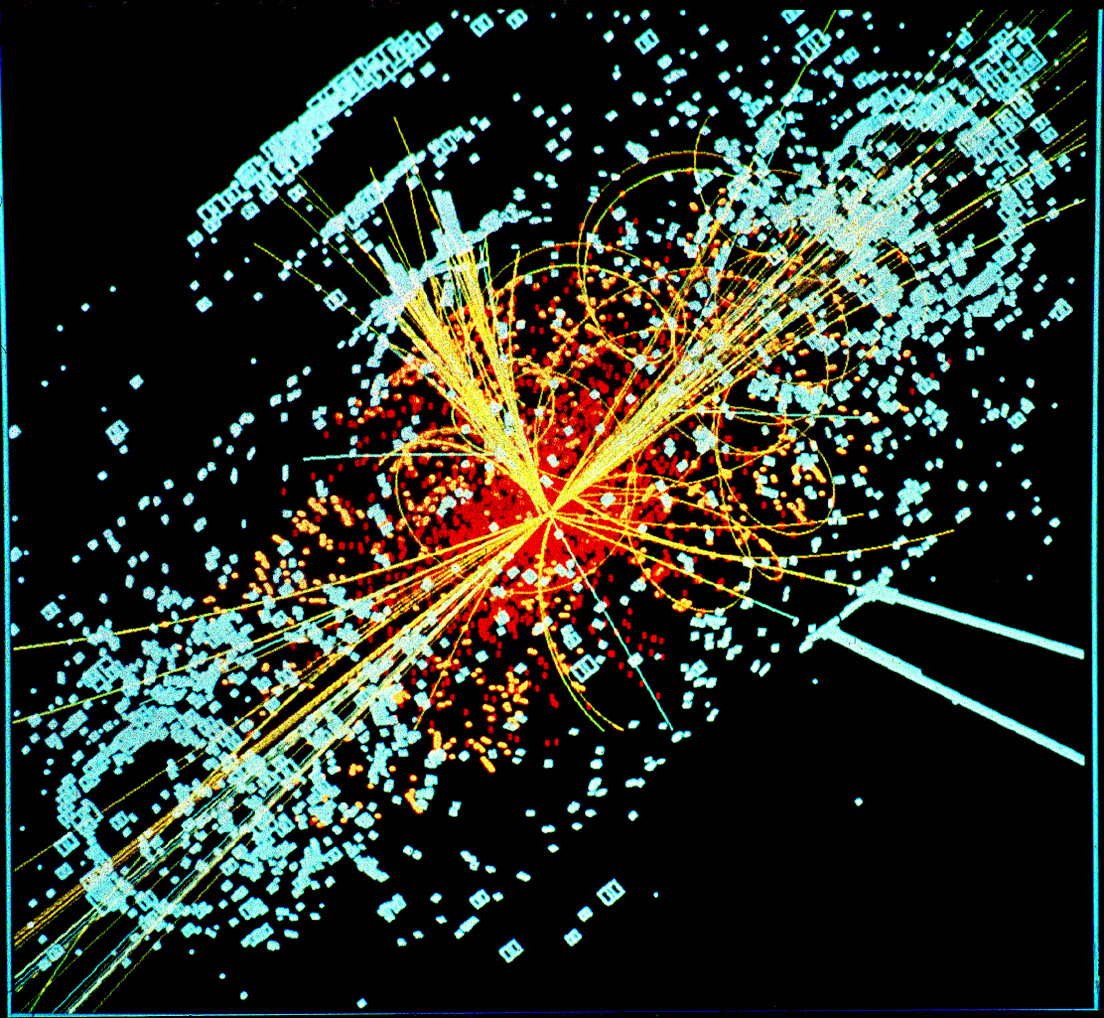
Today, July 4 2012, Cern announced the likely detection of the elusive Higgs boson – known by the popular press as the “God particle”.

Last installment of my lecture on “Religion and Scientific Change” closed by introducing three levels on which claims about relationships between religion and science should be analysed: the institutional, the socio-cultural, and the individual. I was going to wait a couple of days with releasing the rest, but since news headlines today have been all about the discovery of the “God particle” in the bowels of the Large Hydron Collider at Cern, it  seemed highly appropriate to continue. Why is it that such a (truth be told, rather ridiculous) religious pet-name has been put on the elusive boson? Read on, and you might find out. (And: happy Higgs boson day!)

(more…)

Religion and Scientific Change: The Case of the New Natural Theologies between the World Wars (1/2)

Earlier this spring I gave an Illustre School lecture at Spui25 in Amsterdam, on the lofty topic of the relationship between science and religion in the early 20th century. A significant part of my PhD dissertation concerns this topic, and I hope that the lecture provides a relatively accessible  (=popularized) account of some of the questions I grapple with there. There is also a methodological concern in this lecture. As the abstract stated:

Since the European Enlightenment, the relation between science and religion has been a topic of much public interest. Usually, however, it has been a debate formed by heavily vested interests: in the 19th century, scientists attacked organized religion as a part of their emancipation from the church; vice versa, religious spokespersons have been eager to claim compatibility between doctrines of faith and emerging new authoritative views on nature. Even today, it remains the case that most academic research on relations between science and religion are driven either by the current “new atheism” vogue, or funded by religiously motivated organizations, such as the massively influential Templeton Foundation. The result has been a loss of nuance and critical perspective. In order to remedy this situation, one needs, on the one hand, to broaden the scope and look at the wider social contexts of scientific knowledge production and interaction with religious institutions, and, on the other, to be more precise by looking at particular instances of such interaction.

Continuing my practice from an earlier talk on a similar topic, I will make the manuscript of the lecture available here, in two installments. You’ll find the first part below.

(more…)

ESSWE newsletter, Spring 2012

The ESSWE’s newsletter for Spring 2012 was sent out to the Society’s members this morning. It has already found its way online, and can be read here.  The editor, Per Faxneld, has put together a nice little overview of what is going on in the field, including a report from the three centres at Paris, Amsterdam, and Exeter. Besides this, Sasha Chaitow (of Phoenix Rising Academy) presents her PhD project on Péladan (“A Babylonian Mage in 19th Century Paris”), while Mike Zuber, who is just about to join the Amsterdam group as a PhD candidate, describes his upcoming research on Pietism and alchemy. It should be exciting stuff.

There is also a report on the second INASWE conference, that took place in Haifa, Israel, earlier this Spring. The Israeli group has rapidly become the most active local network in the ESSWE, as it has now produced two workshops/conferences in less than one year (see this post for their first event last summer)! Finally, the “scholar interviews” this time are with Kocku von Stuckrad, and yours truly. Enjoy!

A good year for magic (research)

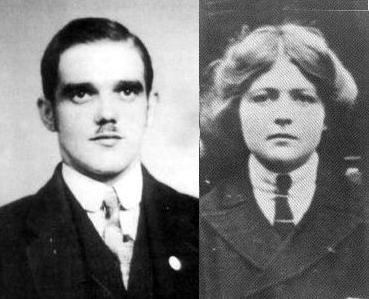
Occultists Franz Bardon and Dion Fortune are the subject of a recent book by Maia Daw.

The first half of 2012 has been a great year for research on modern Western ritual magic. I have already mentioned the publication of my own book, Arguing with Angels, which deals with that obscure system of angel magic known as “Enochian”. I have also mentioned the forthcoming thesis workshop on magic, co-hosted by the ESSWE and the Chair for History of Hermetic Philosophy and Related Currents here in Amsterdam. There are however a couple of other publications that have appeared so far this year as well, which I have been meaning to mention for a while. Let’s get to it.

(more…)

Magic and how to write about it – 2nd ESSWE thesis workshop, July 6, 2012

This summer the European Society for the Study of Western Esotericism is hosting its second Thesis Workshop in Amsterdam. Participation is free, and the intention is to provide a one-day platform for people involved with academic research in western esotericism on the MA and PhD levels to get together, discuss ideas and research challenges, make connections with other students, and with established scholars in the field. The workshop coincides with the ESSWE board meeting, which means that a number of senior scholars will be present and approachable.

(more…)

Registered for Contemporary Esotericism yet?

There is still time, but the early bird registration for the first international conference on Contemporary Esotericism is about to expire on May 31. So if you are considering to attend what looks to be a very interesting conference with many juicy topics on the agenda, you may save some euros if you register now.

If you still need more convincing, do take some time to check out the list of confirmed speakers and titles that has now been made available. There are about fifty of them, and thematically they range from afro-american esoteric milieus, to occultism in the occupy movement, to Philip K. Dick’s newly released Exegesis, to the films of Alejandro Jodorowski,  to  ancient astronauts, entheogens, esotericism in the environmentalist movement, Satanism, left-hand path magic(k), right-wing paganism, left-wing paganism, chaos, anarchy, underground distribution practices, and much, much else besides. Have a look.

Also while you are at it, you may check out the full abstracts for the four keynote lectures. Quoted below for convenience:

(more…)

Published in: on May 13, 2012 at 10:22 pm  Leave a Comment  
Tags:

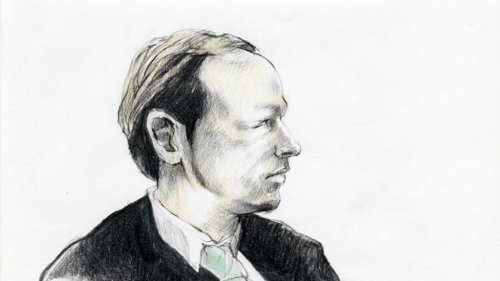
Circus Breivik

It is time for the circus of the century, when the trial against Anders Behring Breivik starts in Oslo this week. His defence is scheduled to begin on Tuesday (April 17), and even though the court has decided that no audio or video recording will be allowed, we can expect a theatre without its parallel in Norwegian juridical history.

(more…)

Update: Paganism and European Identity Politics at “Regimes of Religious Pluralism” Conference

The conference on “Regimes of Religious Pluralism” is now only a week away. The final programme has just been released, and you can check it in pdf here: Regimes of Religious Pluralism Conference Programme.

As announced here earlier, we will be having a workshop on “European Identity Politics and the Memory of Paganism” on Friday, April 20. This panel/workshop will take place at 14.30 in the afternoon, and we will be hearing about the “pagan” emphasis of the European New Right, the occultist and pagan-revivalist influences on early-twentieth century Irish nationalism, and, not least, about contemporary New Age Nazism and the Aryan Jesus from outer space.  In short, a perfectly satisfying way to spend an afternoon.

The Religious Studies Project – and a podcast on fiction-based religion

ImageI have been meaning to post on an excellent new initiative that kicked off in January: The Religious Studies Project (RSP). It is rapidly becoming the best (and only?) webportal for the academic study of religion in Europe, sponsored by the British Association for the Study of Religion. (The Americans have things like Religion Dispatches, and a good number of related blogs – including by the legendary Peter Berger). I’ll let RSP introduce themselves:

(more…)