Jesus was a … shaman (heterodox Christologies II)

Jesus the shaman

Jesus the shaman

Next up in what is quickly becoming a series on heterodox Christologies: Jesus was really a shaman. This claim was found in Norwegian media last week – more precisely in the Sami branch of the state channel NRK’s online news site. The (neo)shamanic healer Eirik Myrhaug went on record saying that he saw Jesus as “a great shaman”: “after all he was 40 days and 40 nights in the desert, and that’s a typical shamanic seance”.

This news item caught my attention because I have recently been working on an article on neoshamanism – or rather, on the genealogy and mythology of shamanism, as created by a motley crew of explorers, romantics, nationalists, psychedlelic gurus, anthropologists and historians since the 1600s – before it finally became a new religious movement in the 1960s. Myrhaug himself is of Sami descent, but his shamanic techniques appear to be derived from the anthropologist Michael Harner’s “core shamanism” – as is the case with the entire “revival” of shamanism in a Sami context. What struck me the most, however, was that Myrhaug’s shamanic interpretation of Jesus – which was heavily and predictably criticised by a Lutheran minister in the same news article – has a long history. “Jesus was a shaman” is in fact a stock element in the continuously expanding “universal shamanism” franchise.

(more…)

William Newman demonstrates alchemical transmutation – with a few notes on whiggishness

The perpetually mystified Newton

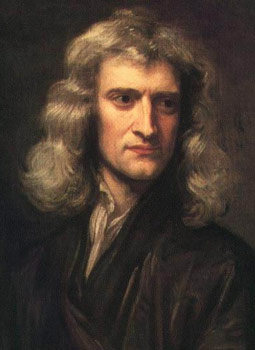
When I press the “publish” button for this post I shall immediately duck and take cover from allegations of whiggishness. The title of the lecture I post below, “Why did Newton believe in alchemy?” is precisely the sort of question-asking that has recently been criticised in the history of science blogging community in a recent upsurge of discussions about whig history and misapplication of categories in narrating or explaining science history. As Rebekah Higgitt wrote on teleskopos back in 2010, the “Newton as alchemist” trope seems to be a perennial surprise, and she suggested (I think convincingly) that the very fact that journalists but also scholars continue to introduce this topic precisely as a surprise – no doubt to attract the attention of their audience – is actually just perpetuating the mystery rather than leaving it behind and moving on. The problem is not only that we should start by acknowledging the state-of-the art established knowledge in the field (which in the case of Newton means at least departing from such works as Robert Westfall’s Never at Rest, and Betty Jo Teeter Dobbs’ The Janus Face of Genius) rather than by perpetuating the research questions of more than half a century ago. The problem is also that by playing the surprise card, we encourage people to ask questions that are poorly formulated and misleading in the first place. Questions such as, “was Newton a scientist or a sorcerer?” As Thony Christie will tell you, that’s a completely silly question, which cannot avoid distorting the material it’s supposed to clarify. To put it in histsci jargon, the question is too far removed from “actor’s categories” to make any sense.

(more…)

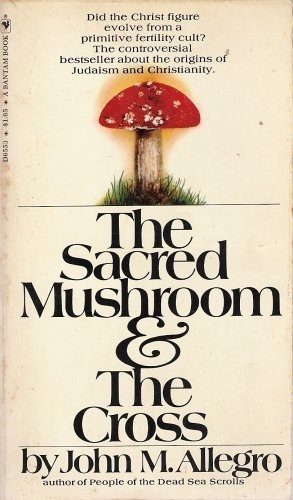
“Jesus was a mushroom” – Interview with John Allegro

In the last post I mentioned that Creative Reading has a post up on the biblical scholar John M. Allegro, who committed academic suicide in 1970 when he published a book arguing that Christianity had been a fertility cult with the  ingestion of psilocybin hallucinogenic mushrooms (fly agaric) as its central rite – the true “body of Christ”, as it were. That post has now been updated with a link to an interview with Allegro, conducted by two Dutch comedians for their satirical show, “Het Simplistisch Verbond” (the Simplistic Alliance), in 1976.

As Wouter points out in his blog post, the intention with the interview was no doubt to poke fun at what to any regular viewer comes across as a hilariously insane theory. Allegro swallows the bait whole and swims away with it. The interview is an intriguing insight into the scale of Allegro’s  theory of religion in general: religion has its origin in solar-phallic worship and entheogenic practices. An educational video for one of the theories of religion that is generally not taught in religious studies programmes. Perhaps for good reason. Watch it and find out why Jesus was a mushroom.

Coptic scholars are in a strange position compared to most other researchers of arcane and obscure corners of history: their field occasionally makes world-wide news headlines, especially when there is some text claiming something about a certain carpenter from Nazareth. Last week newspapers across the world announced that someone writing in  coptic on a piece of papyrus some time possibly in the 4th century had insinuated that the carpenter might have had a wife. Sensational, but well: it turns out the papyrus fragment is most likely not authentic. Read more about the arguments in this excellent post by Hugo Lundhaug and Alin Suciu. (For the record – this is the first time I reblog anything, so bear with me).

Alin Suciu's avatarAlin Suciu

First of all, it should be clearly stated that, although in the following lines we shall express our doubts concerning the authenticity of the so-called Gospel of Jesus’s Wife, our suggestions remain hypothetical until the ink of the document has been properly tested. Secondly, our analysis does not refer either to the figure of the historical Jesus, or to his marital status, which are beyond our field of expertise, but only to a literary fragment written in Coptic, whose identity is suspicious.

During the 10th International Congress of Coptic Studies, which took place September 17-22, 2012 in Rome, the Harvard Professor Karen L. King introduced to us a previously unknown Coptic papyrus fragment.

(SOURCE OF THE PHOTOGRAPH)

Her paper was delivered on Tuesday, September 18, from 7.00 o’clock P.M., in one of the rooms of the Patristic Institute ‘Augustinianum.’  We estimate that about…

View original post 1,476 more words

Launching ContERN with a Google group and a Call for Papers

As announced previously, a new network has been created with the aim of placing the field of contemporary esotericism clearly on the agenda of academic research: the Contemporary Esotericism Research Network, or ContERN for short (no connection with the Third International, we promise…). It is affiliated with the European Society for the Study of Western Esotericism (ESSWE), and everyone who participate in our activities is encouraged to become a member of that organisation (which can be done by applying online here).

There is currently a Google group which will work as a mailing list and discussion forum for the network (click here to sign up), and also a Facebook group for easy communication.

As the description on the Google group reads:

(more…)

Parapsychology in Germany – review of Heather Wolffram’s Stepchildren of Science (2009)

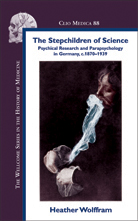
In 2009 a fat and promising book landed on my desk, fresh from the publisher. I had looked forward to it for a while, as the topic was highly relevant for my dissertation, and this was the first full-length academic study ever to look at it. It was furthermore written by an author whose articles on the same topic I had been following for a while, with great interest. The book was Heather Wolffram’s Stepchildren of Science: Psychical Research and Parapsychology in Germany, c. 1870-1939. I was going to write a book review for Aries, which I did. It only appeared this spring, however. Since it is already three years ago that the book was published, I think it is about time to share the review with a broader community. So please find the pre-publication version of the review below.

(more…)

Religion and Scientific Change: The Case of the New Natural Theologies between the World Wars (2/2)

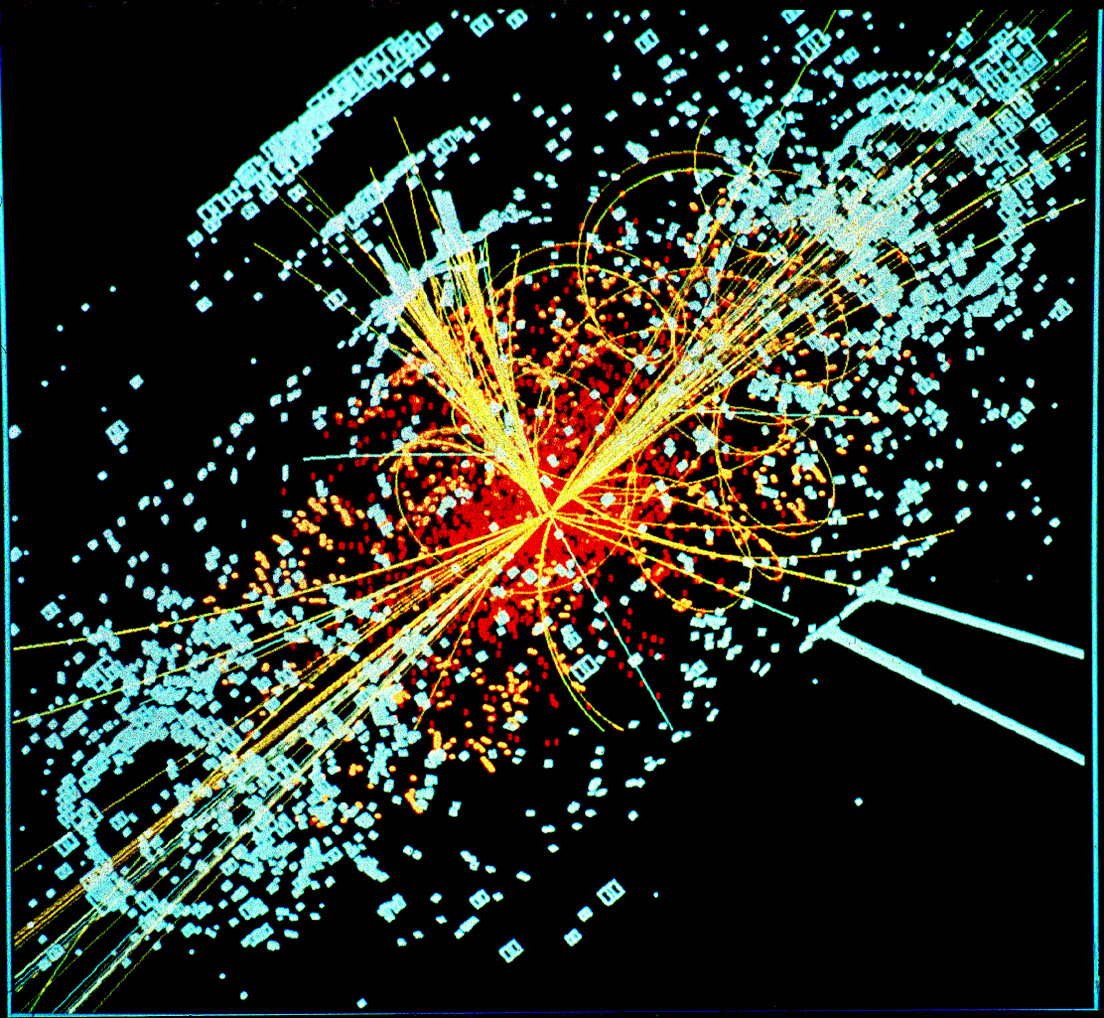
Today, July 4 2012, Cern announced the likely detection of the elusive Higgs boson – known by the popular press as the “God particle”.

Last installment of my lecture on “Religion and Scientific Change” closed by introducing three levels on which claims about relationships between religion and science should be analysed: the institutional, the socio-cultural, and the individual. I was going to wait a couple of days with releasing the rest, but since news headlines today have been all about the discovery of the “God particle” in the bowels of the Large Hydron Collider at Cern, it  seemed highly appropriate to continue. Why is it that such a (truth be told, rather ridiculous) religious pet-name has been put on the elusive boson? Read on, and you might find out. (And: happy Higgs boson day!)

(more…)

Religion and Scientific Change: The Case of the New Natural Theologies between the World Wars (1/2)

Earlier this spring I gave an Illustre School lecture at Spui25 in Amsterdam, on the lofty topic of the relationship between science and religion in the early 20th century. A significant part of my PhD dissertation concerns this topic, and I hope that the lecture provides a relatively accessible  (=popularized) account of some of the questions I grapple with there. There is also a methodological concern in this lecture. As the abstract stated:

Since the European Enlightenment, the relation between science and religion has been a topic of much public interest. Usually, however, it has been a debate formed by heavily vested interests: in the 19th century, scientists attacked organized religion as a part of their emancipation from the church; vice versa, religious spokespersons have been eager to claim compatibility between doctrines of faith and emerging new authoritative views on nature. Even today, it remains the case that most academic research on relations between science and religion are driven either by the current “new atheism” vogue, or funded by religiously motivated organizations, such as the massively influential Templeton Foundation. The result has been a loss of nuance and critical perspective. In order to remedy this situation, one needs, on the one hand, to broaden the scope and look at the wider social contexts of scientific knowledge production and interaction with religious institutions, and, on the other, to be more precise by looking at particular instances of such interaction.

Continuing my practice from an earlier talk on a similar topic, I will make the manuscript of the lecture available here, in two installments. You’ll find the first part below.

(more…)

Magic and how to write about it – 2nd ESSWE thesis workshop, July 6, 2012

This summer the European Society for the Study of Western Esotericism is hosting its second Thesis Workshop in Amsterdam. Participation is free, and the intention is to provide a one-day platform for people involved with academic research in western esotericism on the MA and PhD levels to get together, discuss ideas and research challenges, make connections with other students, and with established scholars in the field. The workshop coincides with the ESSWE board meeting, which means that a number of senior scholars will be present and approachable.

(more…)

“Varieties of Magical Experience” – a new article on Crowley, magic, and psychologisation

Magic, Ritual, and Witchcraft (Penn Press)

The November issue of Magic, Ritual, and Witchcraft ran an article by my colleague Marco Pasi, titled ”Varieties of Magical Experience: Aleister Crowley’s Views on Occult Practice”. It may safely be characterised as the most complete academic treatment of Crowley’s magical thought and practice that has so far been published in a peer-reviewed journal. It also ties in neatly with a discussion here at Heterodoxology and a couple of other blogs earlier this year (Tyromanteia and Invocatio), namely the question of the “psychologisation of magic”. A review is definitely in order.

(more…)