 It’s been silent here for a while. My excuse is a lot of traveling and lecturing over the past month. In trying to get back to blogging, I’ll give some thoughts on a concept I’ve been thinking about in connection with one of the lectures in Trondheim a few weeks ago: “emic historiography of science”.
“Emic historiography of science” – a possibly useful term

Lots of history of science blogging
It’s been a little quiet here as the new semester starts, with plenty of tasks to fulfill. While the heterodoxologist makes time for his next post, I suggest you visit Entertaining Research. That’s where this month’s issue of Giant’s Shoulders is at – the monthly History of Science Blog Carnival. There is really a lot to check out from there this time. (Heterodoxology is represented with this post on some papers received for last semester’s class on esotericism and science). Enjoy!
Esotericism, Religion and Science in Toronto – report on the IAHR (part 1)
 As shamelessly advertised on this blog before, there were several esotericism-and-science-related things happening at this years quinquennial world congress of the International Association of the History of Religion (IAHR) in Toronto. There was a three-session panel on esotericism, organized by my colleague Marco Pasi, and a two-session panel on science, religion and the arts in the early 20th century (under the title Seduced by Science), organised by my colleague Tessel Bauduin and myself. Having had more than a week now to overcome what was only a minor jet lag after all, it is time for a short report on events.
Occult Trajectories towards Science: the conclusion of a course
Last semester I taught an MA course on the troubled relationship between science and esotericism in the post-Enlightenment era. I blogged about some of the classes earlier, particularly on mesmerism (here and here), spiritualism, the interactions with the ideological superstructures of naturalism and positivism (here and here), Frederic Myers, William James and psychical research, and the encounter between Jung and Pauli. It’s a diverse subject, which can go in very different directions. To show a bit of the diversity, I will briefly present some of the papers that were submitted. (more…)
IAHR: Two panels
 As mentioned a couple of times before, I am going to Toronto next weekend to join the IAHR World Congress. It only happens every five years, and is a big happening in the fields of religious studies/Religionswissenschaft. This year there will also be a considerable presence of esotericism research. Marco Pasi, Cathy Gutierrez and Allison Coudert are hosting a large panel on “Western esotericism and its boundaries”, which, by systematically tackling the issue of the cultural and geographical boundaries of this concept will no doubt be an important occasion for this field of research. In addition there is the “Seduced by Science” panel, which I co-host with Tessel M. Bauduin. For anybody who’s interested, I attach more details about these two panels below.
Breaking the silence – and some news
Summer time has been upon me and Heterodoxology has been dead silent for a while. Unfortunately, when I look at the pile of things to do these coming months I fear it may stay that way. This is nevertheless an honest attempt at getting things rolling again. I’ll just kick off with some whimsically chosen (perhaps relevant) news:
Neurosurgical nonsense and the historical method
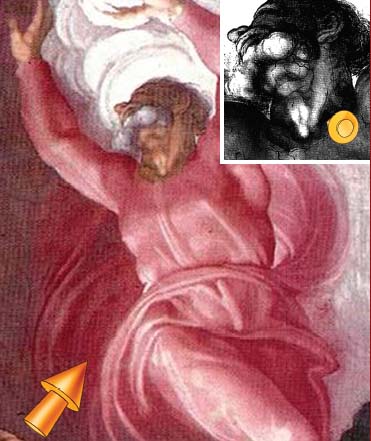
The brain of God, or just another Rorschach effect?
Some will have noticed the recent revival of speculation about the anatomical knowledge of Michelangelo. The blog at Scientific American reported on “findings” published in Neurosurgery this May. The authors, Tamago and Suk, claimed to reveal detailed anatomical sketches of a human brain and nervous system hidden in the “Separation of Light and Darkness” fresco in the Sixtine Chapel.
Rather exceptional, since these anatomical details were officially not known until 360 years later. The cutting-age anatomy of the day was that of Vesalius – very impressive, but hardly taught to modern-day neurosurgeons.
This unfortunate piece of Scientific American-backed high-publicity nonsense has been thoroughly debunked by Darin over at PACH (here, here, and here). In addition to clarifying some of the serious historical errors of fact in the SA piece, he has some very readable reflections on the utter disregard for the historical method, and the typical fallacies encountered (a little too often) when scientists try their hands at history of science. Go read it. (The PACH blog will now duly be added to the blog roll).
Alchemy, and how to write about it: ESSWE thesis workshop
 As advertised before on this blog, the European Society for the Study of Western Esotericism (ESSWE) has been organising a thesis workshop on alchemy. It took place in Amsterdam on June 24; here is a short report.
Lawrence Principe and the Rehabilitation of Alchemy – another lecture in Utrecht
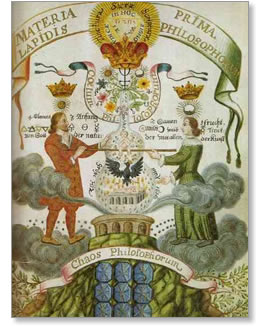 Utrecht has apparently become the place for me to see visiting historians of science. A couple months back Peter Galison gave lectures and a workshop on secrecy and science, and now last week, the alchemy specialist Lawrence Principe gave the third Descartes-Huygens lecture on “Uncovering the Secrets of Alchemy and its Role in the History of Science”. It was quite a ceremonial occasion, as Principe, who is ordinarily based at John Hopkins University, was officially given an honorary fellowship at Utrecht Unversity. As the man himself opened by saying, this was probably the first time since the 17th century that the oration of a new fellow would be devoted to the art of alchemy.
Marginality in The European Legacy
 There is a call for papers out for an upcoming special issue of The European Legacy, the official organ of the International Society for the Study of European Ideas (ISSEI). The issue will focus on the problem of marginality in European intellectual history – both posed as an empirical problem and as a problem for methodological and theoretical reflection in humanities disciplines which too often focus on “canons” (whether in art, literature, philosophy, religion, politics, or science). The topic should interest readers of this blog as much as it does me. The deadline is shortly after next vernal equinox, and the issue should be out shortly before the end of the world. More information (official CFP) below. (Thanks to Renaud Evrard for bringing this to my attention).




 Heterodoxology