Cornelius Agrippa and Renaissance feminism at the BPH blog

H. C. Agrippa – occult, sceptical, and feminist philosopher of the Renaissance.

The BPH/Ritman Library’s blog has an article-length post up by my good friend and colleague Joyce Pijnenburg, on the Renaissance humanist and “occult philosopher” Heinrich Cornelius Agrippa and his lesser known treatise on the nobility  of women. I remember being fascinated by this work when I first “discovered” Agrippa in my late teens – back then it was an eye-opener for me to find that the man who had been embraced by modern occultists as “their” intellectual patron, primarily for his Three books of occult philosophy (and the spuriously attributed Fourth book), had also produced works of sceptical philosophy (De incertitudine et vanitate scientiarum et artium), as well as a work that might classify as “Renaissance proto-feminism”. Agrippa is certainly more interesting than he’s often made into.

Joyce takes a closer look at this little-explored Renaissance feminist current, and transposes it  with certain contemporary issues discussed by Slavoj Žižek (whom, I must confess, I generally see as a stand-up comedian rather than a philosopher – some sharp observations, much hyperbole, and a lot of hilarity). The article  is entitled “Does woman exist? Agrippa von Nettesheim and Slavoy Žižek on Women and (their) Presence”. As an additional teaser before you go and read the whole thing, here’s the abstract:

(more…)

William Newman demonstrates alchemical transmutation – with a few notes on whiggishness

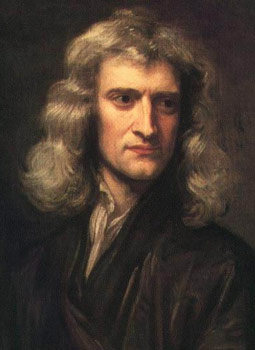
The perpetually mystified Newton

When I press the “publish” button for this post I shall immediately duck and take cover from allegations of whiggishness. The title of the lecture I post below, “Why did Newton believe in alchemy?” is precisely the sort of question-asking that has recently been criticised in the history of science blogging community in a recent upsurge of discussions about whig history and misapplication of categories in narrating or explaining science history. As Rebekah Higgitt wrote on teleskopos back in 2010, the “Newton as alchemist” trope seems to be a perennial surprise, and she suggested (I think convincingly) that the very fact that journalists but also scholars continue to introduce this topic precisely as a surprise – no doubt to attract the attention of their audience – is actually just perpetuating the mystery rather than leaving it behind and moving on. The problem is not only that we should start by acknowledging the state-of-the art established knowledge in the field (which in the case of Newton means at least departing from such works as Robert Westfall’s Never at Rest, and Betty Jo Teeter Dobbs’ The Janus Face of Genius) rather than by perpetuating the research questions of more than half a century ago. The problem is also that by playing the surprise card, we encourage people to ask questions that are poorly formulated and misleading in the first place. Questions such as, “was Newton a scientist or a sorcerer?” As Thony Christie will tell you, that’s a completely silly question, which cannot avoid distorting the material it’s supposed to clarify. To put it in histsci jargon, the question is too far removed from “actor’s categories” to make any sense.

(more…)

Digitized sources for the history of German parapsychology

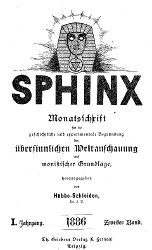
Sphinx journal

German occult, spiritualist and parapsychological journals now digitized and available online.

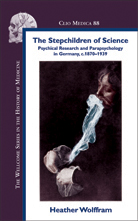
The history of parapsychology has been one of my research interests in recent years. It is not so long ago that I  reviewed Heather Wolffram’s recent book on German parapsychologyStepchildren of Science,  and noted that it breaks new ground in providing access to little-explored German sources – in English. Much of the source material for German parapsychology is indeed very hard to access outside of Germany. In my own research, I have been able to draw on a good collection of psychical research literature at the Amsterdam University Library, much of which was collected by a students society for psychical research active in Amsterdam in the early 20th century. Even this collection is weak on German sources, however. The same is true for the digital collections available through Archive.org – a great resource for anglophone sources, but less so for other languages. In my case, I had to spend a couple of days at the IGPP’s collections in Freiburg to finish the parts of my research that dealt with German parapsychology.

(more…)

Hermetically Open – BPH 2.0

The Ritman library has risen from the ashes of the calamity of 2010. The new developments look very promising and should interest many international readers – particularly because of the initiative “Hermetically Opened”. With it, the Bibliotheca Philosophica Hermetica is being proactive about joining the digital and connected age. It’s the next best thing to having the  unique library of hermetic, alchemical, and rosicrucian literature in your own living room. Digitization projects are underway,  there are plans for a Hermetic wiki, and not least, great plans for a webinar series where scholars of esotericism and Hermeticism will speak about particular topics. All of this is available to a global public online, and you can read all about it at the  library’s new website.

The webinar series, named “Infinite Fire”, was officially launched last week, with a short talk by my colleague Dr. Peter Forshaw, a specialist in the history of alchemy. Future talks are being planned, to begin with by other experts present in Amsterdam (Wouter Hanegraaff and Marco Pasi). The idea is, however, to expand with time. So if you are a scholar working in an area related to the library’s collection, and you’re planning a trip to Amsterdam, I am sure that the BPH staff would love to hear from you. Perhaps you will do a brief interview or otherwise contribute to this collaborative, evolving “global hermetic circle”?

Peter talks about / devours some of his favourite books from the BPH collection below:

Very promising developments indeed. Do check it out.

Parapsychology in Germany – review of Heather Wolffram’s Stepchildren of Science (2009)

In 2009 a fat and promising book landed on my desk, fresh from the publisher. I had looked forward to it for a while, as the topic was highly relevant for my dissertation, and this was the first full-length academic study ever to look at it. It was furthermore written by an author whose articles on the same topic I had been following for a while, with great interest. The book was Heather Wolffram’s Stepchildren of Science: Psychical Research and Parapsychology in Germany, c. 1870-1939. I was going to write a book review for Aries, which I did. It only appeared this spring, however. Since it is already three years ago that the book was published, I think it is about time to share the review with a broader community. So please find the pre-publication version of the review below.

(more…)

On Enoch, metal, and lonely girls: a response to Dan Harms’ review of Arguing with Angels

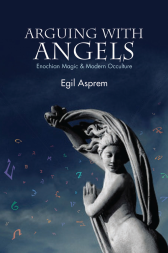
Arguing with Angels book cover

A first review of Arguing with Angels

Dan Harms, a well-known scholar of Western magical traditions, has recently published a brief review of my book, Arguing with Angels. Harms will perhaps be best known as a connoisseur of Lovecraftiana, having co-written  The Necronomicon Files with John Wisdom Gonce III, and published the Cthulhu Mythos Encyclopedia a few years ago.

You can read the review for yourself on Harms’ blog. It is generally positive:

 “the book is well-written and comprehensively [and] covers the area in question in ways that are helpful for both scholars and more casual readers. … It does an admirable job of covering the complexities of Enochian magic, both in regard to the system itself and the textual transmission thereof.”

Despite being generally positive, Harms also finds that the book had a larger potential which it did not fulfill, and he points to a few  omissions that he would have liked to see addressed. I will allow myself a brief response, as I find that Harms’ questions are important and likely to be addressed by other attentive readers with some background knowledge of the topic.

Arguing with Angels is, to begin with, a book that covers a pretty long time span, and deals with a number of different historical contexts, so it shouldn’t be surprising that some readers will be left wanting for more in certain cases. Harms mentions two cases in particular, one, so to speak, in each end of the historical narrative.

To begin with the earliest example, Harms would have liked to see a proper discussion on the Enoch figure, which could “have helped the reader with regard to the Biblical roots of Dee’s project”. The Biblical figure of Enoch, the patriarch in the seventh generation after Adam, who according to Genesis was taken to heaven and “walked with God”, and according to the apochryphal Book of Enoch acted as a mediator between God and the fallen angels, and, who according to certain Jewish mystical traditions was apotheosised by transforming into the archangel Metatron, does indeed constitute a context for Enochian magic. Besides that, he is a fascinating mythological figure in his own right. However, the most fascinating material about Enoch was simply not available to Dee: the Book of Enoch did not survive in the West, and only became available to European scholars in 1773, when Scottish adventurer James Bruce returned with three copies translated into Ethiopian that he had presumably plundered  from a monastery in Abyssinia.

Not adding a longer discussion of Enoch was, however, a conscious choice. Why? Because the relation between Enoch and Dee & Kelley’s angel conversations has typically been made into something that it was not – a trap which I wanted to avoid. In fact, the argument could be made that the term “Enochian” is a bit of a misnomer for the magical systems, language, and metaphysical speculations they “received”. While discussions of Enoch appear in the angel diaries, he is only one exotic reference among many others. Enoch was rumoured to have been the previous person to have known the secrets that were revealed to Dee and Kelly, for example, but their ultimate source was divine. The language, furthermore, had also been known to Enoch’s great-great-great-great grandfather: Adam. At any rate, in the first chapter on Dee and Kelley’s conversasions, it is more pertinent to focus on the actual immediate historical contexts, and what is known about Dee’s intensions, agendas, and use of sources. In that context, a preoccupation with Enoch is not all that important, except as a mythological example of someone who had achieved an unusual communication with God and the angels. Enoch was, however, far from alone in that achievement: other Biblical examples include Jacob, Esdras, Daniel, and Tobit. Ultimately, the contexts of natural philosophy and “low-culture” catoptromantic practices are much more important for understanding where Dee’s angel conversations come from.

The second omission Harms points to concerns contemporary references to Enochian in popular occulture. There are, for example, a number of bands in genres spanning metal, goth, and electronica that have used the Enochian language or other references to the system in their music and lyrics. Some might also remember the mystery youtube phenomenon “Lonelygir15”, who was seen cramming the Enochian alphabet in preparation for a mysterious and sinister ceremony.  The popcultural significance is indeed important and interesting, and again, it was seriously considered for inclusion (the extremely careful reader will even find me excusing myself on this very point in footnote 11 to the introduction). In the end I decided not to write about this as it diverged too much from the general argument and drift of the book as a whole. It should be remembered that Arguing with Angels is, above all, a contribution to the slowly emerging academic literature on the reinterpretation and legitimacy of ritual magic in the modern world, with the history of Enochian as a convenient case. Of course, interplay with popular culture is immensely important also for this type of research, and much remains to be done. In the present work, however, emphasis was put on internal debates and conflicts among those who truly practice magic, and less with the broader pop-occultural landscape which has been forming approximately since the 1970s.


For other readers who may have missed the same things as Harms did, I hope this response helps to fill the picture slightly.

 
Creative Commons LicenseThis work by Egil Asprem was first published on Heterodoxology. It is licensed under a Creative Commons Attribution-ShareAlike 3.0 Unported License.


Religion and Scientific Change: The Case of the New Natural Theologies between the World Wars (2/2)

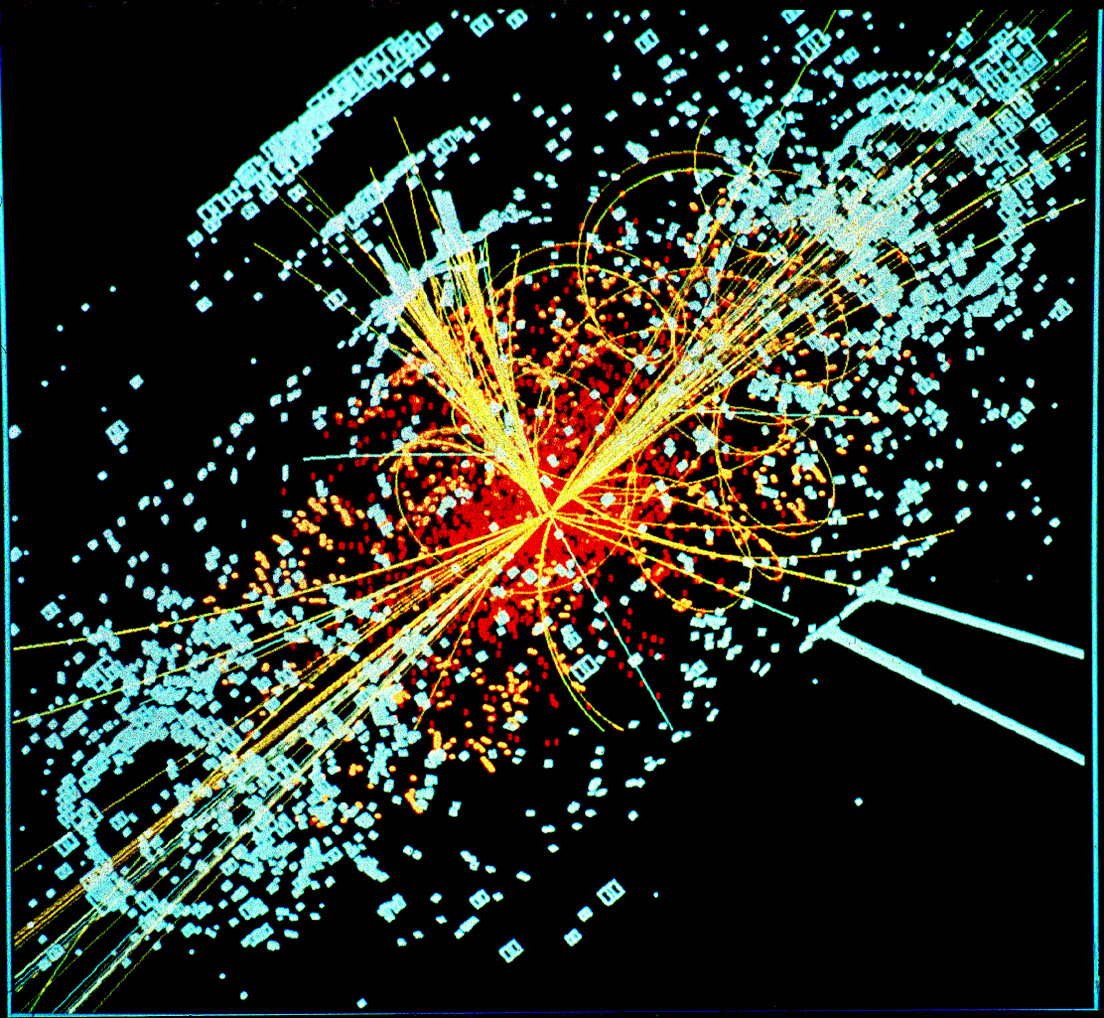
Today, July 4 2012, Cern announced the likely detection of the elusive Higgs boson – known by the popular press as the “God particle”.

Last installment of my lecture on “Religion and Scientific Change” closed by introducing three levels on which claims about relationships between religion and science should be analysed: the institutional, the socio-cultural, and the individual. I was going to wait a couple of days with releasing the rest, but since news headlines today have been all about the discovery of the “God particle” in the bowels of the Large Hydron Collider at Cern, it  seemed highly appropriate to continue. Why is it that such a (truth be told, rather ridiculous) religious pet-name has been put on the elusive boson? Read on, and you might find out. (And: happy Higgs boson day!)

(more…)

Religion and Scientific Change: The Case of the New Natural Theologies between the World Wars (1/2)

Earlier this spring I gave an Illustre School lecture at Spui25 in Amsterdam, on the lofty topic of the relationship between science and religion in the early 20th century. A significant part of my PhD dissertation concerns this topic, and I hope that the lecture provides a relatively accessible  (=popularized) account of some of the questions I grapple with there. There is also a methodological concern in this lecture. As the abstract stated:

Since the European Enlightenment, the relation between science and religion has been a topic of much public interest. Usually, however, it has been a debate formed by heavily vested interests: in the 19th century, scientists attacked organized religion as a part of their emancipation from the church; vice versa, religious spokespersons have been eager to claim compatibility between doctrines of faith and emerging new authoritative views on nature. Even today, it remains the case that most academic research on relations between science and religion are driven either by the current “new atheism” vogue, or funded by religiously motivated organizations, such as the massively influential Templeton Foundation. The result has been a loss of nuance and critical perspective. In order to remedy this situation, one needs, on the one hand, to broaden the scope and look at the wider social contexts of scientific knowledge production and interaction with religious institutions, and, on the other, to be more precise by looking at particular instances of such interaction.

Continuing my practice from an earlier talk on a similar topic, I will make the manuscript of the lecture available here, in two installments. You’ll find the first part below.

(more…)

Science and religion for lunch? Illustre School lecture, 12 April 2012

Lecture at Spui25, Amsterdam

I have been invited to give a public lecture in the Illustre School’s lunch lecture series, “Geesteswetenschappen presenteert” (“The Humanities present…”). The topic is nothing less than “The relationship between science and religion”, which I will of course set forth in a final and authoritative manner in the exactly 18 minutes that I am given…  So if you want a heavy lunch on April 12, please do come to Spui25 in the centre of Amsterdam. Seats are limited, so you need to register at Spui25’s website if you want to come (please note that registration only opens one month in advance of the lecture).

The full program can be found here, but the abstract reads as follows:

(more…)

Published in: on March 5, 2012 at 4:51 pm  Comments (2)  
Tags: ,

Bad science is normal (pseudoscience is neither)

Frankenstein's monster, immortalized by Boris Karloff's performance

Science gone bad. Frankenstein's monster, immortalized by Boris Karloff's performance.

I have an unhealthy interest in what some like to call the “pseudosciences”. Having spent quite a bit of time trying to understand this category from historical, sociological, and philosophical perspectives, I have also developed a keen interest for another category, “bad science”. Bad science and pseudoscience should not be confused with each other, however. While pseudoscience may also be bad science, most of bad science is not generally considered pseudoscience. In fact, bad science is normal. Pseudoscience, on the other hand, is defined precisely by deviating from the norm of science.

(more…)