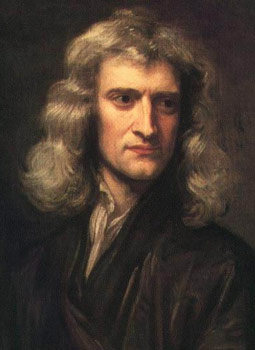
When I press the “publish” button for this post I shall immediately duck and take cover from allegations of whiggishness. The title of the lecture I post below, “Why did Newton believe in alchemy?” is precisely the sort of question-asking that has recently been criticised in the history of science blogging community in a recent upsurge of discussions about whig history and misapplication of categories in narrating or explaining science history. As Rebekah Higgitt wrote on teleskopos back in 2010, the “Newton as alchemist” trope seems to be a perennial surprise, and she suggested (I think convincingly) that the very fact that journalists but also scholars continue to introduce this topic precisely as a surprise – no doubt to attract the attention of their audience – is actually just perpetuating the mystery rather than leaving it behind and moving on. The problem is not only that we should start by acknowledging the state-of-the art established knowledge in the field (which in the case of Newton means at least departing from such works as Robert Westfall’s Never at Rest, and Betty Jo Teeter Dobbs’ The Janus Face of Genius) rather than by perpetuating the research questions of more than half a century ago. The problem is also that by playing the surprise card, we encourage people to ask questions that are poorly formulated and misleading in the first place. Questions such as, “was Newton a scientist or a sorcerer?” As Thony Christie will tell you, that’s a completely silly question, which cannot avoid distorting the material it’s supposed to clarify. To put it in histsci jargon, the question is too far removed from “actor’s categories” to make any sense.
ContERN with its own website and blog
Heterodoxology has functioned as an unofficial outlet for ContERN news lately; for those who are not primarily interested in news about this obscure network, I apologize. Now, however, I can announce that the Contemporary Esotericism Research Network has finally gotten its own website and blog, which you can check out here. It’s relatively simple for now, but has the essential information about the fledgling network in a concise form. The blog section of the website will now work as a channel for announcing news (I might occasionally re-post here, too). The link section has references to important scholarly associations and societies, departments, and journals that are of relevance for the study of contemporary esotericism. These are obviously flexible lists, and will be modified as we go. Other pages will also be added to the website in the future, with new features and content, so stay tuned!
Another review of the Contemporary Esotericism conference
There is another review up on the 1st International Conference on Contemporary Esotericism, written by Venetia Robertson and published by the Religious Studies Project (for earlier reviews, see this post). Venetia has found out about my secret identity as an agent of the cherubim (was it my flaming sword or my rosy cheeks that gave it away?), and for the rest has a lot of nice things to say about the conference that came out of this esthetic “marriage of heaven and hell”. I particularly think she’s spot on in referring to the general atmosphere of the conference being characterised by “tough love”.
Go read the whole thing. There’s also some revealing pictures from the Dragon Rouge temple, tucked away in an unassuming suburban apartment building in Stockholm.
Buy a book on werewolves and help Malört Förlag
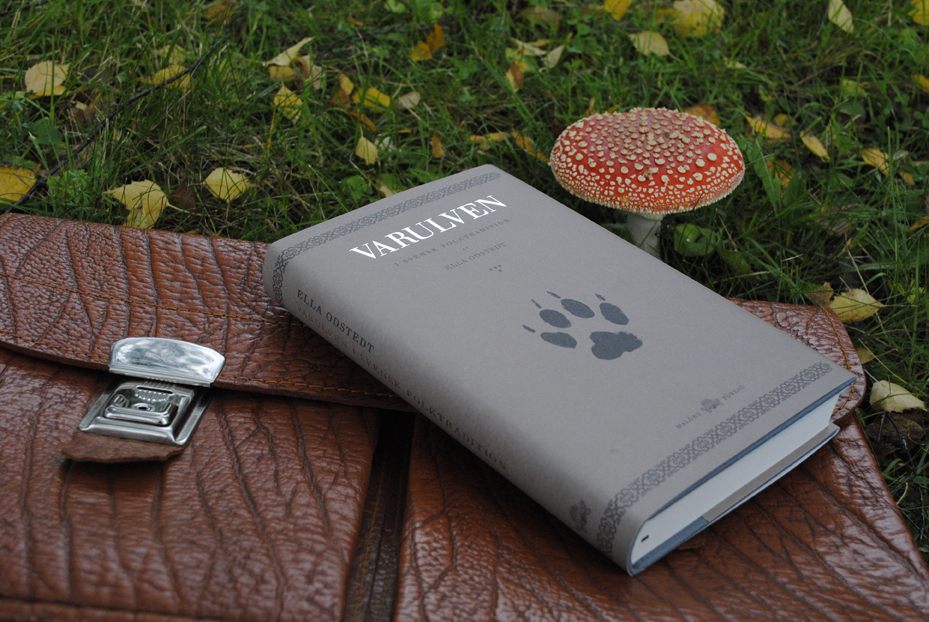
Malört Förlag (“Wormwood Publishing”) is a unique and delightful little Swedish publishing house “specializing in texts about the fantastic, the numinous and the aberrant”. Being in the trade of craft books, their editions are made to last for generations – and as if that does not already mark their releases from most books published these days, each new release also come with its own soundtrack. Thus you can read the first Swedish translation of Jacques Cazotte’s 1772 occult novel Le Diable Amoureux (The Devil in Love) while listening to tracks such as “I’m in Love With the Devil” (Tiger Lillies), “Mistress of Deceit” (Jarboe), and “Love in the Devil’s Tongue” (Stone Breath). While Malört has so far been focusing on publications in Swedish, they do plan to expand to the English speaking market soon.
That is, if they are able to continue.
Digitized sources for the history of German parapsychology
The history of parapsychology has been one of my research interests in recent years. It is not so long ago that I reviewed Heather Wolffram’s recent book on German parapsychology, Stepchildren of Science, and noted that it breaks new ground in providing access to little-explored German sources – in English. Much of the source material for German parapsychology is indeed very hard to access outside of Germany. In my own research, I have been able to draw on a good collection of psychical research literature at the Amsterdam University Library, much of which was collected by a students society for psychical research active in Amsterdam in the early 20th century. Even this collection is weak on German sources, however. The same is true for the digital collections available through Archive.org – a great resource for anglophone sources, but less so for other languages. In my case, I had to spend a couple of days at the IGPP’s collections in Freiburg to finish the parts of my research that dealt with German parapsychology.
Coptic scholars are in a strange position compared to most other researchers of arcane and obscure corners of history: their field occasionally makes world-wide news headlines, especially when there is some text claiming something about a certain carpenter from Nazareth. Last week newspapers across the world announced that someone writing in coptic on a piece of papyrus some time possibly in the 4th century had insinuated that the carpenter might have had a wife. Sensational, but well: it turns out the papyrus fragment is most likely not authentic. Read more about the arguments in this excellent post by Hugo Lundhaug and Alin Suciu. (For the record – this is the first time I reblog anything, so bear with me).
First of all, it should be clearly stated that, although in the following lines we shall express our doubts concerning the authenticity of the so-called Gospel of Jesus’s Wife, our suggestions remain hypothetical until the ink of the document has been properly tested. Secondly, our analysis does not refer either to the figure of the historical Jesus, or to his marital status, which are beyond our field of expertise, but only to a literary fragment written in Coptic, whose identity is suspicious.
During the 10th International Congress of Coptic Studies, which took place September 17-22, 2012 in Rome, the Harvard Professor Karen L. King introduced to us a previously unknown Coptic papyrus fragment.
Her paper was delivered on Tuesday, September 18, from 7.00 o’clock P.M., in one of the rooms of the Patristic Institute ‘Augustinianum.’ We estimate that about…
View original post 1,476 more words
Launching ContERN with a Google group and a Call for Papers
As announced previously, a new network has been created with the aim of placing the field of contemporary esotericism clearly on the agenda of academic research: the Contemporary Esotericism Research Network, or ContERN for short (no connection with the Third International, we promise…). It is affiliated with the European Society for the Study of Western Esotericism (ESSWE), and everyone who participate in our activities is encouraged to become a member of that organisation (which can be done by applying online here).
There is currently a Google group which will work as a mailing list and discussion forum for the network (click here to sign up), and also a Facebook group for easy communication.
As the description on the Google group reads:
Contemporary Esotericism round-up and other news
It’s been a long time away from blogging, but for good reason I assure you. While in the middle of moving house I have been finishing my dissertation, a good 600+ pages that will be sent off to committee members on Friday. Now more work awaits in following up on a recent event in Stockholm: as announced many times on this blog, the 1st International Conference on Contemporary Esotericism was held at Stockholm University on August 27-29.
Hermetically Open – BPH 2.0
The Ritman library has risen from the ashes of the calamity of 2010. The new developments look very promising and should interest many international readers – particularly because of the initiative “Hermetically Opened”. With it, the Bibliotheca Philosophica Hermetica is being proactive about joining the digital and connected age. It’s the next best thing to having the unique library of hermetic, alchemical, and rosicrucian literature in your own living room. Digitization projects are underway, there are plans for a Hermetic wiki, and not least, great plans for a webinar series where scholars of esotericism and Hermeticism will speak about particular topics. All of this is available to a global public online, and you can read all about it at the library’s new website.
The webinar series, named “Infinite Fire”, was officially launched last week, with a short talk by my colleague Dr. Peter Forshaw, a specialist in the history of alchemy. Future talks are being planned, to begin with by other experts present in Amsterdam (Wouter Hanegraaff and Marco Pasi). The idea is, however, to expand with time. So if you are a scholar working in an area related to the library’s collection, and you’re planning a trip to Amsterdam, I am sure that the BPH staff would love to hear from you. Perhaps you will do a brief interview or otherwise contribute to this collaborative, evolving “global hermetic circle”?
Peter talks about / devours some of his favourite books from the BPH collection below:
Very promising developments indeed. Do check it out.