2013 has been a very busy year on my end, characterised by several relocations, the opening and closing of projects and the managing of very different possible futures. By the end of the year I will have worked on 5-6 different contracts (depending on how you count), in three different countries. Right now I am in the middle of the final great transition of the year, which is the main reason why not much new material is turning up here these days. Let me, at least, let you in on the developments.
This call for papers for the next ASE conference (Association for the Study of Esotericism) has already circulated for a while, but since the deadline is still two months away (January 15 to be exact) it can still be circulated some more. The ASE is the American sister organization of the ESSWE, and the idea has been that these two societies will offer their biannual conferences in alternating years. Thus, we had ESSWE4 in Gothenburg in 2013, and will get ASE5 at Colgate University, Hamilton NY in 2014.
The topic that ASE has chosen for next year’s conference is I think an excellent one: “Esoteric Practices: Theories, Representations and Methods”. It’s an excellent idea because, quite surprisingly, there has been very little research on practice in this field. This is largely due to a bias towards “ideas” and “systems of thought” and historical genealogies, and a lacking engagement with social scientific research communities (anthropologists and ethnographers above all). That does not mean that no such research exists – it does, and especially outside of the context of “esotericism scholarship” as institutionalised in the family of journals, book series and scholarly societies that identify as such. But conceptualisations of “esotericism” (whether as a theoretical object or a historical phenomenon) have not sufficiently looked at the practical dimension or engaged the research that already exists. There are notable exceptions, of course, but not many.
When Kennet Granholm and I organised the 2012 conference on Contemporary Esotericism in Stockholm, and established the ContERN website, we gave our promises that video material from the conference would appear online within a few months. I’m not sure if 14 months can be characterised as “a few”, but in any case: The first material has now been publicized. We started by releasing our own introductory lecture and welcome address. In the short lecture we discuss our reasons for establishing ContERN and organising the conference in the first place, and argue for the need of an interdisciplinary study of contemporary esotericism to take shape.
As explained on the ContERN website, the video is a lot more grainy and static than we had hoped for. We originally had two cameras, but the results from one of them unfortunately had to be discarded. Luckily, though, the audio is pretty clear, so we hope that the documentation value is still fair enough as far as the content is concerned.
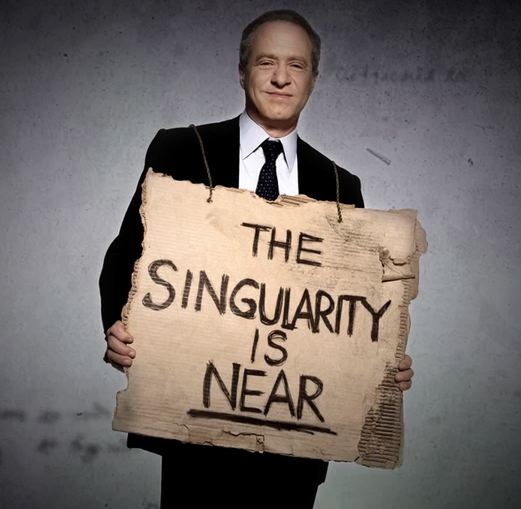
Transhumanism and religion proves a popular topic. I started exploring some aspects of the transhumanist movement from the perspective of a scholar of religion and esotericism earlier this year, in connection with a conference. I have never had more responses from so many different audiences to a conference paper. After uploading my “Magus of Silicon Valley” paper to Academia.edu this summer, I’ve had private messages, emails, reblogs and comments (including a few annoyed transhumanist reactions) – several requests for spinoffs. First of this was a public lecture in the occulturally oriented Forum Nidarosiae in Trondheim. There’s also been interest from more old-fashioned humanists (the type that’s not too impressed by flashy prefixes such as trans-, post-, or neo-). Thus, a spin-off article is underway with the Norwegian secular humanist magazine Humanist, while another has just now been published in the Australian online magazine MercatorNet – describing itself as being of “dignitarian” orientation, which I take to be a non-confessional, non-partisan, cross-worldview form of humanism (the editor in chief, Michael Cook, is open about his Catholic leaning – while justifications appear to be classic European Enlightenment: no revelation, just reason, evidence and critical practice).
So if you haven’t read it yet, “The Magus of Silicon Valley” is now relaunched in a new medium – slightly edited and modified for the occasion (the jargon should be a little less Academese this time around). They also added a link to a very recommendable documentary on Ray Kurzweil: “Transcendent Man”. Watching it a few years back contributed to my interest in doing something on the movement from a religious studies perspective.
It’s time to sit back and await the first accusations of being in league with this or the other vested interest, dissing the transhuman visionary movement – or perhaps even supporting the coming Inquisition against it.
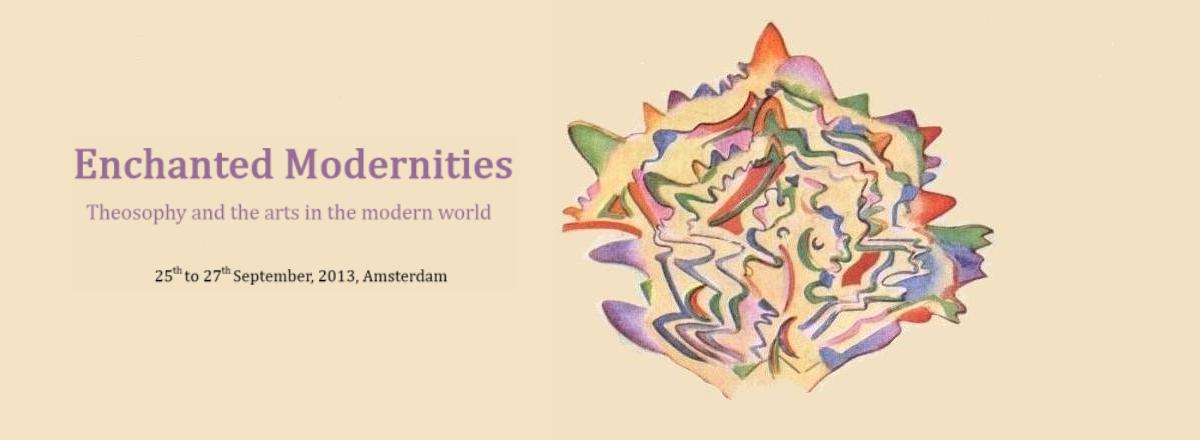
The focus of the conference is on Theosophy and art – not an unfamiliar topic, of course, but one which is now starting to see more systematic and interdisciplinary attention. From the conference website:
If you’re in Trondheim next week, I am giving a public lecture on some aspects of the transhumanist movement. It’s organized by the excellent club- and lecture initiative Forum Nidarosiae. The lecture will be in Norwegian, but I attach an English translation of title and blurb below:
There is another webinar out from the collaboration between the BPH and the HHP in Amsterdam. This time, Wouter Hanegraaff gives a one-hour crash course on the wonderfully obscure and fascinating German Silesian Christian theosophist/mystic/pietist (or however one wants to label him) Jakob Böhme (1575-1624). This cobbler from Görlitz was the author of some fairly heterodox theological texts, written in unsystematic, poetic, highly symbolic and mythologizing style. In this webinar, Hanegraaff focuses mostly on Böhme’s cosmogony – or rather, his theogony. In stark contrast to Christian orthodoxy, Böhme held that God was not eternal nor really transcendent, and certainly not immaterial or purely “spiritual”. To the contrary, he was obsessed with “the birth of God” from an original, primeval, unknowable chaos, the Ungrund (“un-ground”). Materiality and corporeality are always highlighted.
Chances are you have seen the new open access journal Correspondences, which publishes peer-reviewed research on esotericism (if you haven’t, check out the first issue here). In case you were wondering who’s behind this initiative and what compelled them to start this journal, Ethan Doyle White of Albion Calling has published an interview with the two editors, Jimmy Elwing and Aren Roukema. The accompanying rock star image leaves little doubt that the editors and the journal are part of the emerging “next generation”, defining “Esotericism 3.0”. Read about how they got involved with the academic study of esotericism, what kind of research they’re into, and their views on open access publishing and the way forward.
The interviewer also had an article published in the first issue of Correspondences, focusing on witchcraft and Luciferianism. Oh, and while the deadline for the second issue has just passed, I’m sure Aren and Jimmy would appreciate new submissions!
This weekend I have relocated to my old home town, Trondheim. In the coming few months I’m going to fill an associate professor position, temporarily, due to a set of complicated circumstances that I’ll not go into here. Having left the Center for History of Hermetic Philosophy and Related Currents in Amsterdam behind, I’ll now be found at the newly restructured Department of Philosophy and Religious Studies at the Norwegian University of Science and Technology (NTNU). My office and all teaching happens at campus Dragvoll, which looks pretty much like a giant greenhouse, in a rural and woodlands area on the outskirts of town. Certainly a change of scenery from Amsterdam’s overcrowded streets!









 Heterodoxology