Plato the Pythagorean – a possible revolution in Plato research?

I must admit to feeling a sceptical gut reaction when I first read about J. B. Kennedy’s brand new article on Pythagorean number theories being embedded in the structure of Plato’s dialogues – a possible key to his unwritten doctrine. I first read about it in The Guardian‘s rather popularizing account. After doing some more searches, and finally checking  the original paper published in Apeiron, I am happy to say it looks much more solid than one first expects when hearing something along the lines of “lone scholar x cracking codes in the works of legendary intellectual hero y“.

(more…)

Published in: on June 29, 2010 at 5:55 pm  Comments (5)  
Tags: , , ,

Neurosurgical nonsense and the historical method

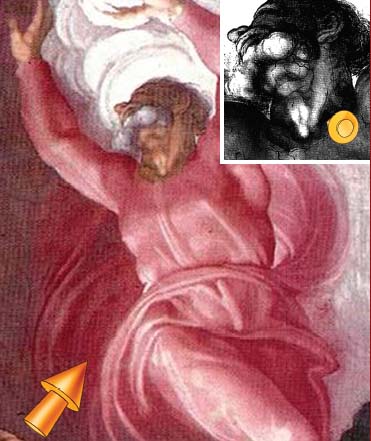
The brain of God, or just another Rorschach effect?

Some will have noticed the recent revival of speculation about the anatomical knowledge of Michelangelo. The blog at Scientific American reported on “findings” published in Neurosurgery this May. The authors, Tamago and Suk, claimed to reveal detailed anatomical sketches of a human brain and nervous system hidden in the “Separation of Light and Darkness” fresco in the Sixtine Chapel.

Rather exceptional, since these anatomical details were officially not known until 360 years later. The cutting-age anatomy of the day was that of Vesalius – very impressive, but hardly taught to modern-day neurosurgeons.

This unfortunate piece of Scientific American-backed high-publicity nonsense has been thoroughly debunked by Darin over at PACH (here, here, and here). In addition to clarifying some of the serious historical errors of fact in the SA piece, he has some very readable reflections on the utter disregard for the historical method, and the typical fallacies encountered (a little too often) when scientists try their hands at history of science. Go read it. (The PACH blog will now duly be added to the blog roll).

Alchemy, and how to write about it: ESSWE thesis workshop

As advertised before on this blog, the European Society for the Study of Western Esotericism (ESSWE) has been organising a thesis workshop on alchemy. It took place  in Amsterdam on June 24; here is a short report.

(more…)

More on Goetic Magic: Three 20th century developments

In a previous post, now a couple of months ago, I wrote about the distinction between goetia and theurgy in ceremonial magic. I tried to trace the development of the distinction, in very broad strokes, from neo-platonic discussions in late antiquity through the renaissance rehabilitation of magic, through to 19th century occultism. This was part of developing my thoughts for an article on «Goetia in Modern Western Magic», the deadline for which has now (as it usually goes with academic anthologies) been postponed. This gives me opportunity to try out some more ideas here.

(more…)

Lawrence Principe and the Rehabilitation of Alchemy – another lecture in Utrecht

Utrecht has apparently become the place for me to see visiting historians of science. A couple months back Peter Galison gave  lectures and a workshop on secrecy and science, and now last week, the alchemy specialist Lawrence Principe gave the third Descartes-Huygens lecture on “Uncovering the Secrets of Alchemy and its Role in the History of Science”. It was quite a ceremonial occasion, as Principe, who is ordinarily based at John Hopkins University, was officially given an honorary fellowship at Utrecht Unversity. As the man himself opened by saying, this was probably the first time since the 17th century that the oration of a new fellow would be devoted to the art of alchemy.

(more…)

Marginality in The European Legacy

There is a call for papers out for an upcoming special issue of The European Legacy, the official organ of the International Society for the Study of European Ideas (ISSEI). The issue will focus on the problem of marginality in European intellectual history – both posed as an empirical problem and as a problem for methodological and theoretical reflection in humanities disciplines which too often focus on “canons” (whether in art, literature, philosophy, religion, politics, or science). The topic should interest readers of this blog as much as it does me. The deadline is shortly after next vernal equinox, and the issue should be out shortly before the end of the world. More information (official CFP) below. (Thanks to Renaud Evrard for bringing this to my attention).

(more…)

Follow

Get every new post delivered to your Inbox.

Join 204 other followers