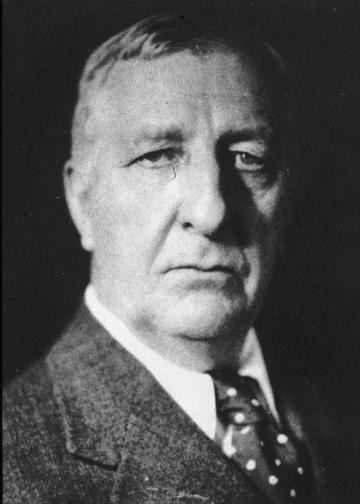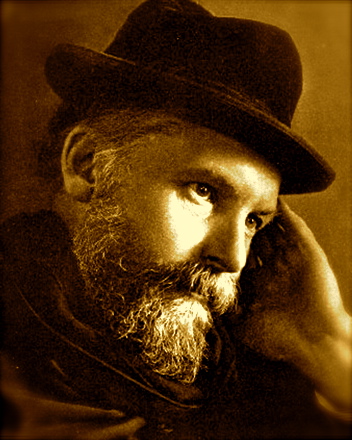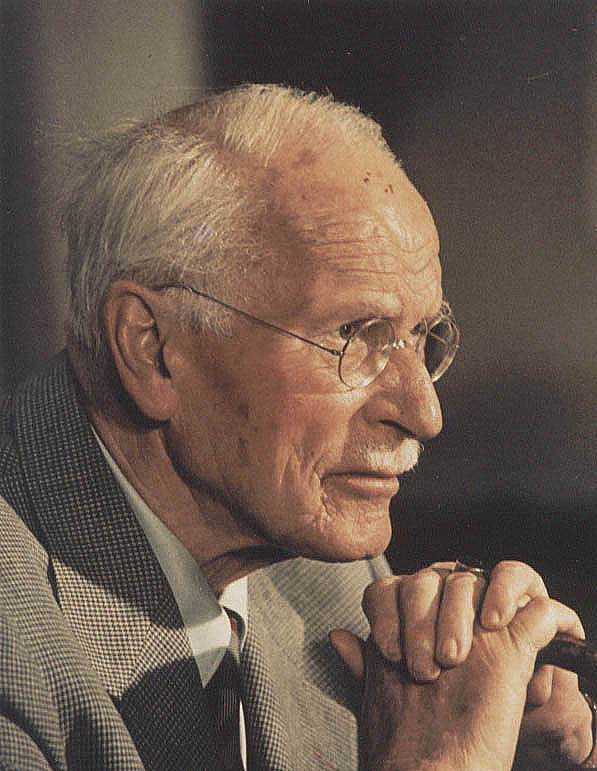
Last week in the MA course we are currently running on “Esotericism and modern science” (I’ve written about previous classes here, here, here, here and here) we talked about the encounter between two influential thinkers of very different impact: psychologist Carl Gustav Jung (1875-1961) and theoretical physicist Wolfgang Pauli (1900-1958). Two men who led at the surface very different careers; one a disciple of Freud and crown-prince of psychoanalysis, the other a student of Bohr and a co-creator of quantum mechanics. While Pauli gave name to the exclusion principle, Jung developed concepts of psychological archetypes and the collective unconscious, established his own school of “analytic psychology”, and arguably founded a charismatic cult of personality which still greatly influences new age religion, pagan spirituality and other occultural belief systems.
A bright day for freedom of speech in science
After two years’ struggle, the British Chiropractic Association finally dropped their libel case against science writer Simon Singh. This has been a high profile case in the campaign (which has only just begun!) to reform the UK’s ridiculous libel laws. This is a great step in the right direction. For the man who’s occupied centre stage, the victory will still be a costly one. Singh has spent 200.000 pounds to defend himself in the case, which started after he wrote an article in the Guardian in 2008 criticising the (lacking) scientific basis for chiropractic treatments. Instead of meeting him with arguments and evidence, the BCA attempted to sue the criticism to silence.
Frederic W. F. Myers and Gothic Psychology
“Frederic Myers will always be remembered in psychology as the pioneer who staked out a vast tract of mental wilderness and planted the flag of genuine science upon it.” With these words the far more famous American psychologist and philosopher, William James, concluded his 1901 obituary of British classicist, amateur psychologist and founding member of the Society for Psychical Research (SPR), Frederic W. F. Myers (1843-1901). According to James, Myers’ work would set a new standard for the psychological sciences of the 20th century. More than a decade into the 21st, the name is mostly remembered by parapsychologists and historians with an interest in the quirkier twists that psychology could have taken.
“Alchemy: Between Science and Religion” – a workshop
On 24 June the European Society for the Study of Western Esotericism (ESSWE) will organize a one-day workshop on alchemy in Amsterdam. Some of the top experts of alchemy will present papers, including Professor Lawrence Principe of John Hopkins University. Although the main focus is on alchemy and its ambiguous relation to early modern natural philosophy and religion, the workshop is intended for graduate and postgraduate students working with themes related to esotericism more generally. Since it coincides with the board meeting of the ESSWE, virtually all the leading scholars of western esotericism will be present, including Antoine Faivre, Wouter Hanegraaff, Nicholas Goodrick-Clarke, Boaz Huss, Mark Sedgwick, and Gyorgy Szonyi. They will all happily engage in discussions with students and young researchers.
In short: A great opportunity if you’re doing an MA or PhD in this area, and can make it to Amsterdam in June. Another notable perk: It’s free. For more details, check out the announcement, which I also post in its entirety below.
First month of heterodox blogging
It’s April, and Heterodoxology has survived its first month. The stats show ca. 1.300 hits in March, with posts dealing with magic, both old and new, as the most read. Perhaps not surprising, and I can reveal that there will, eventually, be more of that.
So far the strategy has been to write about topics that I teach, write or read about. I find that quite rewarding and will continue the policy, hopefully keeping the pace up with about two posts per week. I might also start writing somewhat shorter posts, and perhaps slicing up the larger ones into parts. We’ll see.
At any rate, the first month of Heterodoxology has been satisfying, and a thanks go out to those who have been following so far.